£0.00



Introduction: why “Visa stablecoin” matters now
The Visa stablecoin pilot puts programmable, near-instant settlement inside a network consumers already trust. It couples card-network reach with blockchain rails. As a result, cross-border transfers can move faster, with clearer fees and better transparency. Analysts call this a breakthrough because Visa can bundle compliance, fraud tools, and merchant acceptance into a single, bank-friendly package.
How the pilot works at a glance
The pilot connects Visa Direct payout corridors with selected stablecoin rails and licensed digital wallets. A sender funds the transfer with fiat. Then a regulated partner mints or routes a matching amount of stablecoins. Next, the stablecoins move over a public chain with on-chain tracking. Finally, the receiver cashes out to a local bank account or holds the stablecoin.
Crucially, Visa orchestrates the flow rather than replacing banks. Issuer banks handle onboarding and funding. Acquirers and wallets manage local payouts, KYC, and settlement. Visa provides routing, risk controls, and messaging, plus dispute-handling frameworks when applicable.
What changes under the hood: speed, clarity, and control
Speed: Settlement arrives in minutes, not days. Traditional time zones and cut-offs matter less.
Clarity: Users see the path and fees up front. On-chain transfers give a single source of truth.
Control: Treasury teams choose when to convert. They can hold stablecoins briefly to avoid poor FX windows.
Because transfers move as tokens, partial automation becomes simple. Smart contracts can release funds only when conditions are met, which reduces manual checks.
Why many analysts see Visa as the “stablecoin winner”
Distribution power: Visa connects thousands of banks, PSPs, and fintechs. A single integration can reach many markets.
Trust layer: Stablecoins gain consumer credibility when wrapped in familiar dispute and fraud tooling.
Compliance muscle: Visa and its partners can embed screening, travel-rule messaging, and sanctions controls.
Merchant fit: Merchants want predictable settlement and chargeback workflows. Visa already sets those norms.
Network effects: Once a few large corridors succeed, volumes attract more wallets, banks, and platforms.
In short, Visa blends crypto efficiency with established payment governance. That mix is hard to copy.
Inside the flow: funding, minting, and redemption
-
Funding: The sender tops up in local currency via card, bank, or wallet balance.
-
Token leg: A partner converts value into a permitted stablecoin. Transfers execute on a whitelisted chain.
-
Risk checks: Screening runs at onboarding and per transaction. Velocity limits reduce fraud and mule risks.
-
Payout: The receiver chooses a bank deposit, wallet balance, or stablecoin hold.
-
Reconciliation: API callbacks and on-chain proofs align ledgers for banks and merchants.
Because all steps are API-driven, PSPs can embed the pilot in existing payout products with minimal UX change.
Fees and economics: where savings come from
-
Fewer intermediaries: Tokens jump over some correspondent hops.
-
Straight-through processing: Automation reduces manual exceptions.
-
Netting and batching: Treasury teams can aggregate flows and settle at optimal times.
-
Transparent FX: Firms can price FX explicitly rather than hide it in spreads.
Savings will vary by corridor. Yet even modest gains matter at scale, especially for high-volume remittances.
Real-world use cases unlocked
1) Remittances that feel real time
Remitters want speed, certainty, and low cost. Stablecoin legs cut weekend and holiday delays. Receivers can see funds arrive in their wallet, then cash out locally. Moreover, senders get status updates tied to on-chain events, which builds trust.
2) Marketplace and gig payouts
Marketplaces pay sellers across borders daily. Stablecoins reduce payout friction and lower reconciliation costs. Sellers can choose to hold or convert. Because confirmations are deterministic, support teams resolve payout tickets faster.
3) Corporate treasury and B2B settlement
Treasury teams face cut-offs and trapped cash. With stablecoins, firms pre-fund a token float and sweep balances on demand. They can schedule just-in-time supplier payments, pay global contractors, or rebalance entities overnight, even across time zones.
4) Merchant settlement and refunds
Acquirers can settle merchants faster, including on weekends. Stablecoin refunds post quickly as well. That improves customer experience and reduces chargeback noise due to delayed credits.
Why this matters for compliance teams
Stablecoin pilots do not lower the bar; they raise it. Programs layer KYC, transaction-risk scoring, and sanctions screening around the token leg. Counterparties exchange sender and beneficiary data where required. Audit trails include on-chain hashes and traditional logs. Finally, issuers publish reserve attestations that treasury teams can review during due diligence.
Interoperability and chain choices
The pilot focuses on chains with predictable fees, strong uptime, and mature tooling. Aggregators abstract gas and address management from end users. Over time, token bridges or multiple mints may support corridor diversity. However, the early rule is simple: fewer chains, higher reliability.
Risk and resilience: practical safeguards
-
Volatility risk: Stablecoins aim for par, but programs cap exposure time and use only high-quality issuers.
-
De-peg events: Automated circuit breakers pause new sends or switch corridors. Existing balances can redeem first.
-
Counterparty risk: Custody is segregated. Partners follow strict reserve, audit, and incident-response plans.
-
Operational risk: Multi-region nodes, retry logic, and message idempotency keep payouts reliable.
-
Fraud risk: Sessions, velocity caps, and behavioral analytics throttle bad actors.
Metrics that will decide success
-
End-to-end delivery time by corridor and time of day.
-
All-in cost per payout versus wires and legacy wallets.
-
Success rate without manual intervention.
-
Refund and dispute cycle time.
-
Treasury working-capital savings from faster settlement and netting.
How banks and fintechs can plug in
Banks can start as payout agents, custody providers, or stablecoin liquidity partners. Fintechs can embed the flow in remittance, payroll, or marketplace products. Both should prepare playbooks for de-peg contingencies, FX conversion windows, and weekend operations. Clear client communications are essential: explain when funds are tokenized, where they travel, and how redemption works.
What this means for regulators and policy
The pilot aligns with a global shift toward clear rules for tokenized money. Programs emphasize reserve quality, audits, and consumer protection. As standards solidify, token rails will look less like an experiment and more like core financial plumbing, especially for cross-border corridors.
Mini-guide: what to check before sending a cross-border stablecoin payment
-
Confirm the corridor. Ensure the destination wallet and payout method are supported.
-
Check the stablecoin. Use only approved issuers and chains for the route.
-
Review fees and FX. Compare the all-in cost against wires or ACH.
-
Verify recipient details. Match legal name, wallet address, and bank data.
-
Set limits. Use per-transaction and daily caps, especially for new recipients.
-
Plan for de-peg events. Know the pause rules and redemption steps.
-
Keep logs. Store payment IDs, hashes, and confirmations for audit.
-
Test a small send. Pilot the route with a small amount before scaling.
-
Automate reconciliation. Map on-chain events to your ERP or payout ledger.
-
Communicate timelines. Tell recipients when to expect funds and how to cash out.
Conclusion: from pilot to production rails
The Visa stablecoin pilot shows how tokenized settlement can sit inside familiar payment flows. It pairs public-chain finality with Visa’s compliance and acceptance stack. If results hold, remittances become faster, treasury gets more flexible, and marketplaces gain reliable global payouts. The real test now is scale: consistent performance, resilient risk controls, and clear customer experiences across many corridors.

Introduction: why “Ethereum Pectra” matters now
The Ethereum Pectra upgrade blends execution-layer and consensus-layer improvements into a single step forward. It focuses on safer keys, smoother wallet flows, and more scalable data for apps. For everyday users, that translates into fewer scary signatures and clearer cost controls. For developers, it unlocks cleaner patterns for account logic, data availability, and long-term UX upgrades that make Ethereum feel less like a developer tool and more like consumer-grade finance.
What changed under the hood: accounts, keys, and programmability
Ethereum’s base model long separated externally owned accounts (EOAs) from smart contract accounts. Pectra narrows that gap. In practice, it becomes easier to attach policy logic to your account without migrating funds or teaching users new seed phrases. As a result, apps can enforce spending limits, time locks, or session rules at the account level. Crucially, this logic can be updated safely, so wallets no longer feel “frozen in time” the day you create them.
Beyond policy logic, Pectra formalizes clearer interfaces for wallets to coordinate with dapps. Instead of brittle, app-specific workarounds, wallets can expose capabilities—like rate limits or allowed spenders—that dapps can query and respect. The result is a consistent contract between wallets and apps, which reduces foot-guns and odd edge cases.
Better wallet UX: fewer signatures, more safety rails
Wallets are the face of Ethereum, and Pectra improves that face in three ways:
-
Session-style approvals: Users can authorize a dapp to perform a set of actions for a limited time or within preset limits. You no longer confirm twenty small steps; you approve a well-scoped session and keep full revocation power.
-
Native spending rules: Think of them as guardrails. You can cap daily outflows, restrict specific token contracts, or require an extra confirmation above a threshold.
-
Clearer human-readable prompts: Transactions surface what will really change—balances, approvals, and target contracts—so you can tell upgrades from exploits at a glance.
Together, these changes reduce signature fatigue. They also cut accidental infinite approvals, a common cause of losses for DeFi newcomers.
Why this is a big deal for DeFi
DeFi lives on composability, but composability is only safe if the account model is resilient. Pectra helps by:
-
Making approvals safer by default. Session rules and spending limits blunt the risk of malicious routers and “approval forever” UX traps.
-
Smoothing multi-step flows. Complex interactions—like leverage loops or multi-venue swaps—bundle into a single, auditable session rather than a dozen fragile clicks.
-
Improving oracle and keeper reliability. Cleaner account logic makes automated agents easier to permission and monitor, lowering operational risk for vaults, perps, and money markets.
As trust improves, more users are willing to try on-chain lending, trading, and structured products without feeling like they need a security PhD.
Real-world assets (RWA): from pilots to pipelines
Tokenized treasuries, invoices, and funds need more than a chain; they need account-level rules and predictable operations. Ethereum Pectra helps RWA platforms by:
-
Embedding compliance policies at the account layer. Whitelists, velocity limits, and time-bound permissions can live with the investor account, not in ad-hoc middleware.
-
Supporting institutional custody models. Multi-operator controls (for example, ops + compliance) reduce single-key risk while keeping workflows fast enough for daily NAV and settlements.
-
Enhancing data throughput for rollups. With improved data-availability pathways, L2s can batch more transactions at lower cost, which suits RWA transfer volumes and corporate actions.
These features make tokenization less about shiny demos and more about dependable back-office plumbing.
Developer experience: cleaner patterns, fewer edge cases
For builders, Pectra is a quality-of-life release:
-
Unified account interfaces. You can design for one consistent set of hooks to verify, execute, and recover user intent. That slashes boilerplate and reduces fragmentation across wallets.
-
Safer upgrade paths. Account logic can evolve under transparent constraints, so you can fix bugs or add features without forcing users to migrate assets or rotate keys.
-
Gas and calldata ergonomics. Encodings are more predictable, signatures are easier to validate, and batching paths are clearer—useful for aggregators and intent solvers.
The bottom line: fewer bespoke patches, more reusable libraries, and simpler audits.
Security posture: what improves and what still needs care
Pectra does not magically remove risk, but it changes the risk curve:
-
Key risk shifts to policy risk. Users depend less on a single seed phrase and more on the rules protecting their funds. That is good, yet bad policies can still lose money.
-
Approval risk decreases. Session limits and human-readable prompts make toxic approvals rarer.
-
Smart-contract risk remains. Upgrades, delegates, and external calls still need thorough reviews, formal verification where possible, and strong monitoring.
Therefore, threat modeling must cover the policy layer (limits, whitelists, revoke paths) as carefully as the core contract logic.
Ecosystem impacts: wallets, L2s, and tooling
Wallet teams gain a clearer roadmap: converge on session permissions, standard prompts, and recovery flows. Rollups benefit because better data-availability handling and cleaner account semantics reduce L2 differences that leak into app code. Tooling vendors—indexers, security scanners, and analytics—can flag risky sessions or policy changes in near-real time, not weeks later.
For users, this convergence feels like a single network with consistent rules. For developers, it means an app written against the Pectra patterns should “just work” across major L2s with minimal tweaks.
Governance and operations: upgrade safety and recovery
Pectra nudges the ecosystem toward recoverable accounts. Social or hardware-based recovery can be built into the account itself with transparent safeguards, such as time-delayed changes and public event logs. Teams can rotate operators without downtime, and users can recover from device loss without exposing seed phrases to risky environments.
Moreover, standardized prompts make governance safer. When a DAO submits a proposal that changes a vault’s withdrawal rules, the signer sees exactly which permission is changing before confirming.
Why this matters for mainstream adoption
People adopt systems that are easy, safe, and cheap. Ethereum Pectra moves the chain toward all three. Wallets feel safer and less noisy. DeFi feels less intimidating. RWAs gain the controls institutions need. And L2s get the scaling headroom to run these experiences at consumer price points. It is the most “user-facing” core upgrade in years—even though much of the work hides under the surface.
Mini-guide: what to check before you sign any transaction
Use this checklist every time, even with Pectra’s guardrails:
-
Who am I really talking to? Confirm the dapp URL, connected chain, and wallet name. Fake pop-ups remain common.
-
What will change? Read the human-readable summary. Look for balance deltas, token IDs, and any new approvals.
-
Is this a session or a one-off? For sessions, check time limits, spending caps, and which contracts are allowed. Avoid “unbounded” scopes.
-
Which tokens and which contract addresses? Verify the exact contract you’re approving or calling, not just its symbol.
-
Are there hidden approvals? Many swaps include permit/approve calls. If you only intended to trade, consider lower allowances or single-use permits.
-
What are the safeguards? Ensure your account policy has daily limits, whitelists, or a second-factor for large transfers.
-
Can I revoke easily? Know where to revoke approvals and how to end a session. Keep that page bookmarked in your wallet.
-
How will I recover if something breaks? Confirm your recovery method (guardians, hardware, or timelock) and test a dry run with small funds.
-
What’s the gas and total cost? Check the maximum you could pay under current conditions. If it looks off, wait or switch networks.
-
Am I rushing? Scams thrive on urgency. If a timer is pressuring you, step back.
Conclusion: a safer, cleaner, more capable Ethereum
The Ethereum Pectra upgrade tightens the link between security and usability. It standardizes account-level protections, reduces signature fatigue, and gives builders clean, scalable primitives. DeFi becomes more trustworthy, while real-world assets gain the operational controls institutions demand. Most importantly, users get a network that feels modern without sacrificing self-custody. Keep your policies tight, your sessions scoped, and your eyes on the prompt—Pectra has done its part; now it’s our turn to use it well.
Introduction: A new rulebook for dollar-pegged money
The GENIUS Act stablecoin framework is now the cornerstone of U.S. policy for payment-token issuers. Enacted in July 2025 with broad bipartisan support, it delivers long-sought clarity on who may issue payment stablecoins, how reserves must be held and audited, and what compliance programs are mandatory. That clarity is already catalyzing moves by banks, fintechs, and global payment networks eager to plug stablecoins into everyday commerce.
What the GENIUS Act actually covers
At its core, the Guiding and Establishing National Innovation for U.S. Stablecoins (GENIUS) Act creates a federal regime for payment stablecoins—tokens redeemable at par in fiat and used for payments. It sets out who can issue, how they are supervised, and how foreign-issued tokens may be offered or traded in the U.S. The Act takes effect on the earlier of 18 months from enactment or 120 days after primary regulators finalize rules—so compliance programs must be underway now.
Why Congress acted now
Stablecoins have swelled into a multi-hundred-billion-dollar market and an increasingly important back-end rail for crypto and, increasingly, mainstream payments. Lawmakers responded to both systemic-risk concerns and a strategic view that well-regulated dollar tokens can reinforce U.S. monetary primacy in digital markets.
Issuer obligations: AML, audits, and classifications
Mixture-of-rules regimes are over: the GENIUS Act makes issuer status, controls, and disclosures explicit.
AML/KYC programs as for financial institutions
Issuers are treated as financial institutions for Bank Secrecy Act purposes. They must maintain risk-based AML/CFT programs, designate compliance officers, conduct customer due diligence (CDD/KYC), file SARs where applicable, and maintain robust sanctions screening. This ends the ambiguity that previously let some issuers rely on partners to “own” AML.
Independent audits and reserve attestations
The law requires independent third-party assurance over reserves and financial statements on a recurring basis, with standardized disclosures so users can assess liquidity, asset mix (e.g., cash, T-bills), and concentration risk. Expect quarterly reserve attestations and annual audits to become standard issuer hygiene.
Permissible assets and prudential safeguards
Issuers must hold high-quality liquid assets—typically cash and short-dated U.S. Treasury bills—segregated for the benefit of token holders. Detailed governance, risk, and custody controls apply, including wind-down and insolvency playbooks that clarify treatment of reserves if an issuer fails.
Federal–state perimeter and “who can issue”
The GENIUS Act builds a federal licensing and supervision layer while accommodating certain state frameworks and providing tools for the Fed or OCC to intervene in unusual circumstances (notably for state-chartered issuers). Foreign issuers face tailored rules for offering and secondary trading in the U.S. through digital asset service providers.
What it means for banks
A new product line—within familiar compliance rails
For insured depository institutions, stablecoins become a regulated, auditable deposit-adjacent product. Banks can now issue or distribute tokens with better clarity on capital, liquidity, and supervisory expectations. This opens use cases from on-chain commercial payments to instant wholesale settlement between corporate treasuries.
Balance-sheet opportunities—and responsibilities
With reserves largely in cash and T-bills, banks can participate as custodians, trustees, or liquidity agents. The flip side: ALM, concentration, and operational risks (smart-contract security, key management) move under bank-grade controls and examiner scrutiny. Insolvency and segregation provisions heighten fiduciary duties toward token holders.
What it means for fintech and crypto-native issuers
License pathways and higher compliance costs
Non-bank issuers must meet bank-like standards: rigorous AML, governance, cybersecurity, and audit cadence. Many will seek partnerships with banks for custody, cash management, and compliance “co-sourcing,” while building internal capabilities to pass ongoing supervisory exams. Strong actors gain; marginal players face consolidation.
Distribution through regulated intermediaries
Exchanges and wallets operating in the U.S. will need policies for listing, secondary trading, and surveillance tailored to GENIUS Act classifications—especially for foreign-issued stablecoins now subject to explicit U.S. access rules and potential exemptions or waivers.
Why the payments giants are moving now
Regulatory certainty reduces integration risk
Card networks and global PSPs have eyed stablecoins for years to accelerate cross-border payments, reduce nostro balances, and enable programmable settlement. Post-GENIUS, the legal risk discount shrinks, clearing the way for pilots and phased rollouts across merchant acquiring and B2B payouts.
The network-effects moment
With a federal floor in place, merchants and platforms can negotiate SLAs around redemption windows, cut-off times, and chargeback analogs. As rails standardize, stablecoins shift from crypto niche to embedded financial infrastructure, encouraging big-tech wallets and PSPs to add stablecoin rails alongside cards and ACH.
GENIUS vs. MiCA: convergences and friction points
The EU’s MiCA already governs e-money tokens and asset-referenced tokens, with sell-only and delisting levers when issuers fall short. GENIUS now provides the U.S. counterpart: both regimes demand licensing, reserve quality, and disclosures—yet they differ in institutional perimeter and passportability. Multinationals must design compliance architectures that map controls to both jurisdictions without duplicating effort.
Operational checklist: getting to day-one compliance
1) Governance & classification
Define whether your token is in-scope as a payment stablecoin; stand up a board-level risk committee; document redeemability terms and wind-down triggers aligned to GENIUS.
2) Reserves & custody
Adopt a permissible-assets policy (cash/T-bills), segregation mechanics, tri-party agreements, and daily liquidity monitoring. Prepare for quarterly attestations and annual audits.
3) AML/CFT & sanctions
Build BSA-compliant programs (CDD, ongoing monitoring, SAR, sanctions), with risk scoring for counterparties and chain-analytics integrations.
4) Technology & security
Institute change-management for smart contracts, multi-sig/HSM key custody, incident response, and continuous monitoring; align with examiner-ready cybersecurity frameworks.
5) Market access & disclosures
Draft standardized reserve reports, publish transparency dashboards, and align exchange listing packets to U.S. and EU templates to streamline approvals.
Strategic implications for the next 12–24 months
-
Balance-sheet yield meets instant settlement: With T-bill-backed reserves, issuers can fund operations via interest income while offering instant retail and B2B settlement—if they maintain liquidity buffers for stress redemptions.
-
Consolidation wave: Compliance cost curves favor scale; expect M&A and bank-fintech partnerships.
-
Dollar dominance in digital form: Clear U.S. rules amplify dollar-stablecoin adoption globally, reinforcing the greenback’s role in crypto and cross-border commerce.
Conclusion: Clarity unlocks adoption
The GENIUS Act stablecoin regime ends the wait-and-see era. By hard-coding AML duties, audit obligations, permissible reserves, and a licensing perimeter, it gives banks and fintechs the confidence to build for real-world payments. For issuers, the bar is higher—but so is the prize: access to mainstream commerce with regulatory legitimacy on both sides of the Atlantic. The winners will be those who operationalize compliance as a product feature—transparent reserves, reliable redemption, and programmable money that actually works at checkout.
Introduction: Understanding the Stablecoin Peg
A stablecoin peg is the mechanism that ensures the value of a stablecoin stays tied to a reference asset, usually the U.S. dollar or the euro. Without a reliable peg, stablecoins lose their main purpose: providing stability in the volatile crypto market.
But how do stablecoins actually maintain their peg? The answer lies in collateral models, reserve assets, and regulatory oversight. With the EU’s MiCA framework entering into force, the rules for stablecoins in Europe are evolving rapidly.
How Stablecoins Maintain Their Peg
On-Chain Collateral Models
Some stablecoins, like DAI, rely on on-chain collateral. This means users lock up digital assets such as Ether (ETH) or USDC into smart contracts. The system then issues stablecoins against this collateral at overcollateralized ratios (e.g., $150 of ETH for $100 of DAI).
If the collateral value falls below thresholds, the smart contract liquidates it automatically. This mechanism provides transparency and decentralization, since reserves are visible on-chain and governed by code.
Off-Chain Collateral Models
Other stablecoins, like USDC or Tether’s USDT, are backed by off-chain collateral. Their issuers hold real-world reserves such as cash, commercial paper, or more recently, U.S. Treasury bills (T-bills).
Holders can redeem their stablecoins for fiat, which keeps the price anchored. However, transparency depends on audits and disclosures rather than blockchain data, raising concerns about trust and opacity.
The Role of Treasury Bills and Reserves
T-bills have become a key instrument in maintaining a stablecoin peg. Issuers invest reserves into short-term government bonds, which provide both safety and yield. This allows them to cover redemption requests while earning income.
For example, Tether and Circle hold billions in T-bills, effectively making them significant players in U.S. debt markets. While this provides liquidity, it also ties stablecoins to traditional financial risks, such as interest rate shifts or government shutdowns.
Risks of De-Pegging
Market Shocks
During times of stress, stablecoins can lose their peg. For instance, USDC briefly de-pegged in March 2023 when its reserves at Silicon Valley Bank became temporarily inaccessible. Market panic drove its price below $0.90 before recovering.
Algorithmic Failures
Algorithmic stablecoins, such as TerraUSD (UST), failed spectacularly in 2022. Their peg relied on incentives and token dynamics rather than robust collateral. Once market confidence collapsed, the system spiraled into a death loop.
Liquidity Crunches
Even collateralized stablecoins face risks if too many users redeem at once. If issuers cannot liquidate assets quickly enough, the peg may wobble. This is especially dangerous for those relying on less liquid assets as reserves.
MiCA and the Future of Stablecoin Pegs in the EU
Stricter Authorization Requirements
Under MiCA, stablecoin issuers must be authorized and meet strict conditions. This includes holding sufficient reserves, publishing detailed disclosures, and being subject to ongoing supervision.
This reduces the risk of opaque collateral structures, ensuring that only well-capitalized, transparent issuers can operate in the EU.
Sell-Only and Delisting Rules
If a stablecoin fails to meet MiCA requirements, European crypto exchanges may be forced into sell-only mode. Users would be allowed to redeem existing tokens but not acquire new ones. Over time, this could lead to delisting.
This creates strong incentives for issuers to comply, since losing access to the EU market would reduce adoption significantly.
Protecting Users and Markets
For consumers, MiCA ensures better protection. Issuers must prove that reserves are safe, accessible, and properly audited. For the broader market, this means fewer risks of sudden de-pegs caused by mismanagement or hidden vulnerabilities.
Conclusion: Stability Meets Regulation
The stability of a stablecoin peg depends on collateral transparency, reserve quality, and robust mechanisms to handle market shocks. On-chain models offer openness but can be volatile, while off-chain models rely on trust in issuers and traditional assets like T-bills.
With MiCA, Europe is introducing one of the world’s most comprehensive stablecoin regimes. By enforcing authorization, disclosure, and user protection rules, the EU aims to ensure that stablecoins truly live up to their name — stable.
For users and firms alike, the message is clear: the era of unregulated stablecoins is ending, and the future will be shaped by compliance and accountability.
Introduction: The MiCA Countdown Begins
The European Union’s MiCA regulation (Markets in Crypto-Assets) is about to reshape the future of digital assets in Europe. After years of debate, the rules are now entering into force with concrete deadlines that crypto-asset service providers (CASPs) can no longer ignore.
While the regulation offers much-needed clarity, it also comes with a strict timeline. Some firms will benefit from grandfathering periods, while others must act quickly to comply with new licensing requirements and technical standards. For users, this means more transparency, safer markets, and significant changes in token availability across EU platforms.
MiCA’s Timeline: Deadlines and Grandfathering Periods
Official Enforcement Dates
MiCA was adopted in 2023, with phased implementation set between 2024 and 2026. Key dates include:
-
June 2024: Stablecoin rules (asset-referenced tokens and e-money tokens) took effect.
-
December 2024: CASPs must start applying for licenses, with requirements enforced across all EU member states.
-
Mid-2025 onward: Transition periods expire, meaning unlicensed providers will no longer be allowed to operate.
Grandfathering Rules for CASPs
Not all providers face an immediate cut-off. MiCA allows for grandfathering clauses, meaning existing crypto businesses can continue operating temporarily under national rules while applying for an EU license.
-
Up to 12–18 months: Depending on the member state, firms may continue serving clients if they were authorized under local law before MiCA.
-
After the grace period: Only fully MiCA-compliant entities will be allowed to operate across the EU single market.
This ensures a smoother transition but also puts pressure on firms to prepare compliance roadmaps quickly.
Key Technical Standards Under MiCA
Whitepapers and Disclosure Requirements
Issuers of crypto-assets must publish whitepapers that follow MiCA’s strict templates. These documents must clearly outline risks, rights, and obligations — eliminating vague or misleading descriptions that plagued earlier ICO markets.
Prudential Safeguards
CASPs must hold minimum capital requirements, ensuring financial stability. Custodians must implement enhanced segregation of client assets and robust cybersecurity protocols.
Supervision and Reporting
MiCA empowers national regulators and the European Securities and Markets Authority (ESMA) to enforce reporting standards. CASPs must provide regular updates on operations, liquidity, and consumer protection mechanisms.
These technical rules aim to align crypto firms with the same level of trust as traditional financial institutions.
Impact on Token Listings and Delistings
Stricter Criteria for Token Listings
Under MiCA, CASPs will be required to adopt formal listing policies. Tokens must meet transparency and compliance checks before they can be offered to EU customers. This means many speculative or lightly documented tokens may not qualify.
Increased Delisting Activity
The flipside is clear: CASPs will also face pressure to delist tokens that fail to meet MiCA’s disclosure or prudential standards. Platforms may need to streamline offerings, focusing on assets with regulatory approval.
User Communication Obligations
MiCA also introduces strong obligations for user communication. CASPs must:
-
Notify customers in advance of any delisting.
-
Provide clear explanations for risks and regulatory decisions.
-
Offer accessible complaint and redress mechanisms.
This is designed to prevent the kind of sudden withdrawals or opaque decisions that have damaged trust in the sector.
What MiCA Means for Crypto Firms
Compliance as a Competitive Advantage
Firms that move quickly to align with MiCA will gain first-mover advantages, particularly in winning institutional and corporate clients who demand regulatory clarity.
Costs and Operational Burdens
Smaller CASPs may struggle with the compliance costs, including legal, reporting, and IT infrastructure upgrades. Some may exit the market or consolidate with larger players.
The Single EU Market Opportunity
Once licensed, CASPs can operate across all EU states without reapplying locally. This passporting system mirrors existing rules in traditional finance and could make Europe one of the most attractive crypto markets worldwide.
MiCA and the User Experience in Europe
For European users, MiCA brings several tangible benefits:
-
Safer markets: Reduced exposure to scams and poorly backed assets.
-
Better transparency: Clearer information about tokens and service providers.
-
More trust in exchanges: Regulated custodians and platforms reduce counterparty risk.
However, users may also face a shrinking range of token options as platforms adjust to regulatory pressure.
Conclusion: The Final Countdown for Compliance
The MiCA regulation is not just another piece of EU legislation; it is a watershed moment for the crypto industry. With deadlines approaching, CASPs must act fast to secure licenses, align with technical standards, and restructure their token offerings.
For regulators, this is about ensuring Europe leads in shaping safe and transparent digital finance. For users, it marks a transition toward a more secure and trustworthy crypto environment — even if that means fewer, but stronger, token choices.
As the countdown continues, MiCA is set to redefine Europe’s crypto landscape for years to come.

Introduction: The Rise of the Euro Stablecoin
The concept of a euro stablecoin is moving from theory to reality. Nine of Europe’s largest financial institutions — including ING, UniCredit, CaixaBank, and others — have joined forces to create a new company in Amsterdam. Their goal is ambitious yet clear: launch a regulated, bank-backed euro stablecoin by the second half of 2026. This initiative comes at a pivotal moment, with the EU’s new Markets in Crypto-Assets (MiCA) regulation set to define how digital assets can operate across the bloc.
The move raises several critical questions: why are these banks taking this step now, what challenges lie ahead, and how will this impact the European payments landscape?
Why European Banks Are Entering the Stablecoin Market
Consolidating Control in a Fragmented Payments System
For years, the European payments ecosystem has been fragmented across borders, with national schemes competing alongside international players like Visa, Mastercard, and PayPal. By introducing a euro stablecoin, European banks hope to consolidate a secure, unified digital payments rail under European oversight.
This project is not about competing with the digital euro proposed by the European Central Bank (ECB). Instead, it aims to provide an industry-driven solution for faster, cheaper, and more transparent payments within the EU and globally.
Protecting European Sovereignty in Finance
Stablecoins tied to the U.S. dollar — like Tether’s USDT and Circle’s USDC — dominate the global crypto payments market. European regulators and banks fear that relying too heavily on dollar-backed tokens could weaken monetary sovereignty. A euro stablecoin ensures that digital payments within Europe remain anchored to the euro, strengthening its role in the digital economy.
A Strategic Response to MiCA
The EU’s MiCA framework, which will take full effect by 2024–2025, provides legal clarity for stablecoins. For banks, this reduces regulatory uncertainty and opens the door for compliant, large-scale projects. By timing the launch for H2 2026, the consortium ensures its product aligns fully with MiCA requirements.
How the Euro Stablecoin Would Work
Bank-Backed and Fully Collateralized
Unlike algorithmic stablecoins that rely on complex mechanisms to maintain parity, the planned euro stablecoin will be fully collateralized. Each token will be backed 1:1 with deposits held by participating banks. This guarantees stability, credibility, and compliance — a major advantage over private crypto issuers.
Integrated into Banking and Retail Payments
The euro stablecoin is expected to integrate seamlessly with existing payment systems. Customers could use it for peer-to-peer transfers, e-commerce payments, and even cross-border settlements. By leveraging blockchain infrastructure, transactions can be executed in seconds rather than days.
A Platform for Innovation
Beyond retail payments, the project could enable programmable money features, such as conditional payments for supply chain finance or automated settlement for securities trading. This positions the euro stablecoin not only as a payment tool but also as a catalyst for digital finance innovation.
What Changes for European Payments
Faster, Cheaper Cross-Border Transfers
Currently, international transfers in Europe can take several days and involve high fees. A euro stablecoin, operating on blockchain rails, would enable near-instant settlement at a fraction of the cost. This could drastically improve efficiency for both consumers and businesses.
Competition with Tech Giants
Big Tech firms, such as Apple and Google, increasingly dominate digital wallets and payment solutions. By launching a euro stablecoin, banks regain a competitive edge. They can offer their customers a trusted, bank-regulated alternative to third-party apps.
Strengthening the Euro’s Role Globally
With a credible euro stablecoin, European institutions can promote the euro as a digital reserve currency. This could enhance its position against the U.S. dollar in global trade and finance.
The Role of Regulation: MiCA in the Spotlight
Clarity and Trust Through MiCA
MiCA represents a milestone in global crypto regulation. It sets clear rules for stablecoin issuers, requiring transparency, robust reserves, and regulatory supervision. The euro stablecoin initiative directly aligns with these standards, ensuring compliance and investor trust.
Balancing Innovation and Oversight
While MiCA provides clarity, it also introduces strict obligations. Issuers must hold sufficient reserves, publish detailed whitepapers, and undergo continuous monitoring. Banks, however, are better positioned than startups to meet these obligations. Their existing compliance infrastructure gives them a significant advantage.
Interaction with the Digital Euro
The ECB is exploring its own central bank digital currency (CBDC), the digital euro, with pilot projects already underway. The euro stablecoin will likely coexist with this initiative. Whereas the CBDC will be issued by the central bank, the stablecoin will be a private-sector solution, offering flexibility and innovation.
Challenges Ahead for the Euro Stablecoin
Building Public Trust
Trust remains the biggest hurdle. Many consumers associate stablecoins with volatility, hacks, or failed projects. For success, the euro stablecoin must differentiate itself as a secure, bank-backed digital currency.
Interoperability Across Borders
While blockchain offers speed, interoperability remains a challenge. Ensuring seamless integration across banks, payment providers, and EU countries will require significant coordination.
Competing With Existing Stablecoins
Dollar-based stablecoins enjoy a strong network effect. Convincing businesses and consumers to adopt a euro-backed alternative will take time and strong incentives.
The Bigger Picture: Toward a Digital Europe
The euro stablecoin initiative is more than a technical experiment. It reflects Europe’s broader ambition to strengthen its financial sovereignty in a rapidly digitizing world. With MiCA as a regulatory foundation, and banks providing the infrastructure, Europe is positioning itself as a leader in regulated digital finance.
If successful, the euro stablecoin could redefine how Europeans pay, transfer money, and interact with digital assets. It may also accelerate the global adoption of blockchain in mainstream finance.
Conclusion: A Defining Moment for European Finance
The decision by nine leading banks to launch a euro stablecoin by 2026 is a historic milestone. It demonstrates how traditional finance can embrace blockchain technology while staying fully compliant with regulation. For Europe, this move could mean faster payments, stronger monetary sovereignty, and new opportunities for digital innovation.
As MiCA comes into force and the ECB explores its digital euro, the financial landscape is set for profound transformation. The euro stablecoin may well become the missing link that brings Europe’s payments system into the digital age.
Blockchain Enters the Physical World
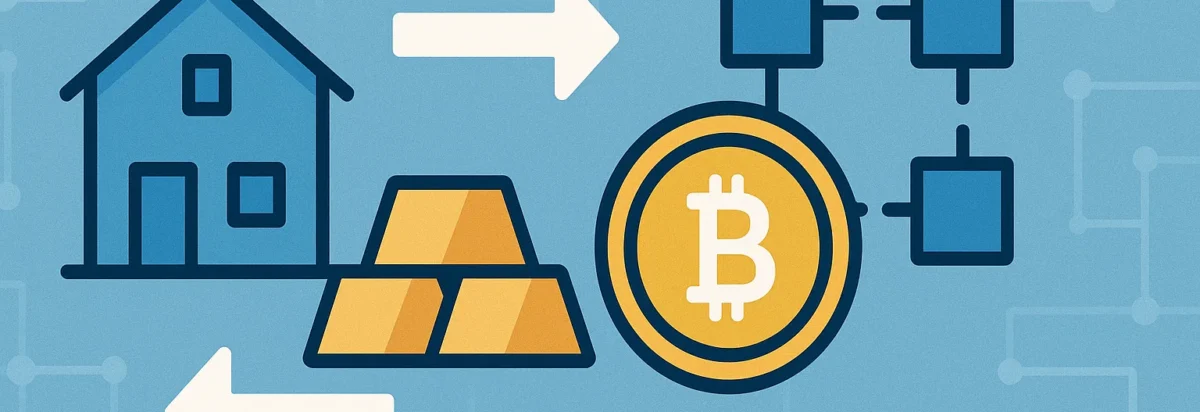
The crypto industry is no longer just about digital currencies. In 2025, the tokenization of real-world assets (RWA) has become one of the fastest-growing trends in the blockchain space. From real estate to gold, more physical assets are being digitized and traded through blockchain, opening doors to fractional ownership, improved liquidity, and borderless investment.
This trend is fundamentally reshaping how traditional markets interact with decentralized technology, creating opportunities once reserved for institutions and high-net-worth individuals.
What Is Tokenization of Real-World Assets?
Breaking Down the Concept
Tokenization refers to the process of converting ownership rights of a real-world asset into a digital token on a blockchain. These tokens represent a claim on an asset and can be traded like cryptocurrencies.
Examples of tokenized assets include:
-
Real estate properties
-
Precious metals like gold
-
Fine art and collectibles
-
Bonds and private equity
-
Commodities and even intellectual property
How It Works
-
Asset Valuation: The physical asset is professionally appraised.
-
Smart Contract Deployment: A digital representation is created through a smart contract.
-
Token Issuance: Tokens are minted, each representing a fraction of the asset.
-
Trading & Custody: These tokens are bought, sold, and stored in digital wallets.
Why Tokenization Is Gaining Momentum
Improved Liquidity
Traditional assets like real estate or gold are historically illiquid. Tokenization allows for fractional ownership, meaning you no longer need to buy an entire apartment or a gold bar. This dramatically lowers the entry barrier for retail investors.
24/7 Global Access
Unlike traditional markets, blockchain operates around the clock. Tokenized assets can be traded globally and instantly, expanding access and eliminating middlemen.
Enhanced Transparency and Security
Thanks to blockchain’s immutable ledger, all ownership changes and transactions are recorded and auditable. This creates trust and reduces fraud, especially in high-value asset markets.
Automation Through Smart Contracts
Smart contracts automate dividend payouts, compliance checks, and voting rights, reducing administrative costs and errors. This brings institutional-grade efficiency to markets that were once manual and opaque.
Tokenization in Real Estate and Gold
Real Estate: Property Investment Reimagined
The tokenization of real estate is revolutionizing property investment:
-
Investors can buy fractional shares of properties, earning rental income and capital appreciation.
-
Projects like RealT and Brickken offer tokenized access to residential and commercial buildings worldwide.
-
Real estate development firms are increasingly raising funds via security token offerings (STOs) instead of traditional financing.
[Link to internal article on blockchain in real estate]
Gold: A Liquid Digital Asset
Gold, a historically trusted store of value, is now more accessible thanks to tokenization:
-
Projects like PAX Gold (PAXG) and Tether Gold (XAUT) back each token with a physical ounce of gold.
-
Investors can hold, trade, or redeem tokens for physical delivery, merging the benefits of digital liquidity with real-world value.
These gold-backed tokens also offer inflation protection and portfolio diversification, especially in volatile economic conditions.
Institutional Adoption Fuels Growth
Banks and Asset Managers Join In
Major financial institutions are jumping on the tokenization wave. BlackRock, JPMorgan, and HSBC are exploring tokenized securities and funds, bringing legitimacy and liquidity to the space.
In April 2025, BlackRock tokenized a $100 million bond on Ethereum, marking a significant step toward mainstream financial adoption of tokenized RWAs.
Governments Testing the Waters
Countries like Singapore, Switzerland, and the UAE are creating regulatory sandboxes and legal frameworks to support tokenized asset markets. These jurisdictions aim to balance innovation with investor protection.
Challenges and Considerations
Regulatory Uncertainty
Tokenized assets often fall into legal gray areas. Are they securities, commodities, or something else entirely? This ambiguity hinders widespread adoption and limits institutional participation.
Custody and Compliance
Proper custody solutions and AML/KYC mechanisms are essential for secure and legal operations. Integrating blockchain systems with traditional financial institutions remains a work in progress.
Market Fragmentation
Many tokenization platforms are not interoperable, which can result in liquidity silos and technical complexity for investors.
The Future of Tokenized Assets
Multi-Trillion Dollar Potential
According to Boston Consulting Group, tokenized assets could represent $16 trillion in value by 2030. As tokenization expands to more sectors—such as carbon credits, insurance policies, and even music rights—the market scope widens.
The Rise of Real-World DeFi
Real-world assets are now entering Decentralized Finance (DeFi) ecosystems. Platforms are offering loans backed by tokenized real estate or gold, bridging traditional finance and blockchain in new and powerful ways.
More Inclusive Capital Markets
Tokenization could be the key to democratizing finance, allowing individuals in developing countries to invest in global assets, and giving small businesses alternative ways to raise capital.
Expert Perspectives
Maria Fernandez, Blockchain Strategist
“Tokenization will do for real-world assets what ETFs did for stock markets—boost liquidity, transparency, and access.”
David Lam, CEO of AssetChain
“This is not a crypto fad. Tokenized RWAs are infrastructure for the future of finance.”
Conclusion
The tokenization of real-world assets is no longer a futuristic concept—it’s happening now and gaining speed. By converting tangible value into blockchain-based tokens, this innovation offers greater accessibility, transparency, and global liquidity.
While challenges remain, the opportunities are vast. From gold to real estate, the shift toward digital ownership is transforming how the world thinks about investment, finance, and property. As infrastructure matures and regulations evolve, tokenized assets are poised to become a fundamental pillar of the next financial era.
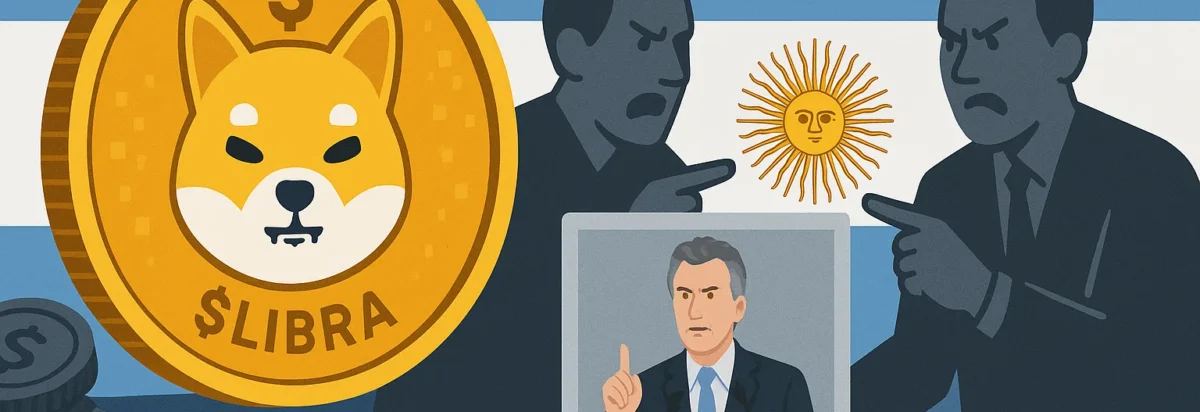
The Meme Coin That Rocked Argentina’s Political Landscape
Argentina is no stranger to economic upheaval, but few expected a meme coin to be at the heart of a national scandal. The recent collapse of $LIBRA, a cryptocurrency widely believed to be endorsed by Argentine President Javier Milei, has sent shockwaves through both political and financial circles.
The fallout from the $LIBRA meme coin scandal underscores the growing intersection between cryptocurrency and politics, particularly in developing nations eager for economic innovation.
What Is the $LIBRA Meme Coin?
A Joke That Turned Serious
Like other meme coins, $LIBRA started as a light-hearted crypto project, leveraging President Milei’s image and libertarian branding. At first, it seemed like a community-driven joke. But as its market cap surged and official-looking endorsements began circulating, $LIBRA took on a new, dangerous seriousness.
Political Involvement and Influence
President Javier Milei, a self-described “anarcho-capitalist,” has long expressed support for cryptocurrencies as a tool to escape traditional banking. However, Milei’s alleged support for $LIBRA blurred the lines between political ideology and financial speculation. Many investors—both domestic and international—took his words as implicit endorsement.
The Collapse and Investor Fallout
Sudden Dumping, Massive Losses
In early July 2025, the $LIBRA coin saw a sudden and catastrophic price drop—over 85% in 48 hours. The cause? A series of large wallet dumps, likely orchestrated by early insiders, triggered panic selling. Investors who had bought in during the hype lost millions.
Accusations of Rug Pull
Crypto analysts were quick to label $LIBRA a rug pull—a scam in which developers pump a coin’s value and then abruptly withdraw liquidity. While direct involvement by government officials remains unproven, screenshots of Milei’s past tweets and videos praising $LIBRA have gone viral, sparking allegations of complicity.
[Link to internal article on how to spot a rug pull]
Political Backlash: Milei Under Fire
Opposition Demands Investigation
Argentina’s political opposition has seized on the scandal. Lawmakers have demanded a full investigation into Milei’s connections with the project. Some are even calling for sanctions or impeachment proceedings, arguing that the President misused his influence to promote a speculative and risky investment.
Public Trust Erodes
Trust in Milei’s leadership has taken a hit. Citizens feel betrayed—especially the young crypto-savvy voters who were previously enthusiastic about his libertarian agenda. Public sentiment has turned sour as personal savings evaporated almost overnight.
Crypto Populism: A Dangerous Trend?
Politicians and Memecoins
The $LIBRA scandal is not an isolated case. Around the world, politicians are increasingly being linked to meme coin promotions, either directly or through social media influencers. These projects often play on the candidate’s image, mixing humor with false promises of financial gains.
False Hope in Economic Despair
In countries like Argentina, where inflation runs rampant and the peso struggles, crypto often appears as a beacon of hope. Scams like $LIBRA exploit this desperation by wrapping themselves in the language of freedom and financial sovereignty, even as they enrich only a select few.
[Link to internal article on crypto and inflation in Latin America]
Regulatory and Legal Consequences
Argentine SEC Steps In
In response to mounting public pressure, Argentina’s Comisión Nacional de Valores (CNV) has launched a formal inquiry into the $LIBRA project. Investigators are exploring whether the coin violated securities laws or engaged in deceptive marketing.
Calls for Global Crypto Regulation
The $LIBRA incident has reignited global calls for stricter regulation of meme coins and political endorsements in crypto. Legal experts argue that there should be clearer rules when public officials are associated—formally or informally—with financial products.
Expert Opinions
Dr. Lucia Barrios, Political Analyst
“$LIBRA shows how political branding and financial technology can become a toxic mix. The public often doesn’t distinguish between a meme and a legitimate endorsement.”
Nicolás Marquez, Blockchain Researcher
“This scandal isn’t just about Milei or Argentina. It’s a warning to all crypto investors: meme coins are volatile, often manipulated, and rarely offer long-term value.”
Lessons for Investors
Don’t Trust Hype or Faces
Investing based on celebrity or political endorsement is extremely risky—especially in the unregulated world of meme coins. Always do your own research (DYOR).
Diversify and Secure
Avoid putting large portions of your portfolio into a single, speculative asset. Also, use secure wallets and double-check who is behind a crypto project before investing.
Track Smart Contracts
Check if the smart contract is verified, how liquidity is locked, and whether the development team is doxxed (i.e., their identities are public and verifiable).
Conclusion
The $LIBRA meme coin scandal in Argentina reveals just how dangerous the intersection of politics and cryptocurrency can be. When economic desperation meets unchecked digital hype, the result is often financial disaster.
President Javier Milei now faces growing scrutiny for his role in promoting a coin that many saw as a joke—until it wasn’t. Whether this will affect his political future remains to be seen. For now, the damage is done, and the lesson is clear: in the world of crypto, not everything that glitters is gold.

The Growing Threat of Crypto-Related Kidnappings
In recent years, France has witnessed a worrying trend: the rise of crypto-related kidnappings. Criminals are increasingly targeting individuals believed to possess significant cryptocurrency holdings. These incidents often involve threats, physical violence, or coercion to gain access to victims’ digital wallets.
The target keyword “crypto-related kidnappings” is now at the center of discussions among law enforcement, cybersecurity experts, and the crypto community. While cryptocurrencies offer decentralized control, they also come with risks that criminals are now exploiting in very physical ways.
Why Crypto Makes You a Target
Pseudonymity vs. Anonymity
Cryptocurrencies like Bitcoin are often perceived as anonymous, but this is a misconception. Most are pseudonymous, meaning transactions are recorded on a public ledger and can be traced with the right tools. However, this doesn’t stop criminals from assuming that digital assets can be transferred without trace.
Portable Wealth
Unlike traditional assets, cryptocurrencies can be stored on a mobile phone or a USB drive. This portability makes them highly attractive to kidnappers who can force a transfer within minutes.
Lack of Regulation
Although France has implemented strong financial regulations, crypto regulations are still evolving. Criminals often exploit these gray areas to launder stolen funds or hide transactions across borders.
Real-Life Cases Making Headlines
High-Profile Victims
Recent media coverage has exposed cases where French entrepreneurs, tech investors, and crypto influencers have been kidnapped or violently coerced into handing over their private keys. In one incident in Paris, a crypto investor was held at gunpoint and forced to make a large transfer from his digital wallet.
Criminal Gangs Involved
According to France’s Ministry of the Interior, organized crime groups are now including crypto-related kidnapping in their repertoire. These are not isolated incidents but appear to be part of a growing criminal trend.
[Link to internal article on digital asset safety]
Government and Law Enforcement Response
Increased Police Training
Police forces in major French cities, especially Paris, Lyon, and Marseille, are now receiving specialized training in handling crypto-related crimes. Officers are being taught how to trace blockchain transactions and how to manage victims who are coerced into transferring funds.
Legislative Proposals
France’s government is exploring new laws to regulate crypto ownership, including requiring better KYC (Know Your Customer) standards for crypto wallets. The goal is to make it harder for criminals to convert stolen digital assets into fiat currency.
International Cooperation
Since cryptocurrency is borderless, France is cooperating with Europol and Interpol to track stolen assets across jurisdictions. This has led to several high-profile arrests in the past year.
Staying Safe: How to Protect Yourself
1. Use Cold Storage
Avoid keeping large sums of crypto on mobile devices or online wallets. Instead, use cold storage options like hardware wallets, which are harder to access under duress.
2. Limit Public Exposure
If you’re a crypto investor or influencer, avoid sharing your portfolio or success online. This can make you an easy target for criminals scanning social media platforms.
3. Enable Multi-Signature Protection
Set up multi-sig wallets, which require more than one private key to authorize a transaction. This can prevent forced transfers even in a kidnapping scenario.
4. Know the Law
Stay informed about local regulations and protection mechanisms. Understanding your rights and available security tools is your first defense.
[Link to internal article on crypto security best practices]
Crypto’s Traceability: A Double-Edged Sword
Although criminals may believe cryptocurrencies are untraceable, blockchain technology is inherently transparent. Each transaction is recorded on a public ledger. Law enforcement agencies now use advanced forensic tools like Chainalysis or Elliptic to trace stolen funds.
According to Europol, over 70% of crypto ransom cases in 2024 have led to asset recovery due to blockchain tracing. This should serve as a deterrent, but not all criminals are aware of the traceability involved.
Experts Weigh In
Cybersecurity Analyst, Jean Moreau
“The rise in crypto-related kidnappings is a symptom of how valuable digital assets have become. Awareness and security education are crucial.”
Crypto Legal Advisor, Camille Dubois
“Victims often don’t report crypto theft because they assume nothing can be done. But in reality, blockchain can help us recover assets if action is taken quickly.”
External Resources
Conclusion
The surge in crypto-related kidnappings in France is a disturbing but revealing trend. As digital assets become more mainstream, they also become more attractive to criminals. However, crypto’s traceability, combined with improved law enforcement capabilities, offers hope.
By understanding the risks, implementing security measures, and supporting better regulations, individuals and institutions can defend against this new form of criminal threat.
The world of crypto offers freedom and innovation—but with great power comes great responsibility.
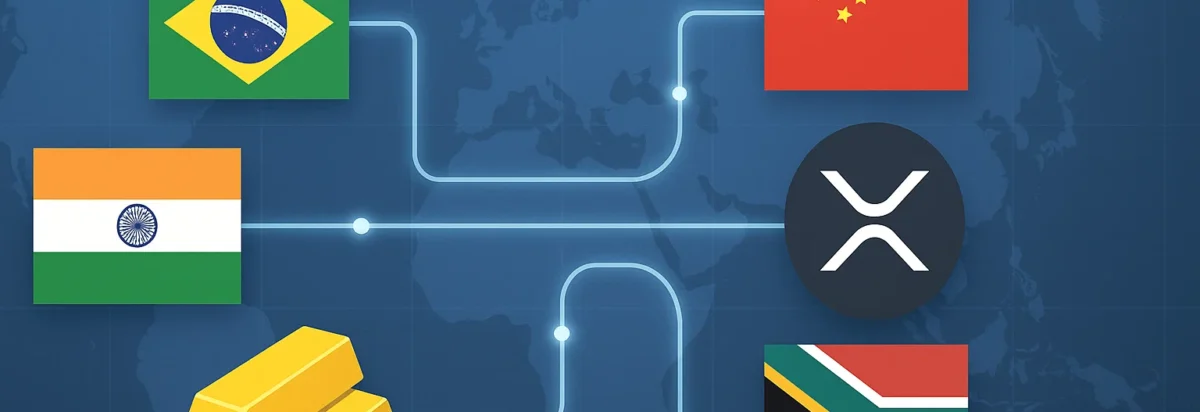
BRICS Nations Consider Adopting Ripple’s XRP for Trade
The BRICS alliance—comprising Brazil, Russia, India, China, and South Africa—is reportedly exploring the adoption of Ripple’s XRP to facilitate gold-backed international trade. If implemented, this strategy could mark a transformative shift in global economics, potentially reducing the BRICS bloc’s reliance on the U.S. dollar as a settlement currency.
This bold move comes amid growing dissatisfaction with dollar dominance, economic sanctions, and a push for financial sovereignty. Ripple’s XRP, known for its speed, low transaction fees, and interoperability, may provide the technological foundation needed for a decentralized, real-time, cross-border payment infrastructure.
The BRICS Bloc’s Strategic Interest in XRP
Challenging the Dollar’s Dominance
The BRICS nations have long expressed concern about the U.S. dollar’s outsized influence in global trade. Over 85% of all international transactions still rely on the dollar, giving the U.S. unmatched leverage over the global economy.
By considering a blockchain-based alternative like XRP, BRICS aims to:
-
Increase monetary independence
-
Avoid U.S.-imposed financial sanctions
-
Facilitate direct trade settlements among member states
Gold-Backed Trade: A New Settlement Standard?
Reports indicate that BRICS may also consider backing trade settlements with physical gold reserves, using Ripple’s XRP ledger as the digital rails for transaction processing. This combination of hard asset backing and blockchain technology would be unique, blending traditional and modern finance.
Gold-backed digital transactions would enhance trust and transparency, particularly in emerging markets where currency volatility is high.
Why XRP? The Technology Behind the Interest
Speed and Efficiency
Ripple’s XRP ledger is designed to handle 1,500 transactions per second, settling in just 3–5 seconds. For comparison, SWIFT payments can take 1–5 business days, depending on the destination. This dramatic speed advantage is critical for trade finance.
Low Cost and Scalability
XRP transactions cost a fraction of a cent, regardless of amount or destination. This cost-effectiveness makes it suitable for high-volume cross-border settlements, including those related to commodities, raw materials, and industrial exports—core sectors for BRICS economies.
Decentralized Ledger Technology
Ripple’s network does not rely on traditional mining like Bitcoin. Instead, it uses a consensus algorithm validated by independent nodes, ensuring fast confirmation without heavy energy consumption. It supports smart contracts and asset tokenization, making it ideal for complex trade ecosystems.
Global Reactions and Economic Implications
Disrupting the SWIFT System
A shift toward Ripple’s XRP by BRICS could weaken the SWIFT interbank system, which currently facilitates the vast majority of cross-border payments. Many BRICS members, especially Russia and China, have experienced SWIFT-related restrictions due to geopolitical tensions.
By adopting XRP or similar blockchain solutions, these nations could effectively bypass Western-dominated financial infrastructure.
Strengthening BRICS’ Economic Integration
XRP adoption could further integrate the BRICS economies, simplifying trade and settlement across very different monetary systems. For example:
-
China could pay Brazil for raw materials using XRP, avoiding currency exchange complications.
-
Russia could sell oil or wheat to India with instant payment clearance.
This mechanism would encourage intra-BRICS trade, supporting the bloc’s ambition to act as a counterweight to the G7.
Potential Challenges and Regulatory Concerns
U.S. Legal Pressure on Ripple
One obstacle to XRP’s global adoption is Ripple’s ongoing legal battle with the U.S. Securities and Exchange Commission (SEC). Although recent rulings have favored Ripple, uncertainty still lingers over XRP’s regulatory classification.
This could make some central banks cautious, especially those with strong economic ties to the U.S.
Infrastructure and Trust
To implement XRP for gold-backed trade, BRICS nations would need:
-
Interoperable banking infrastructure
-
Agreements on valuation mechanisms
-
Shared custody of gold reserves
-
Standardized compliance procedures
Building this system across diverse legal, political, and technological landscapes will be a complex, time-intensive process.
Historical Context: BRICS and the Quest for Monetary Autonomy
A Longstanding Goal
BRICS has consistently advocated for reforming global financial institutions like the IMF and World Bank. The idea of creating a BRICS currency or payment system has been circulating for over a decade.
Ripple’s XRP provides a ready-made solution—one that doesn’t require creating a brand-new asset from scratch. Instead, it offers immediate utility through existing technology and a growing network of institutional users.
De-Dollarization Momentum
The interest in XRP also aligns with a broader trend of de-dollarization. Countries like China and Russia have been actively reducing dollar reserves, promoting bilateral trade in local currencies, and investing in digital currency initiatives.
XRP could accelerate this shift by offering a neutral, borderless, and efficient medium of exchange.
XRP’s Current Adoption Beyond BRICS
Ripple’s Growing Network
Ripple has already partnered with central banks, financial institutions, and remittance providers in over 40 countries. Notable users include:
-
Santander Bank
-
SBI Holdings
-
Tranglo (Asia-Pacific)
-
Novatti Group (Australia)
Ripple also recently launched Ripple CBDC Platform, helping central banks build custom digital currencies on the XRP Ledger—an important step that could attract BRICS interest in programmable, tokenized trade assets.
Conclusion
The possibility that BRICS nations may adopt Ripple’s XRP for gold-backed trade represents more than a technological upgrade—it’s a strategic maneuver with deep geopolitical and economic implications. By reducing reliance on the U.S. dollar and building a blockchain-powered trade infrastructure, BRICS is taking concrete steps toward monetary sovereignty.
While challenges remain, especially in regulatory and interoperability terms, the case for XRP is strong: it’s fast, efficient, scalable, and already battle-tested. If BRICS proceeds with XRP adoption, it could mark the beginning of a new era in international trade, one driven not by fiat dominance—but by decentralized innovation.