£0.00


Introduction: The Rise of the Euro Stablecoin
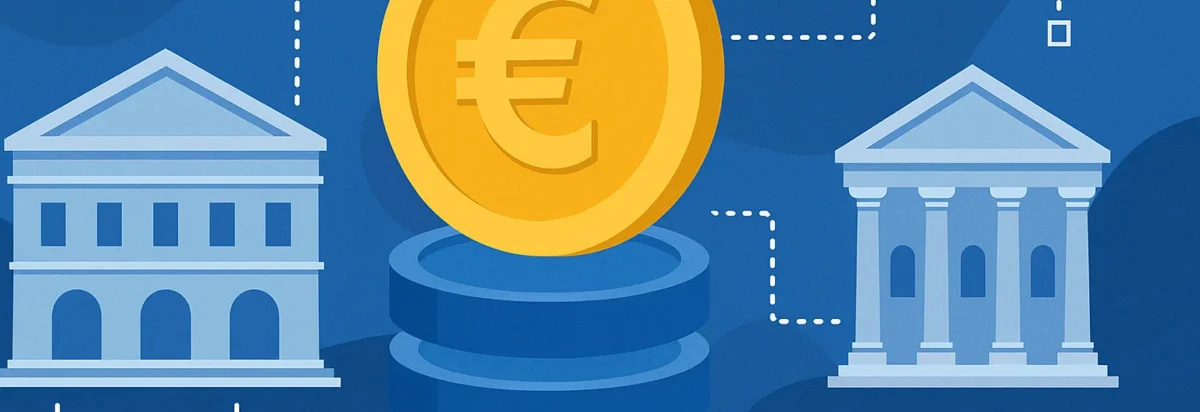
The concept of a euro stablecoin is moving from theory to reality. Nine of Europe’s largest financial institutions — including ING, UniCredit, CaixaBank, and others — have joined forces to create a new company in Amsterdam. Their goal is ambitious yet clear: launch a regulated, bank-backed euro stablecoin by the second half of 2026. This initiative comes at a pivotal moment, with the EU’s new Markets in Crypto-Assets (MiCA) regulation set to define how digital assets can operate across the bloc.
The move raises several critical questions: why are these banks taking this step now, what challenges lie ahead, and how will this impact the European payments landscape?
Why European Banks Are Entering the Stablecoin Market
Consolidating Control in a Fragmented Payments System
For years, the European payments ecosystem has been fragmented across borders, with national schemes competing alongside international players like Visa, Mastercard, and PayPal. By introducing a euro stablecoin, European banks hope to consolidate a secure, unified digital payments rail under European oversight.
This project is not about competing with the digital euro proposed by the European Central Bank (ECB). Instead, it aims to provide an industry-driven solution for faster, cheaper, and more transparent payments within the EU and globally.
Protecting European Sovereignty in Finance
Stablecoins tied to the U.S. dollar — like Tether’s USDT and Circle’s USDC — dominate the global crypto payments market. European regulators and banks fear that relying too heavily on dollar-backed tokens could weaken monetary sovereignty. A euro stablecoin ensures that digital payments within Europe remain anchored to the euro, strengthening its role in the digital economy.
A Strategic Response to MiCA
The EU’s MiCA framework, which will take full effect by 2024–2025, provides legal clarity for stablecoins. For banks, this reduces regulatory uncertainty and opens the door for compliant, large-scale projects. By timing the launch for H2 2026, the consortium ensures its product aligns fully with MiCA requirements.
How the Euro Stablecoin Would Work
Bank-Backed and Fully Collateralized
Unlike algorithmic stablecoins that rely on complex mechanisms to maintain parity, the planned euro stablecoin will be fully collateralized. Each token will be backed 1:1 with deposits held by participating banks. This guarantees stability, credibility, and compliance — a major advantage over private crypto issuers.
Integrated into Banking and Retail Payments
The euro stablecoin is expected to integrate seamlessly with existing payment systems. Customers could use it for peer-to-peer transfers, e-commerce payments, and even cross-border settlements. By leveraging blockchain infrastructure, transactions can be executed in seconds rather than days.
A Platform for Innovation
Beyond retail payments, the project could enable programmable money features, such as conditional payments for supply chain finance or automated settlement for securities trading. This positions the euro stablecoin not only as a payment tool but also as a catalyst for digital finance innovation.
What Changes for European Payments
Faster, Cheaper Cross-Border Transfers
Currently, international transfers in Europe can take several days and involve high fees. A euro stablecoin, operating on blockchain rails, would enable near-instant settlement at a fraction of the cost. This could drastically improve efficiency for both consumers and businesses.
Competition with Tech Giants
Big Tech firms, such as Apple and Google, increasingly dominate digital wallets and payment solutions. By launching a euro stablecoin, banks regain a competitive edge. They can offer their customers a trusted, bank-regulated alternative to third-party apps.
Strengthening the Euro’s Role Globally
With a credible euro stablecoin, European institutions can promote the euro as a digital reserve currency. This could enhance its position against the U.S. dollar in global trade and finance.
The Role of Regulation: MiCA in the Spotlight
Clarity and Trust Through MiCA
MiCA represents a milestone in global crypto regulation. It sets clear rules for stablecoin issuers, requiring transparency, robust reserves, and regulatory supervision. The euro stablecoin initiative directly aligns with these standards, ensuring compliance and investor trust.
Balancing Innovation and Oversight
While MiCA provides clarity, it also introduces strict obligations. Issuers must hold sufficient reserves, publish detailed whitepapers, and undergo continuous monitoring. Banks, however, are better positioned than startups to meet these obligations. Their existing compliance infrastructure gives them a significant advantage.
Interaction with the Digital Euro
The ECB is exploring its own central bank digital currency (CBDC), the digital euro, with pilot projects already underway. The euro stablecoin will likely coexist with this initiative. Whereas the CBDC will be issued by the central bank, the stablecoin will be a private-sector solution, offering flexibility and innovation.
Challenges Ahead for the Euro Stablecoin
Building Public Trust
Trust remains the biggest hurdle. Many consumers associate stablecoins with volatility, hacks, or failed projects. For success, the euro stablecoin must differentiate itself as a secure, bank-backed digital currency.
Interoperability Across Borders
While blockchain offers speed, interoperability remains a challenge. Ensuring seamless integration across banks, payment providers, and EU countries will require significant coordination.
Competing With Existing Stablecoins
Dollar-based stablecoins enjoy a strong network effect. Convincing businesses and consumers to adopt a euro-backed alternative will take time and strong incentives.
The Bigger Picture: Toward a Digital Europe
The euro stablecoin initiative is more than a technical experiment. It reflects Europe’s broader ambition to strengthen its financial sovereignty in a rapidly digitizing world. With MiCA as a regulatory foundation, and banks providing the infrastructure, Europe is positioning itself as a leader in regulated digital finance.
If successful, the euro stablecoin could redefine how Europeans pay, transfer money, and interact with digital assets. It may also accelerate the global adoption of blockchain in mainstream finance.
Conclusion: A Defining Moment for European Finance
The decision by nine leading banks to launch a euro stablecoin by 2026 is a historic milestone. It demonstrates how traditional finance can embrace blockchain technology while staying fully compliant with regulation. For Europe, this move could mean faster payments, stronger monetary sovereignty, and new opportunities for digital innovation.
As MiCA comes into force and the ECB explores its digital euro, the financial landscape is set for profound transformation. The euro stablecoin may well become the missing link that brings Europe’s payments system into the digital age.
Blockchain Enters the Physical World
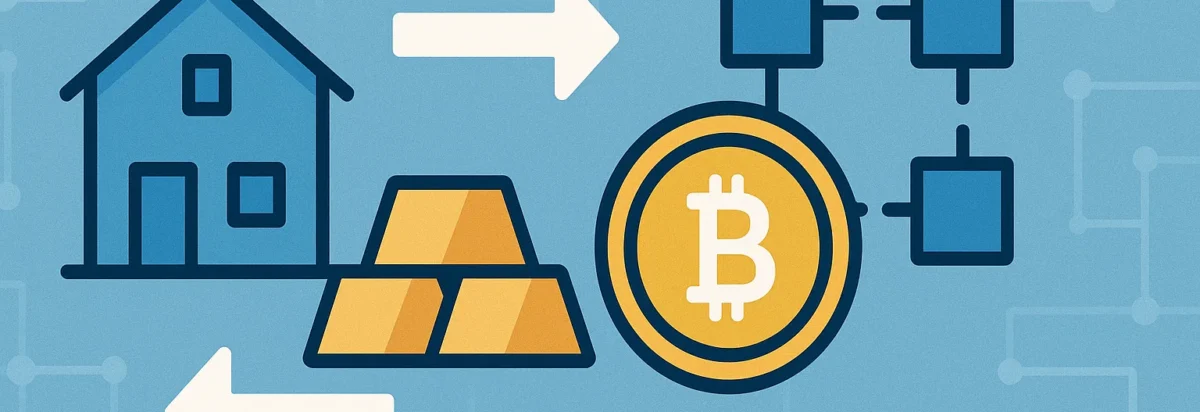
The crypto industry is no longer just about digital currencies. In 2025, the tokenization of real-world assets (RWA) has become one of the fastest-growing trends in the blockchain space. From real estate to gold, more physical assets are being digitized and traded through blockchain, opening doors to fractional ownership, improved liquidity, and borderless investment.
This trend is fundamentally reshaping how traditional markets interact with decentralized technology, creating opportunities once reserved for institutions and high-net-worth individuals.
What Is Tokenization of Real-World Assets?
Breaking Down the Concept
Tokenization refers to the process of converting ownership rights of a real-world asset into a digital token on a blockchain. These tokens represent a claim on an asset and can be traded like cryptocurrencies.
Examples of tokenized assets include:
-
Real estate properties
-
Precious metals like gold
-
Fine art and collectibles
-
Bonds and private equity
-
Commodities and even intellectual property
How It Works
-
Asset Valuation: The physical asset is professionally appraised.
-
Smart Contract Deployment: A digital representation is created through a smart contract.
-
Token Issuance: Tokens are minted, each representing a fraction of the asset.
-
Trading & Custody: These tokens are bought, sold, and stored in digital wallets.
Why Tokenization Is Gaining Momentum
Improved Liquidity
Traditional assets like real estate or gold are historically illiquid. Tokenization allows for fractional ownership, meaning you no longer need to buy an entire apartment or a gold bar. This dramatically lowers the entry barrier for retail investors.
24/7 Global Access
Unlike traditional markets, blockchain operates around the clock. Tokenized assets can be traded globally and instantly, expanding access and eliminating middlemen.
Enhanced Transparency and Security
Thanks to blockchain’s immutable ledger, all ownership changes and transactions are recorded and auditable. This creates trust and reduces fraud, especially in high-value asset markets.
Automation Through Smart Contracts
Smart contracts automate dividend payouts, compliance checks, and voting rights, reducing administrative costs and errors. This brings institutional-grade efficiency to markets that were once manual and opaque.
Tokenization in Real Estate and Gold
Real Estate: Property Investment Reimagined
The tokenization of real estate is revolutionizing property investment:
-
Investors can buy fractional shares of properties, earning rental income and capital appreciation.
-
Projects like RealT and Brickken offer tokenized access to residential and commercial buildings worldwide.
-
Real estate development firms are increasingly raising funds via security token offerings (STOs) instead of traditional financing.
[Link to internal article on blockchain in real estate]
Gold: A Liquid Digital Asset
Gold, a historically trusted store of value, is now more accessible thanks to tokenization:
-
Projects like PAX Gold (PAXG) and Tether Gold (XAUT) back each token with a physical ounce of gold.
-
Investors can hold, trade, or redeem tokens for physical delivery, merging the benefits of digital liquidity with real-world value.
These gold-backed tokens also offer inflation protection and portfolio diversification, especially in volatile economic conditions.
Institutional Adoption Fuels Growth
Banks and Asset Managers Join In
Major financial institutions are jumping on the tokenization wave. BlackRock, JPMorgan, and HSBC are exploring tokenized securities and funds, bringing legitimacy and liquidity to the space.
In April 2025, BlackRock tokenized a $100 million bond on Ethereum, marking a significant step toward mainstream financial adoption of tokenized RWAs.
Governments Testing the Waters
Countries like Singapore, Switzerland, and the UAE are creating regulatory sandboxes and legal frameworks to support tokenized asset markets. These jurisdictions aim to balance innovation with investor protection.
Challenges and Considerations
Regulatory Uncertainty
Tokenized assets often fall into legal gray areas. Are they securities, commodities, or something else entirely? This ambiguity hinders widespread adoption and limits institutional participation.
Custody and Compliance
Proper custody solutions and AML/KYC mechanisms are essential for secure and legal operations. Integrating blockchain systems with traditional financial institutions remains a work in progress.
Market Fragmentation
Many tokenization platforms are not interoperable, which can result in liquidity silos and technical complexity for investors.
The Future of Tokenized Assets
Multi-Trillion Dollar Potential
According to Boston Consulting Group, tokenized assets could represent $16 trillion in value by 2030. As tokenization expands to more sectors—such as carbon credits, insurance policies, and even music rights—the market scope widens.
The Rise of Real-World DeFi
Real-world assets are now entering Decentralized Finance (DeFi) ecosystems. Platforms are offering loans backed by tokenized real estate or gold, bridging traditional finance and blockchain in new and powerful ways.
More Inclusive Capital Markets
Tokenization could be the key to democratizing finance, allowing individuals in developing countries to invest in global assets, and giving small businesses alternative ways to raise capital.
Expert Perspectives
Maria Fernandez, Blockchain Strategist
“Tokenization will do for real-world assets what ETFs did for stock markets—boost liquidity, transparency, and access.”
David Lam, CEO of AssetChain
“This is not a crypto fad. Tokenized RWAs are infrastructure for the future of finance.”
Conclusion
The tokenization of real-world assets is no longer a futuristic concept—it’s happening now and gaining speed. By converting tangible value into blockchain-based tokens, this innovation offers greater accessibility, transparency, and global liquidity.
While challenges remain, the opportunities are vast. From gold to real estate, the shift toward digital ownership is transforming how the world thinks about investment, finance, and property. As infrastructure matures and regulations evolve, tokenized assets are poised to become a fundamental pillar of the next financial era.
The Meme Coin That Rocked Argentina’s Political Landscape
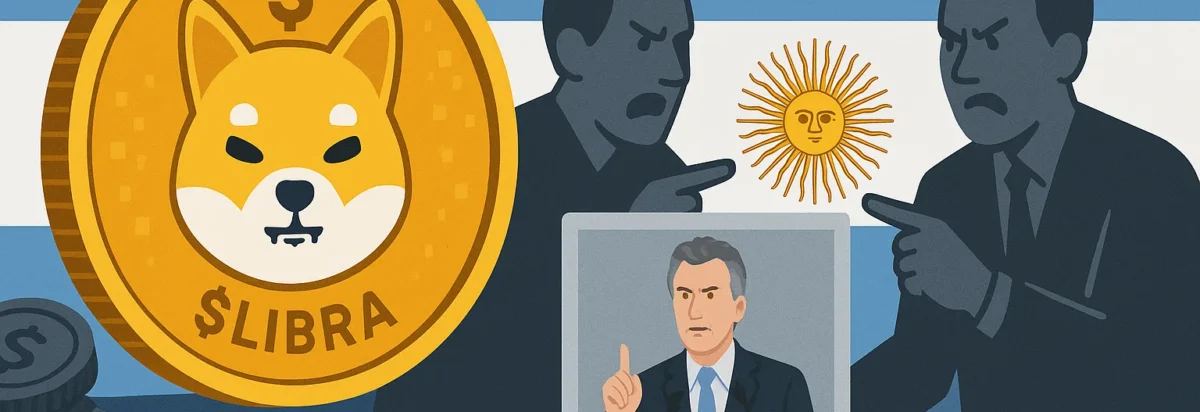
Argentina is no stranger to economic upheaval, but few expected a meme coin to be at the heart of a national scandal. The recent collapse of $LIBRA, a cryptocurrency widely believed to be endorsed by Argentine President Javier Milei, has sent shockwaves through both political and financial circles.
The fallout from the $LIBRA meme coin scandal underscores the growing intersection between cryptocurrency and politics, particularly in developing nations eager for economic innovation.
What Is the $LIBRA Meme Coin?
A Joke That Turned Serious
Like other meme coins, $LIBRA started as a light-hearted crypto project, leveraging President Milei’s image and libertarian branding. At first, it seemed like a community-driven joke. But as its market cap surged and official-looking endorsements began circulating, $LIBRA took on a new, dangerous seriousness.
Political Involvement and Influence
President Javier Milei, a self-described “anarcho-capitalist,” has long expressed support for cryptocurrencies as a tool to escape traditional banking. However, Milei’s alleged support for $LIBRA blurred the lines between political ideology and financial speculation. Many investors—both domestic and international—took his words as implicit endorsement.
The Collapse and Investor Fallout
Sudden Dumping, Massive Losses
In early July 2025, the $LIBRA coin saw a sudden and catastrophic price drop—over 85% in 48 hours. The cause? A series of large wallet dumps, likely orchestrated by early insiders, triggered panic selling. Investors who had bought in during the hype lost millions.
Accusations of Rug Pull
Crypto analysts were quick to label $LIBRA a rug pull—a scam in which developers pump a coin’s value and then abruptly withdraw liquidity. While direct involvement by government officials remains unproven, screenshots of Milei’s past tweets and videos praising $LIBRA have gone viral, sparking allegations of complicity.
[Link to internal article on how to spot a rug pull]
Political Backlash: Milei Under Fire
Opposition Demands Investigation
Argentina’s political opposition has seized on the scandal. Lawmakers have demanded a full investigation into Milei’s connections with the project. Some are even calling for sanctions or impeachment proceedings, arguing that the President misused his influence to promote a speculative and risky investment.
Public Trust Erodes
Trust in Milei’s leadership has taken a hit. Citizens feel betrayed—especially the young crypto-savvy voters who were previously enthusiastic about his libertarian agenda. Public sentiment has turned sour as personal savings evaporated almost overnight.
Crypto Populism: A Dangerous Trend?
Politicians and Memecoins
The $LIBRA scandal is not an isolated case. Around the world, politicians are increasingly being linked to meme coin promotions, either directly or through social media influencers. These projects often play on the candidate’s image, mixing humor with false promises of financial gains.
False Hope in Economic Despair
In countries like Argentina, where inflation runs rampant and the peso struggles, crypto often appears as a beacon of hope. Scams like $LIBRA exploit this desperation by wrapping themselves in the language of freedom and financial sovereignty, even as they enrich only a select few.
[Link to internal article on crypto and inflation in Latin America]
Regulatory and Legal Consequences
Argentine SEC Steps In
In response to mounting public pressure, Argentina’s Comisión Nacional de Valores (CNV) has launched a formal inquiry into the $LIBRA project. Investigators are exploring whether the coin violated securities laws or engaged in deceptive marketing.
Calls for Global Crypto Regulation
The $LIBRA incident has reignited global calls for stricter regulation of meme coins and political endorsements in crypto. Legal experts argue that there should be clearer rules when public officials are associated—formally or informally—with financial products.
Expert Opinions
Dr. Lucia Barrios, Political Analyst
“$LIBRA shows how political branding and financial technology can become a toxic mix. The public often doesn’t distinguish between a meme and a legitimate endorsement.”
Nicolás Marquez, Blockchain Researcher
“This scandal isn’t just about Milei or Argentina. It’s a warning to all crypto investors: meme coins are volatile, often manipulated, and rarely offer long-term value.”
Lessons for Investors
Don’t Trust Hype or Faces
Investing based on celebrity or political endorsement is extremely risky—especially in the unregulated world of meme coins. Always do your own research (DYOR).
Diversify and Secure
Avoid putting large portions of your portfolio into a single, speculative asset. Also, use secure wallets and double-check who is behind a crypto project before investing.
Track Smart Contracts
Check if the smart contract is verified, how liquidity is locked, and whether the development team is doxxed (i.e., their identities are public and verifiable).
Conclusion
The $LIBRA meme coin scandal in Argentina reveals just how dangerous the intersection of politics and cryptocurrency can be. When economic desperation meets unchecked digital hype, the result is often financial disaster.
President Javier Milei now faces growing scrutiny for his role in promoting a coin that many saw as a joke—until it wasn’t. Whether this will affect his political future remains to be seen. For now, the damage is done, and the lesson is clear: in the world of crypto, not everything that glitters is gold.

The Growing Threat of Crypto-Related Kidnappings
In recent years, France has witnessed a worrying trend: the rise of crypto-related kidnappings. Criminals are increasingly targeting individuals believed to possess significant cryptocurrency holdings. These incidents often involve threats, physical violence, or coercion to gain access to victims’ digital wallets.
The target keyword “crypto-related kidnappings” is now at the center of discussions among law enforcement, cybersecurity experts, and the crypto community. While cryptocurrencies offer decentralized control, they also come with risks that criminals are now exploiting in very physical ways.
Why Crypto Makes You a Target
Pseudonymity vs. Anonymity
Cryptocurrencies like Bitcoin are often perceived as anonymous, but this is a misconception. Most are pseudonymous, meaning transactions are recorded on a public ledger and can be traced with the right tools. However, this doesn’t stop criminals from assuming that digital assets can be transferred without trace.
Portable Wealth
Unlike traditional assets, cryptocurrencies can be stored on a mobile phone or a USB drive. This portability makes them highly attractive to kidnappers who can force a transfer within minutes.
Lack of Regulation
Although France has implemented strong financial regulations, crypto regulations are still evolving. Criminals often exploit these gray areas to launder stolen funds or hide transactions across borders.
Real-Life Cases Making Headlines
High-Profile Victims
Recent media coverage has exposed cases where French entrepreneurs, tech investors, and crypto influencers have been kidnapped or violently coerced into handing over their private keys. In one incident in Paris, a crypto investor was held at gunpoint and forced to make a large transfer from his digital wallet.
Criminal Gangs Involved
According to France’s Ministry of the Interior, organized crime groups are now including crypto-related kidnapping in their repertoire. These are not isolated incidents but appear to be part of a growing criminal trend.
[Link to internal article on digital asset safety]
Government and Law Enforcement Response
Increased Police Training
Police forces in major French cities, especially Paris, Lyon, and Marseille, are now receiving specialized training in handling crypto-related crimes. Officers are being taught how to trace blockchain transactions and how to manage victims who are coerced into transferring funds.
Legislative Proposals
France’s government is exploring new laws to regulate crypto ownership, including requiring better KYC (Know Your Customer) standards for crypto wallets. The goal is to make it harder for criminals to convert stolen digital assets into fiat currency.
International Cooperation
Since cryptocurrency is borderless, France is cooperating with Europol and Interpol to track stolen assets across jurisdictions. This has led to several high-profile arrests in the past year.
Staying Safe: How to Protect Yourself
1. Use Cold Storage
Avoid keeping large sums of crypto on mobile devices or online wallets. Instead, use cold storage options like hardware wallets, which are harder to access under duress.
2. Limit Public Exposure
If you’re a crypto investor or influencer, avoid sharing your portfolio or success online. This can make you an easy target for criminals scanning social media platforms.
3. Enable Multi-Signature Protection
Set up multi-sig wallets, which require more than one private key to authorize a transaction. This can prevent forced transfers even in a kidnapping scenario.
4. Know the Law
Stay informed about local regulations and protection mechanisms. Understanding your rights and available security tools is your first defense.
[Link to internal article on crypto security best practices]
Crypto’s Traceability: A Double-Edged Sword
Although criminals may believe cryptocurrencies are untraceable, blockchain technology is inherently transparent. Each transaction is recorded on a public ledger. Law enforcement agencies now use advanced forensic tools like Chainalysis or Elliptic to trace stolen funds.
According to Europol, over 70% of crypto ransom cases in 2024 have led to asset recovery due to blockchain tracing. This should serve as a deterrent, but not all criminals are aware of the traceability involved.
Experts Weigh In
Cybersecurity Analyst, Jean Moreau
“The rise in crypto-related kidnappings is a symptom of how valuable digital assets have become. Awareness and security education are crucial.”
Crypto Legal Advisor, Camille Dubois
“Victims often don’t report crypto theft because they assume nothing can be done. But in reality, blockchain can help us recover assets if action is taken quickly.”
External Resources
Conclusion
The surge in crypto-related kidnappings in France is a disturbing but revealing trend. As digital assets become more mainstream, they also become more attractive to criminals. However, crypto’s traceability, combined with improved law enforcement capabilities, offers hope.
By understanding the risks, implementing security measures, and supporting better regulations, individuals and institutions can defend against this new form of criminal threat.
The world of crypto offers freedom and innovation—but with great power comes great responsibility.