£0.00



The ultimate guide to launching an ICO
The ICO industry today is full of various offers. Investors can sort out for a long time, but as a result, they invest their own money in “young” projects, ensuring profit for themselves and developers. Newcomers to the cryptocurrency world are inspired by the success of their experienced teammates, often not understanding the required scale of efforts to successfully reach heights and not too difficult to find an answer to the question: “How to conduct ICO for your project?” The popularization of ICO makes startups more often choose ICO as a means of collecting investments. However, when faced with initial coin placement campaigns, many newbies do not know what plan to take to prepare and launch ICO. In addition, this area is still young, and therefore it is almost impossible to find a definite answer to the question of how to launch your ICO.

How to create a token?
Before you figure out how to hold an ICO in a company and start creating a coin, take the trouble to write White Paper. The need for this is obvious: this document defines the concept of the project in full. Another important point in the description of the ICO exit algorithm for dummies is obviously the technology of creating a digital coin – a token. A variant for beginners is the development of coins based on current cryptocurrencies. The simplest solution is to work with the waves.
What is behind the concept of “digital coin”?
Before selling tokens to crypto investors within the framework of the initial offer, it is worth deciding what this term means. It implies an asset similar to classic stocks, created to attract investment. An investor, after the start-up transition to the Work stage, which occurs after an ICO, can receive a profit from each token or sell them on a cryptocurrency exchange. The token assumes a certain function, which means it represents a certain obligation of the company to its owner. The implementation of obligations is carried out by providing the investor with certain benefits in return for fiat or cryptocurrency funds invested by him earlier in the project.
ICO Legal Status
As is known, IPO is regulated by law. For example, in the United States to participate in the public auction, the company must have a certain form of ownership – a joint stock company. In this case, registration with the Securities and Exchange Commission (SEC) is expected.
Obviously, such an approach greatly complicates the procedure for projects requiring investments. ICO is much easier. At the same time, the process cannot be called either legal or illegal. There are no approved rules in any country according to which it should pass. Therefore, in each case, it is necessary to adapt the company’s actions to the legislative rules that exist in the country in which the enterprise will be registered.

Team for ICO
Any investor is guided not only by the genius of the idea and the relevance of the project but also by the team that deals with it. Therefore, one of the first steps is to compile a list of company members. It is necessary to specify all the data: not only the full name but also provide photos, achievements, profiles in social networks and other information.
At the same time, it is important not only to assemble a productive team but also to ensure its cohesion. It is necessary to exclude the care of specialists, otherwise, it may cause a deterioration in reputation, a drop in confidence and a decrease in the effectiveness of ICO.
Development of website for ICO
For beginners, it’s enough to create a landing page, which must contain the following information:
- project information;
- data about the developer;
- tab with white paper.
On the site, you can also create an office investor. Particular attention should be paid to writing White Paper. Many already know this term. This document is a full-fledged presentation, which should highlight all the strengths of the project, tell the potential investor about its essence and prospects, as well as practical applicability.
Guides
How To Create A Product For Your ICO
How To Write An ICO White Paper
What is Ethereum Classic?
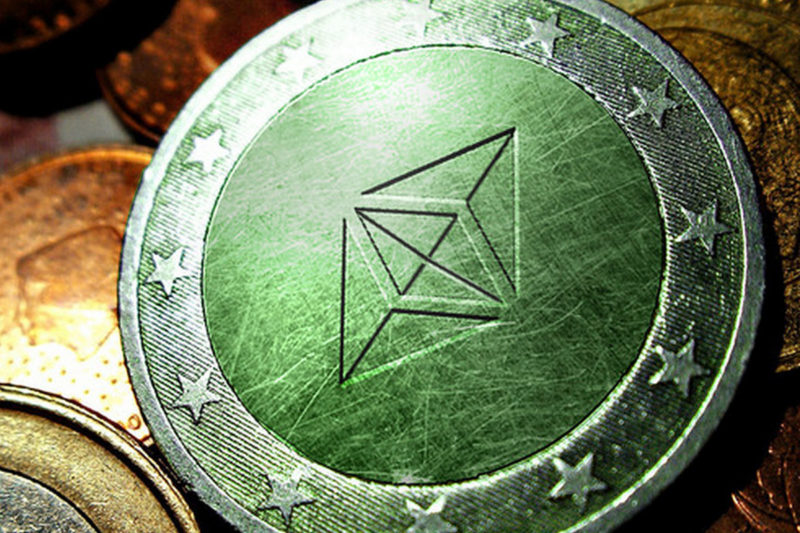
It all started with the largest ICO in history, which was conducted by a decentralized autonomous organization (DAO). This is a venture fund based on Ethereum, which raised $ 150 million. After that, an anonymous attacker took advantage of a previously unknown vulnerability in a smart contract and withdrew $ 55 million from the fund.
To correct the problem, representatives of Ethereum held a hard fork, which divided the currency into two versions, each of which had its own blockchain. In the new version of Ethereum, the funds stolen by the attacker were returned to the owners. As a result, a group of stubborn enthusiasts decided to save and use the old version of Ethereum, which they renamed and made their own currency. This is how Ethereum Classic appeared.

What is more important decentralization or scalability?
Ethereum platform has become a real breakthrough in the cryptocurrency industry. If before this, the blockchain and cryptocurrency were perceived only as a decentralized and anonymous method of making transactions, then thanks to the development of Vitalik Buterin the possibilities of the blockchain were significantly expanded. It was thanks to Ethereum that many projects were developed and financed, which are now successfully developing.
In the future, the platform will be transferred to the algorithm of PoS, which will improve the protection mechanism and will eliminate the possibility of a powerful hacker attack, in which 51% of the computing power of the network is retained by one communication node.
Differences between soft and hard forks
Hardfork is a radical protocol change that helps to make any older transactions do work or the opposite way and requires all users to update their software to the level after hardfork is done. Sometimes you can hear such a thing as softfork.
It means Ethereum Classic is…
The controversial proposal caused a split, which led to the emergence of two different types of the ethereum – two variations of the same old ETH network. Ethereum, which is more popular today, includes the majority of users and leaders of the sphere (including Buterin): they accepted a modified transaction history. A minority that did not accepted the canges created the Ethereum Classic.
Ethereum Classic did not even came close to the success of The Ethtereum, but still exists and feels good. Hardfork showed to the market that ethereum is generally quite stable. Having finished the review of history, let us round the article up with short summary.

What is more important decentralization or scalability?
Ethereum platform has become a real breakthrough in the cryptocurrency industry. If before this, the blockchain and cryptocurrency were perceived only as a decentralized and anonymous method of making transactions, then thanks to the development of Vitalik Buterin the possibilities of the blockchain were significantly expanded. It was thanks to Ethereum that many projects were developed and financed, which are now successfully developing.
In the future, the platform will be transferred to the algorithm of PoS, which will improve the protection mechanism and will eliminate the possibility of a powerful hacker attack, in which 51% of the computing power of the network is retained by one communication node.
Differences between soft and hard forks
Hardfork is a radical protocol change that helps to make any older transactions do work or the opposite way and requires all users to update their software to the level after hardfork is done. Sometimes you can hear such a thing as softfork.
It means Ethereum Classic is…
The controversial proposal caused a split, which led to the emergence of two different types of the ethereum – two variations of the same old ETH network. Ethereum, which is more popular today, includes the majority of users and leaders of the sphere (including Buterin): they accepted a modified transaction history. A minority that did not accepted the canges created the Ethereum Classic.
Ethereum Classic did not even came close to the success of The Ethtereum, but still exists and feels good. Hardfork showed to the market that ethereum is generally quite stable. Having finished the review of history, let us round the article up with short summary.

If you are all set to launch your own ICO company, it is time to decide on how you will market it. ICO marketing takes a vital role in making your ICO company grow. It helps you gain more investors to help fund your project. But how do you really market an ICO company?
Basically, marketing plays a big part in making your ICO venture successful. Without it, you won’t be able to successfully put your ICO tokens in the market. It helps you get people to invest in your product. Down below is a checklist that you can use to help you start in ICO marketing.

Plan out your strategies
Firstly, you need a marketing strategy. You need to plan out the budget and the procedure on how you want your business to operate. It’s easier to proceed when you have a plan in hand.
ICO Company
Before you start marketing your product, make sure that you are done with Phase 1 of your ICO. Make sure that your website is ready. Aside from that, make sure that your ICO product is also ready.
ICO Website and Blog Networks
Guest posting and blogging can help boost your ICO’s visibility. You should consider writing articles in crypto communities like Steemit. In this way, you will be able to build your reputation and market your website at the same time.
Media and Press Release
Before you start on your campaign, prepare your ICO press release. You can hire a PR agency to assist you. However, you can save on expenses if you prefer to do the press release yourself.
Social Media and Social Media Community
News can easily spread in social media and cryptocurrency communities. Build your reputation and rapport with other members by interacting and joining social media sites and communities. These people can actually become a part of your ICO company or possible investors. You can try these social media and community networks:
- Youtube
- Telegram
- Bitcoin Talk
- Quora

Pay-Per-Click Ads (PPC)
Many platforms do not allow PPCs for ICO websites. However, you can use this to promote your website. Google and other platforms do not have strict rules regarding PPCs.
SEO Marketing
Another way to boost your website is SEO marketing. To do so, your website and blog channels should be SEO-friendly. To start off, you need to have a good set of keywords and backlinks. This method will help you top search engines, making it more accessible to the public.
Marketing via E-mail
Aside from SEO and social media marketing, E-mail marketing is considered one of the best marketing strategies. It is very important that you take time to make sure that your email will not be tagged as SPAM. Check out this out to know how.
Airdrop and Bounty Program
You can also market your company by running a bounty program. The bounty program can be expensive because of the extra hands. These people will manage the physical campaign of your product. Aside from that, you can also airdrop coins. Airdropping is usually done by many ICOs. If you plan on doing this, make sure that you have specific strategies for the program.
ICO Listing Site
ICO listing is one of the best ways to put your digital currency on top. You can check out websites like List ICO, ICOfriends, and ICObench. These websites will help you jump start your listing on top.
Crypto-Community and Blockchain Events
Attending blockchain and cryptocurrency events is another way of marketing. It helps you interact, build rapport, and impress investors. You can even host your own blockchain event. It can be quite expensive but is a good investment in marketing your product.
ICO Marketing
ICO marketing doesn’t just stop there. Once everything is settled, make sure that your website and social media platforms are up to date. Make sure that you keep the hype of your cryptocurrency going. In this way, more and more people will invest in your digital coin.
ICO marketing services
ICO marketing is really easy. However, if you think you can’t do it on your own, you can hire an ICO marketing agency. This marketing firm will help you market your ICOs while you are preparing for everything else. ICO marketing agencies can be expensive. Make sure that you set a budget for this.
These are just some of the important things that you need to add in your ICO Marketing Checklist. Have you started checking your list?
Marketing Space
How To Land FREE DR50 Guest Blog Backlinks With Outreach

Reliable Bitcoin News Sources
If you are interested in the world of blockchain and cryptocurrency, then you just need this list. In it, we have collected the most reliable, proven over the years, media resources.

Publications on key cryptocurrency issues
ICOFriends – reviews, news, analytics and opinions of experts on cryptocurrency.
CryptMarketCap – capitalization of cryptocurrency and information about its change in percentage. The total amount of coins emitted.
CoinWarz – online calculators for calculating the profit of cryptocurrency.
Market Analytics
The flagship among the analytical resources was the project Bitcoin Wisdom. Users get access to a convenient price chart with the display in the form of Japanese candles. Parallel data collection from several exchanges is carried out, which allows analyzing the market in real time.
News
The latest news is published on the pages of authoritative information resources. Inside originates at the site of ICOFriends, used by other sites as a primary source.
Users who need technical data will find the ICOFriends project interesting. One of the first publishes important news site ICOFriends.
Financial and trading
Most useful information about any currency is about its value. And to learn everything about the financial aspect of cryptocurrencies we could recommend to look at special articles on our blog and also for more detailed information you can refer to:
- Bitcoin-Qt is a client serving as the backbone of the network. It is characterized by a high degree of security, guarantees anonymity and functions without failures. The disadvantage is the lack of options.
- Bitcoin Armory – is based on the previous wallet platform and has additional features: cold storage of information, data encryption, and file backup.
- Electrum – based on the use of remote service data for processing complex operations. You can restore access to the system using a password.
The holy of holies of the world cryptocurrency – exchange for speculative operations. BTC China platform is in second place in terms of trading volumes and level of capitalization. The disadvantage is the Chinese interface.
Forums
The exchange of views between market participants takes place on forums, and the MMGP project has become a leader here. The site collects people interested in earnings on the Internet, and there is a large subsection on cryptocurrency. The forum has official pages in social networks.
There is an interesting forum on Bits.media, here the whole site is dedicated to cryptocurrencies and has a clear structure:
- news;
- cryptocurrency courses;
- useful articles.
The blockchain, along with Bitcoin, details the Bitnovosti resource. Clear structure, news feed, cryptocurrency courses, information about the nearest ICO. The creators post information about mining and tutorials in the form of films and books.

Check out Bitcoin news in different languages
Also make sure to look at our website in different languages if you are more comfortable with Japanese, Spanish or Portuguese instead of English. We are going to add many more localizations with time and integrate them into the web site. So it means more and more people with different language backgrounds will be able to reach the latest news and top quality materials.