£0.00



What Are Ethereum Smart Contracts?
A smart contract is just a unit of functionality that you load into EVM. The term “distributed application” or dapp usually describes a front-end application with a graphical user interface that is available for the web or smartphones, which uses EVM as a backend. Unless this is a very simple dapp, its backend functionality will rely on several smart contracts.

A transaction can be called an operation that builds on the pattern “if … then …”. The same thing can be called a contract, a contract, conditions – as anyone is accustomed to. In life, we make deals all the time and not only about money: “If I help you write a diploma, you will give me your PlayStation to play,” “If I lose weight by the summer, I will buy myself a ticket to Maldives” etc.
The main problem of transactions – no one can guarantee the fulfillment of their conditions. Helped a friend with a diploma, and PlayStation was not allowed to play – sit down, take offense, write to the sport lot. I bought a ticket to Maldives and flew there in bold – it’s generally a pleasure to break deals with myself. So thought the creators of Ethereum. And they called it smart contracts.
The smart contract prescribes the reinforced concrete conditions under which the token operates. It is not possible to change these conditions. For example, if you submit a smart contract in the insurance industry, it will look like this. A person who wants to ensure buys a company token. This token gives the right to receive insurance payment upon the occurrence of certain conditions (ie, the fact of an insured event). As a result, the implementation of the token will occur in any case, the insurance company will not be able to rewrite the smart contract and refer to any conditions that cancel the contract.
To date, created a huge number of tokens that operate on the basis of the Ethereum platform, the largest of them: EOS, TRON, VeChain, OmiseGO, ICON.
What is the meaning of smart contracts?
A smart contract is an agreement between the participants of the system that does not provide for revision, i.e. once prescribed, it cannot be changed by any party in its own favor, which means there is no opportunity to trick or deceive any of the participants. Figuratively speaking, a smart contract is a perfectly honest arbiter, it is pointless to dispute it in court because it is simply impossible (in life there may be situations where one of the parties proves that he signed a contract under pressure, in smart contracts this factor is excluded).
A smart contract is an algorithm that is prescribed and approved before it enters the market. It clearly declares the issue of interaction between the parties, specifies penalties and the conditions under which they will be applied. Those. A smart contract is a contract, accepting which the parties clearly follow it without the possibility of changing the conditions.
Who performs smart contracts and how?
It is difficult to understand the entire Ethereum at once, because many things in it are cyclically dependent on each other, unlike Bitcoin. So, smart contracts have a lot of restrictions that are associated with the features of Ethereum-blockchain, which, in turn, guarantees the execution of these smart contracts.

So first, let’s look at the smart contracts, and I’ll tell you about the changed blockchain Ethereum and other things so far incomprehensible below. I promise. Technically, smart contracts are better perceived not assigning a contract, but as the execution of pieces of code. In fact, the contract is the stupid code, the result of which is forever fixed in the blockchain.
A contract can be invoked as a function by performing an online transaction to its address — it will return the result or error to you.
Any means of payment, be it gold or fiat money, simultaneously plays the role of a repository of values. In theory, money is what measures the value of a product in exchange. Bitcoin for many years has been the foremost cryptocurrency in the whole world, and it also has the status of a pioneer. But still many people do not understand how it is better than the standard money to which we are all accustomed. Consider a few basic parameters by which Bitcoin, like most other cryptocurrencies, exceeds ordinary money.
- Control
- Affordability
- Speed
- Ease-of-use
- Security
- Personal privacy
- Dependability
- Investment
Let’s elaborate each point in more detail to find out if Bitcoin is really better than a bank account and fiat money.

Reason #1 – Reliability
The number of coins is programmatically limited to the level of 21 million coins. Last bitcoin will extract, presumably, by 2140. A fixed number of coins and an increase in the cost of their extraction are a guarantee that over time the cryptocurrency will go up, if we assume that over time its popularity does not fall to zero. This can be put in opposition to national currencies that are subject to inflation.
Reason #2 – Investment
The value of an asset must be unconditional, and for this, it must be rare and difficult to extract. And Bitcoin just has a limited amount and with time it gets harder to mine. That is, Bitcoin is in short supply, and this is probably the main condition for the repository of value since it basically reflects the property of the human psyche – to collect something rare and not very common.
Reason #3 – Speed
By manipulating the size of the commission, you can increase or decrease the chances of a quick transaction. If transfer speed is important to you, set a high commission and the transaction will be processed faster. If speed is not critical to you, you can save on commission. The choice is yours.
Reason #4 – Control
Bitcoin does not have a regulator, which can if desired, release the necessary amount of currency to the market or vice versa – withdraw from circulation. Bitcoin exists by itself and is not subject to any institution of government.

Reason #5 – Affordability
At any time you can send funds or make a payment anywhere in the world. There are no restrictions on the time of work or geographical distance of the sender and recipient.
Reason #6 – Ease-of-Use
To accept payments using plastic cards, the store needs to purchase or rent a card reader, enter into an unfavorable agreement with the bank and pay a commission of 3%. For operations in cryptocurrencies, a smartphone/computer and a free wallet are sufficient. Bitcoin is much more convenient for business, and the user does not depend on the bank or the payment system, which can suddenly withdraw the contract or cancel the payment.
Reason #7 – Security
Without a doubt, Bitcoins, like other cryptocurrencies, is a safe and reliable alternative to conventional money and bank accounts. Every year their circulation is growing, and the number of users of digital currencies is increasing exponentially.
Reason #8 – Privacy
When making a transfer, the sender and recipient do not need to provide information about themselves to any third parties. To complete a transaction, you only need the address of the recipient’s wallet, which is a combination of letters and numbers and does not contain data about the recipient of funds.
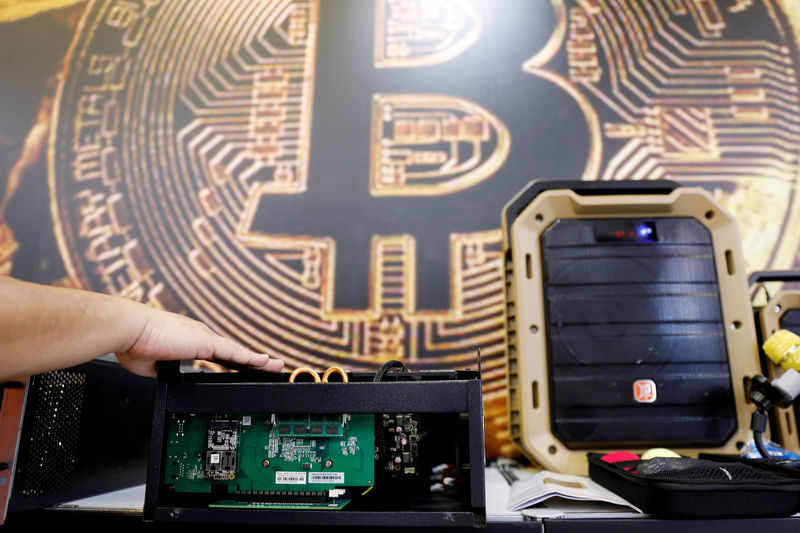
How To Mine Bitcoin Cash
Bitcoin cash what is it? It is a completely independent cryptocurrency, which can be used for calculations and mining. Of course, it is currently inferior to Bitcoin in popularity, rate and capitalization.
But if the creators say that the new crypt is more perfect, will it not become the main competitor of the older brother? You can speculate for a long time (usually called analytics). But only time will tell how the situation will develop.

Who created the bitcoin cash?
Bitcoin cash is a product of miners who decided to abandon bitcoin. Getting coins BTC is becoming increasingly difficult. Many miners expressed dissatisfaction and supported the process of creating a new crypt. Bitcoin cash was very convenient for the so-called “schismatics”. Considering that the idea was supported by about 12 percent of miners, creating their own cryptocurrency did not become a problem for them.
Despite the advantages, BCH has serious drawbacks. The main disadvantage is that most of the mining capacities are concentrated in one pool. That is, you can deal a serious blow to the cryptocurrency, destroying the organization. Many people like Bitcoin for decentralization. Destroying this cryptocurrency is almost impossible. The power to create new coins is distributed among multiple pools.
How to mine bitcoin cash?
We speak at once – mining on the computer does not make sense. Given the requests for computing power, your income will be so small that you should not even bother.
What is the best way to mine BCH, you ask? There are several options:
- On video cards. The most effective way of mining.
- With the use of the processor.
- Cloud technologies.
The most effective option – mining on video cards. You can install multiple modules on a farm to improve overall performance. Such a decision pays off much faster and you can start earning revenues.
Is Bitcoin Cash Mining More Profitable?
Mining Bitcoin Cash Today, the rate of the new cryptocurrency has exceeded $ 500, which is why the net price of the coin to be mined has also changed. Today miners began to allocate power for the blocks of this cryptocurrency. Calculations show that mining BCH is about 2% more profitable than ordinary BTC. Moreover, the possible profit may increase if the extraction of a new crypt becomes easier.
For example, at block 479.808 Bitcoin Cash mining will become half easier. Thus, if the cost of both cryptocurrencies remains at the same level, miners will be able to increase profits on BCH by about 50%, compared to a traditional coin. But when calculating the possible income, one should also take into account the difference between the principles of currency operations.
Blockchain BTC implies quite high transaction fees. Accordingly, miners will be able to receive an additional 1.5 BTC for each mined block. With current prices, it’s about $ 6,000. As for BCH, the transaction cost is significantly lower and one unit can only bring in $ 50.

Conclusion
Mine bitcoin cash need on powerful equipment, then the process will be really profitable. Creating new BCH coins is difficult, so most of the currency is mined on industrial farms. Please share the article on social networks, just click the button below. Subscribe to our portal updates to be the first to know about the release of materials.
The big difference between IPO and ICO
If you’ve ever been assigned to source for capital for a company or you’ve listened so much to the stories of young start-ups, you would realize that one of the toughest thing to do id to raise capital. The advancement in technology has grossly reduced the toils that were once associated with raising capital and has made it quite attractive with the introduction of Initial Public Offer (IPO) and Initial Coin offer (ICO)
Both serve as an attractive way for increasing the financial gearing of the company, however, there are other methods of facilitating investment apart from the two.
The difference between the two
Modern trading platforms and markets like the cryptocurrency market has provided two means of encouraging owners to invest what they have in a business. These methods are IPO and ICO. The question then is; how do you differentiate between the two?
Financial investment can be two ways as far as crypto trading is concerned. You could with choose to invest in old companies that are offering IPO or you could settle for young companies that are offering ICOs. But before you choose, one, there are some distinctions and similarities that you should be on the lookout for.
When trying to distinguish between the two terminologies, the distinction that was given by Cointelegraph seems to be the most appropriate. It says that the major difference between them is that while IPO is associated with a stable and long-standing company, ICO is associated with a new business that is just starting out. As a result, an investment in ICO is always riskier than an investment in IPO.
The Company that has been around for a long time probably has a consistent track record when compared to the new and upcoming company. As a result, there are certain doors that the Start-up company cannot knock on when compared to the other company.

The regulations
Unlike IPO, ICOs are not mandated by any kind of law or legal requirements to issue a form of legal document for each and any of their transaction. Although some try to communicate their tasks and goals through the use of white paper, it is not required by a prescriptive code. The decision to make such information available is decided on by the company and no one else.
Conversely, IPOs are required by a prescriptive code to issue out a prospectus. A prospectus is a document that is used to invite the public to subscribe to the shares of a company and it usually includes details of the offer and the obligations of the different parties that are involved.
Instructions, regulations, and Credibility
Unlike ICOs, IPO companies are mandated to register with the appropriate legal authority beforehand. This is because it is a trade that involves a lot of investors and huge cash. As a result of the strict regulations, investors often feel more confident about IPOs than they are of ICOs.
ICOs are formed on a chain of innovations and blockchain technology. This way, the currencies are liquid and at the same time, volatile. Since there is no legal body to control the activities of ICOs, the process of raising finances often goes unchecked. For this reason, many agencies like the US SEC have tried their best to monitor how well project managers utilize funds and identify unscrupulous ones.
The waiting period
Since both concepts are different, it is only logical that the time frame for processing them varies. IPOs take about six months from the time of initial approval to final presentation. This is because of the lengthy legal process that is involved.
The ICO, on the other hand, depends solely on the kind of task that needs to be performed and time. The absence of lengthy legal requirement and processes ensures that the ICO process is shorter and less complicated than IPOs. The decision of time and fund collection depends solely on the effort and system that is implemented by the task leader. For example, Basic Attention Token (BAT) was an ICO that managed to raise about $36 million in just 30 seconds.
Calculating the return on investment of IPO and ICO
We established earlier that IPO and ICO vary in processes and waiting period. Additionally, their return on investment also varies. ICOs are built on trust. The task leaders provide tokens for the public and assure them that the tokens will appreciate.
The appropriate time to launch an IPO and ICO
It is important to stress that only an existent company can issue an IPO. The IPO provides the much-needed liquidity for investors and business owners and ultimately increase their capital. ICOs are issued by new companies in an attempt to get financing that will set their companies on its feet. Since ICOs provide investment option for start-ups that ICOs do not, it is best to launch it when the management is about to release the company.

Comparing the owners of IPO and ICO
The final comparison that we will examine is the ownership of both business strategies. The IPOs are partly owned by investors. It gives them a say and a stake in the operation of the company. As a result, they enjoy certain privileges from holding such position such as the right to vote, and dividends. These rights vary to the number of shares that each investor own in the company.
ICOs investors do not have any stake in the company. Anybody can purchase tokens with the expectation that the price will go higher. This, however, is not an equivalent of control.
Everything in a nutshell
Although both methods have their differences and similarities, the most important thing to note is that they are both instruments for raising capital. ICOs are efficient ways that industries operating in the crypto sectors use to raise capital, however, its lack of guidelines leaves a lot to be desired. The can change in the nearest future and we might see an extension of the service to other departments outside the crypto sector.
Final Words
ICOs have demonstrated its effectiveness when it comes to raising financing, however, the absence of guidelines casts a shadow of doubt on the entire operation. This is a fact that the organizations that are involved in the crypto sector have come to terms with, perhaps, will force them to work on a better structure.
Who owns an IPO vs. ICO?
Another location of a significant distinction between ICOs and IPOs is business ownership. IPO gives financiers a stake in the company. As investors, the investors have voting rights that are proportional to the number of shares one owns. Moreover, they could likewise get dividends. ICOs, nevertheless, do not give the investors a stake in the company. Individuals buy ICO tokens in the hope that they will sell them when their rates appreciate. Becoming a token holder does not offer one control on the business’s management.
Conclusion
ICOs and IPOs supply services with a method of raising capital. The former have proved to be effective in helping services to raise money, lack of excellent guideline has led to uncertainty in a sector. ICOs have been typical amongst organizations within the Crypto sector; perhaps this choice will be offered to other organizations with proper guidelines in the future.