£0.00



A Shift towards Evaluation
Factual data states that 58% of consumers look for product/services reviews online prior to buying them. This gigantic demand for evaluation can’t be ignored. Moreover, researchers also claim that 98% of buyers believe that online reviews impact their buying. But why are online reviews that impactful when the buyer doesn’t even have the luxury to feel or see the product in person?
One of the reasons is the sales attitude of workers in stores. It is understandable that since they are hired by the brand, they will tell you it is awesome. But that doesn’t entirely apply to online reviews.
But are all the reviews present on forums online believe-worthy? That is where the problem lies. There is a lot of controlling on these platforms. There is always the issue of legitimacy when it comes to buying online. Not to mention, many companies pay people to put false and glowing evaluations to boost sales. It makes them look like they have a chain of delighted customers and thus, making them seem genuine.
Despite the many efforts to create software apps that separate bogus testimonials from real ones, the practice is still very alive.

Why?
For starters, many reviewers don’t have to tell the consumers whether they have used the product/service or not. They are simply placing their opinion about them because they are paid for it.
Blockchain innovation may be of some assistance here. It can keep an eye on all the purchases made by consumers and enable them to leave product reviews of only the ones purchased. This will also limit consumers to post more than one review by using a tamper-proof database. The database will track their shopping history.
Another smart way to detect the authenticity of reviews is to look for any bogus or vague language. Usually, consumers who have used the product back with claims and experiences
So Does Relying On Rankings Also Bogus?
If you happen to come across a site that lists products based on the review it got from its customers, you really should become doubtful.
Does This Mean I Should Not Rely On Item Rankings?
Not long ago, there was the case of a fake restaurant setup. A guy posted high-end photos using shaving foam and bleach tablets. He then listed the place on TripAdvisor and asked his friends for glorious recommendations. It took less than a few months for the place to rank on top as the city’s best place to dine in –even though it didn’t exist in reality.
What about YouTubers Who Promote Products?
There are many YouTubers and social influencers who put up videos of themselves reviewing a certain brand’s product or service. Again, they are used as promoters by companies and purposely do sponsored videos because they are paid. This adds to the persisting issue of bogus reviews as 18% of shoppers do believe in them and end up buying the product reviewed by their favorite influencer.
Another incident that determines how impactful reviews online can be was when a bakeshop that declined to bake a wedding cake for a gay couple was bashed and then closed due to countless bad reviews.
A similar case was seen when a footballer’s diner received bad publicity before even serving a single meal because the owner’s husband performed poorly in the NBA champions.

So Can Blockchain Really Help?
Blockchain can aid the public trust. It can establish platforms that distinguish a genuine review from a fake one. This will help businesses looking to succeed a more genuine consumer base.
So there’s a lot of problems out there, however, what can blockchain do?
Blockchain could help the public trust the compound of the reviews they see online.
A blockchain platform by the name of UUNIO vows to create a space where reviews can be posted free of interaction and external impact.

Blockchain And VR –What’s The Connection?
If we were to question the popularity of VR today, we will come across tons of articles, blogs and statistics in its support online. And they aren’t wrong. It has proven to be an up and coming pattern –all set to take over the world. Everywhere, more and more people are embracing its possibilities enabling it to gain significant market share worldwide.
There was a time, not long ago, when its growth was prevented due to lack of high-quality 3D images. VR designers used image repositories but they failed to deliver a high-quality image. Moreover, they were too overused.
But this is not the case today. 3D technology is improving by the day, making images exceptionally remarkable. As more and more image creation hardware is funded for, it will no longer remain a dream for Technocrats to see the world from a VR perspective.

Uses of VR Technology
VR is no longer just for games or gimmicks. Its extensive range of applications is used in multiple industries to give the world the access it lacked before.
For instance, it is used in training of workers in conditions that are too hazardous. Home hunters can walk through every room of the potential house without actually stepping out of their own. It also has the aptitude to battle irrational worries and allows people to combat their most frightening fears. There are several other describable scenarios but first, let’s find out what potential it holds for development.
VR’s Development Potential
Its potential for growth in the near future seems promising. Google statistics show that the lower-end market for VR is enormous.
But it still hasn’t equaled analysts’ predictions. This is the result of a shortage of innovation, investment and image production. It also craves more access to the marketplace and in the people’s minds.
Obstacles Averting Its Development
A number of challenges obstruct its development. For starters, the most exceptional hardware is pricy. Hardware for the recording of 3D images is a must too. Next, the quality and access to images is also a constraint. VR designers are forced to utilize poor quality images since those are free of cost or available at standard prices. Image depositories that do own high-quality images charge high. Instead of compensating developers accordingly, they benefit from their work.

What are the Available Options?
The first and foremost requirement for the VR technology to bloom is a 3D image depository. It will enable developers to both create and monetize images using peer-to-peer access. A company that offers exactly that is Cappasity.
The company’s vision is to develop a platform for VR developers to create, monetize, publish and promote their designs. Developers serve as sellers and companies wishing to buy their designs are buyers. Upon buying a design, the buyer has the full right to use and modify the designs.
The company is currently going through the SEC Compliance process to allow US residents to also take part in the sale.
Cappasity has also invested in a new image-capturing technology that will create eye-catching 3D images with ease. The images can be captured right from a phone
With promising chances of growth and development, companies like Cappasity assist in awareness and profitability both.

What Is SegWit?
We decided to write an article about one of the most important step in Bitcoin history, in which we will try to convey to you the idea of how scaling the Bitcoin network will affect the cost of this cryptocurrency. Yes, you understood correctly, today we will talk about the very SegWit, about which you can read now, on almost any resource related to finance. But first, let’s try to figure out what this scaling is all about.

What is the primary challenge?
At the moment, the Bitcoin network is gaining increasing popularity among the world’s population, and in this regard, the Bitcoin network faces a problem in processing transactions and their value. Because of this problem, there are very often delays in conducting transactions, which cannot please users and increase the pace of network development. In order for you to understand the essence of the problem, we give figures on processing transactions of other payment systems, such as VISA processes up to 4,000 transactions per second, PayPal up to 100 transactions, the Bitcoin network processes a paltry 3 transactions per second, which forces users to increase the amount of commission for more prompt confirmation of transactions.
SegWit’s solution
To solve this problem, a considerable number of conferences and meetings were held, where a wide range of options and versions were discussed. Among them were the versions proposed by Bitcoin Unlimited, Bitcoin XT and Bitcoin Classic – the main task is to solve the problem of network scaling. But the most interesting of all was the Peter Welle version, which he voiced at a workshop at Scaling Bitcoin in Hong Kong. It was this person who proposed to update the Bitcoin protocol, under the name SegWit. What is SegVit? Segvit is, to put it bluntly, a superstructure over the existing Bitcoin protocol, which helps to “pump” this network in order to improve network bandwidth, while not disturbing the main block chains. The main idea of this software fork, namely this phrase, it is accepted to call Segvit, is to update the block size of 1 MB, to a volume of four thousand units. This change is not the only one, because in parallel with this SW increases the network bandwidth, its security and corrects the plasticity of transactions, thanks to a change in the transaction identifier. But in order to implement this plan, developers need the support of 95% of the miners of the network, which is a barrier to the production of this software fork, because, at the moment, confirmation has been received from a little less than 40 percent of the “digital gold miners”.

Summary
The whole world is looking forward to August 1, 2017, because on that day, SegWit will be launched, which in turn can split Bitcoin into several parts, because not all miners support SegWit. Therefore, there are often options with BIP91, BIP148, and other development options. Against the background of these events, the Coinbase cryptocurrency exchange sent its user a notification in which they offered users to exchange bitcoins for fiat currencies and stop operations for 7 days, because before August 8, according to preliminary calculations, the software of the first world cryptocurrency will be held.
We cannot know exactly what will happen on the Bitcoin network in a week, but we can look at the experience of using Segvit using the example of other cryptocurrencies. So a similar procedure has already been tested on Litecoin cryptocurrency – which is most similar to it. By the way, these are the events that have recently attracted the attention of miners to digital silver. Viacoin and digibyte underwent this procedure even earlier, which led to the rapid growth of cryptocurrency data. In order not to mislead you, or to influence your decision, we simply refrain from presenting our thoughts about this event, and we will not express the opinion of highly respected experts in the field of cryptocurrencies. Therefore, as it is sung in a famous song: “Think for yourself, decide for yourself whether to have or not to have.” With you was a blog BitBetnews, see you.
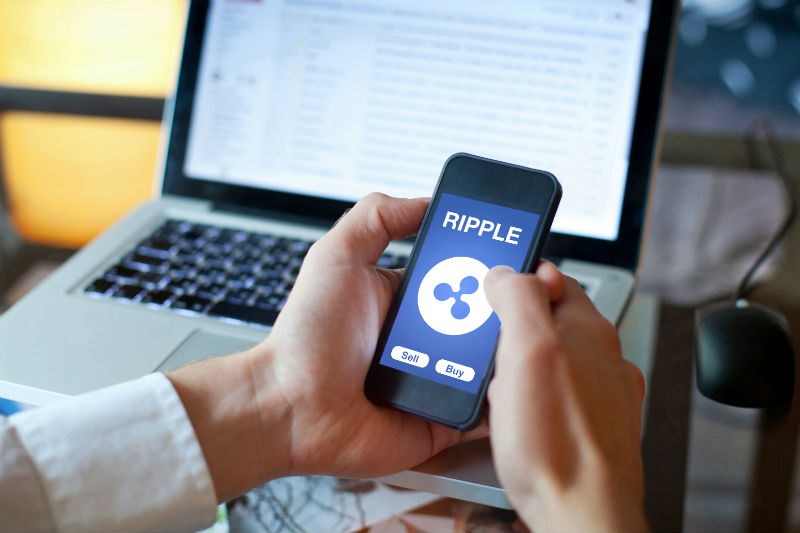
How To Store XRP: A Guide To Ripple Wallets
The imbalances in the purchase and selloff in XRP has made it obvious that the demand and popularity of RippleNet are on the rise. All of this to the advantage of the various crypto sellers who capitalizes on the shift in the demand for XRP and are plowing in their well-deserved benefits. The best sort of motivation in business is profit, and this applies to the Crypto market as well. Interestingly, after purchasing your XRP, you will need to keep them safe and well protected. To do this, you will need to make use of a crypto wallet.
A crypto wallet is a decentralized safe that can be used by owners to safeguard their electronic key. The wallet makes the owner responsible for safeguarding their own key and are liable for any harm that occurs to the contents of the safe. Crypto wallets are categorized into various classes, and they include:

Ripple desktop wallets
The desktop wallets are one of the best wallets for the trading cryptocurrency. Essential features of the ripple desktop wallet include a standby withdrawal account and a real-time deposit. These two features ensure the relevance of the ripple desktop wallet to trading XRP.
- Exodus Wallet: Primarily, the Exodus wallet is made up of the following:
- Over 20 cryptocurrency aid for XRP including BTC, ETC, and LTC.
- Fast and strong charting tools
- Good interface
- A good choice for managing the portfolio and trading cryptocurrencies
- Well established and easy to use orientation product
- Suitable for new users
- Users do not have to be online every time. They can always log out in the absence of any task.
Cons
- Security: the exodus wallet is not really secured as it does not feature the basic two-factor authentication.
- Jaxx Wallet: The Jaxx is often recommended for beginners and new traders. It features:
- About 85 tokens and XRP currency assistance
- It is compatible with different devices like the Desktop, IOS devices, Google, and Android devices.
- The security is updated frequently
- An active community and a wide fan base on the telegram, Reddit, Twitter, Facebook, and YouTube.
- Brilliant fusion with the Shapeshift crypto transaction
Online/Web Wallets
The endearing qualities of the Web wallets include accessibility and convenience. Not all crypto wallet can boast of XRP pair margin trading like the Web Wallet. They are one of the safest means of storing your wallet contents and can be accessed without stress.
- Toast Wallet: Features of the Toast wallet:
- It supports only the Chrome browser
- Can work on various devices like Mac OSX, Apple, Linux, and Windows.
- The private key can be recovered easily
- Easy registration
- Suitable for beginners and new traders
- Jaxx wallet: Features of the Jaxx wallet includes:
- Safe and easy for novices and newbies
- Limits hacking through the implementation of its no download version.

Mobile Wallets
The mobile wallet is similar to the online wallet, except for a few modifications. Features of the mobile wallets are:
- Suitable for new users
- Accessible via smartphone services
- They are mostly mobile-based.
The following are the forces to be reckoned with as far as the mobile wallet is concerned:
- eToro: Unlike the Exodus wallet that supports over 2o currencies, eToro supports just Eth, BTC, BCH, and LTC. Some of the fascinating features of the wallet include:
- Easy and convenient to use
- Cryptocurrency conversion is primary
- Works well with Android and IOS
- Security is enhanced with the use of tailored blockchain address property.
- It is approved and endorsed by the Gibraltar Financial Services Commission.
Cons
- Does not allow XRP/USD fiat cash pairing
- Bitfinex: The level of advanced and yet simple innovation that is tied to Bitfinex makes it one of the key wallets in the market. Some of the features include:
- Wallet variations encourage funding, exchange and trading services.
- USD assistance
- Fast and seamless transactions
- Registration via QR codes
- Two-factor authentication as a security
- API key generation for security
- Unrestricted entry into the world of Bitfinex cryptocurrency market
- Supports Android and IOS which can be downloaded from Google play
Cons
- The process of recovery can be quite long.
Hardware XRP wallets
As the name implies, the wallets are hard, visible, and can be carried from one place to another in an external storage memory. They are carried about in an offline state and are therefore safe and convenient.
Some of the wallets are:
- Ledger Nano S: it comes in the form of a USB storage and has the following advantages:
- Supports about 10 languages
- It can be locked by using a PIN
- Different currency assistance
- Easy to use by beginners
- Is protected from hazards that might result from tampering
- Easy to restore and backup
- Coinvest: Features includes:
- Supports Linux OS
- Supports a cryptographic coprocessor
- Supports FIDO/U2F for security
- Supports different currencies
- 4.3 LED screen touchscreen
- Can be connected to the desktop or mobile phone via a USB.