£0.00


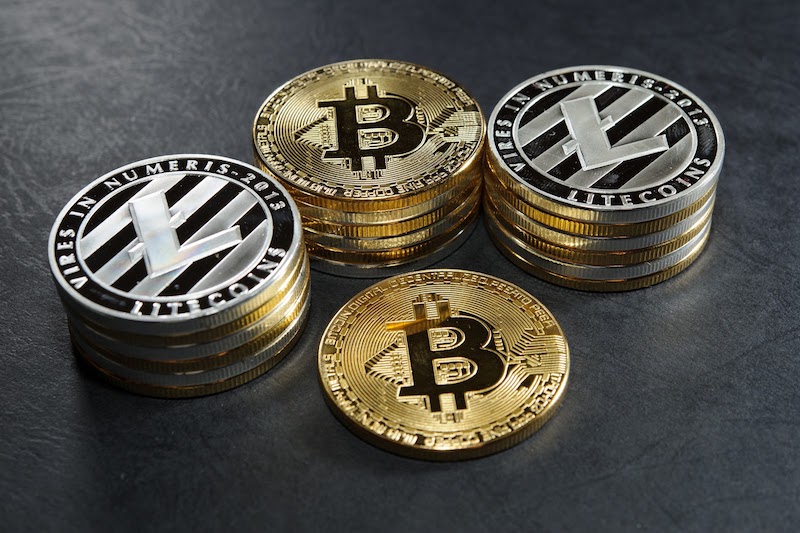
Litecoin Vs Bitcoin: What’s The Difference?
Contrary to misconceptions, Litecoin cryptocurrency is not the first fork of Bitcoin. Those were the digital asset and the Namecoin payment system of the same name. Although this did not prevent Litecoin from winning the title of virtual silver. It is safe to say that 2011 was a turning point in the formation of alternative monetary units. After all, it was then that the beginning of the emergence of a significant number of digital assets based on Bitcoin open source, and after altcoins, the mining of which uses an algorithm that differs from the standard generation process developed by Satoshi Nakamoto (the creator of the first cryptocurrency).

The evolution of crypto active assets is based on the principle of natural competition. The value of altcoins is determined by different features, so the question is: what is better – Bitcoin or Litecoin, does not lose its relevance today. Although, virtual silver from the day of its foundation settled in the TOP-list of digital currency units and continues to hold positions. Moreover, with each drop in Bitcoin quotes, one can hear statements that Litecoin has every chance of becoming a worthy alternative to the first cryptocurrency.
Litecoin and Bitcoin Market Capitalization
Determining which is more profitable, Bitcoin or Litecoin, and taking only the indicators of market capitalization and the dominance index as a basis, we can conclude that Bitcoin is the undisputed leader of the world of cryptocurrencies. At the time of writing (December 24, 2017), the total value of the first digital asset is $ 241 billion. He surpasses the competitor, who settled in the fifth position, more than 16 times. The dominance index, however, varies from 43–44%. The fact that the Bitcoin rate is about $ 13,000 is impressive. This figure is not maximum and has undergone an adjustment after a record retracement of the mark of $ 20,000, but about 55 times higher than the market value of Litecoin ($ 250). It is difficult to understand why the first digital asset should not be a segment leader? After all, he has always been significantly ahead of and ahead of his many competitors in these indicators.
The speed and profitability of transfers Bitcoin and Litecoin
Bitcoin significantly loses its competitor in terms of the speed of remittances. The growth in the number and volume of transactions in the network of the first cryptocurrency caused the emergence of problems with scaling. As a result, it is often possible to see that the number of unconfirmed transfers amounts to hundreds of thousands. The throughput rate often drops to a critical point.
Litecoin many people mistakenly perceive as a test version of Bitcoin. In fact, it is a separate player in the market. This error can be partially explained by the fact that the SegWit algorithm was activated here much earlier. Due to this, so high speed of passing payments increased by 2 times. Moreover, the Institute of atomic swaps was successfully integrated, which allows replacing Bitcoin when performing mutual settlements in the remote mode.

What do we see on the Bitcoin network? Despite the introduction of the Lightning Network (processing of micro-transactions outside the main chain of the blockchain) and SegWit, the early likelihood of launching SegWit2X, the issue of fast transfer operations remains unresolved. However, these details do not give an answer to the question: what is better, Bitcoin or Litecoin? It is known that the services offered by third-party services allow making transfers using Bitcoin coins very quickly, without waiting for the standard 6 confirmations from miners. In addition, you can acquire debit Bitcoin cards to operate your crypto savings without any restrictions.
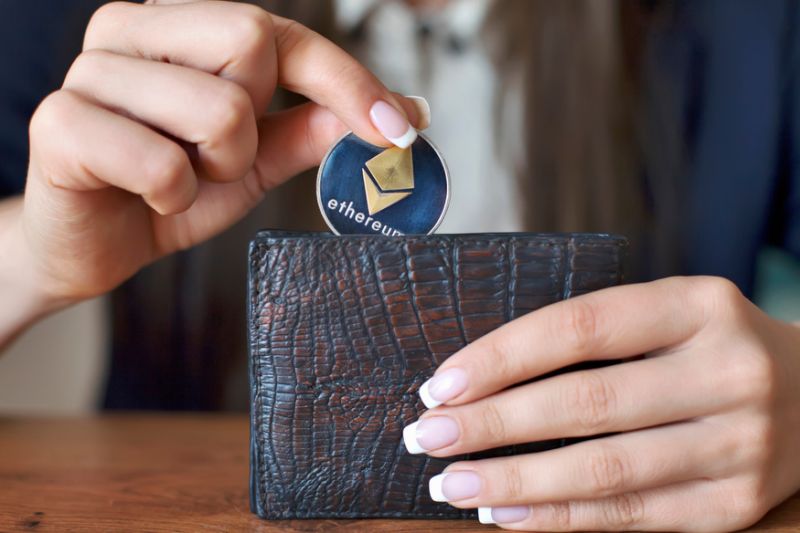
When trading or dealing with cryptocurrency, users need a wallet to hold their Ether tokens. There are various cryptocurrency wallet types for Ether token storage –5 of which we shall review in this article below. But before we do, let us first understand how Ethereum wallets work.

How do Ethereum Wallets work?
Ethereum wallets are different from regular wallets. These store private keys instead of Ether tokens. The private keys allow access to Ether tokens recorded on Ethereum blockchain. If the user misplaces/loses the wallet and private keys, then all ether tokens are also lost. This is why it is essential to take all the necessary steps to ensure their safety and opt for the most suitable wallet for your Ether tokens.
Receiving Ether Tokens on Ethereum Wallets
Confused as to how Ethereum wallets receive the Ether tokens? Well, in addition to private keys, each wallet also has a public key. This is obtainable by anyone. It is mainly the address users use to send and receive cash. The public key allows all users to track your transaction history as well as check your current balance. However, it can’t give anyone access to your private information or allow them to withdraw any cash from your ether wallet.
Types of Ethereum Wallets
- Online wallet
- Desktop wallets
- Mobile wallets
- Paper wallets
- Hardware wallets
Third-party Wallets and Private Wallets
All Ethereum debit cards come attached to an online wallet. This is a third-party type wallet which is tied to a debit card site or exchange firm.
On the other hand, private wallets come in various types such as desktop, mobile, paper or hardware wallets. They are entirely the user’s personal wallet and don’t share any third-party intervention from an exchange or debit card site. Let’s take a brief look at their working below.
Desktop wallets
Desktop wallets are applications installed on a desktop computer. Although safe in general, there is always the risk of the computer breaking down, leaving the user helpless at recuperating the files. This also means you will lose your Ether tokens. Atomic Wallet is a kind of desktop wallet.
Mobile wallets
Like desktop wallets, mobile wallets are installable applications on a phone. There are multiple Ethereum wallet apps on iOS, the App Store or Google Play. Once installed, these apps convert the phone into an Ethereum wallet. There are also some apps that offer wallet synchronization with other devices but not all. If the user loses the phone and the wallet isn’t synchronized to any other device, this means all the Ether tokens will be lost.
Paper Wallets
A paper wallet is the most basic kind of Ethereum wallet. Even though it is labelled as a paper wallet, it can be any lifeless thing you draw your private key onto. Papers wallets eliminate the dangers of technical issues. They can also take the private key offline when required. The only drawback of paper wallets is that they can be misplaced, stone or lost.
Hardware Wallets
Hardware wallets are most preferable for those who wish to safeguard themselves from any third-party, desktop or mobile wallet threats and scams. This is one reason why many call it a sensible investment. As the name suggests, a hardware wallet is a device which holds your private keys –a lot like a flash drive. Another perk is that hardware wallets allow users to go offline whenever needed. This also limits the chances of hacking and loss of data. Ledger Nano S is an example.
Full node Wallet
These wallets are also desktop wallets containing all the data from the Ethereum Blockchain. To use a full node wallet, the user needs to download copious GB of data. Once the installation is complete, the desktop becomes an active node that validates Ethereum blockchain transactions. In case you wish not to download the fill node wallet, then you will have to partner with some other node without the whole blockchain.

Hot vs. cold wallets
Hot and cold wallets are technical terms for online and offline wallets. Many users prefer hot/online wallets due to their easy access. However, this case also comes with a price. Hot wallets are most prone to scams and hacks. Conversely, cold wallets are more secure in nature but less effective.

XAPO Review
This claims to the pioneer Bitcoin debit card in the market today. But it isn’t true. It was Bitwala who first offered the debit card service for the general public. However, XAPO was the first to link their card with Bitcoin. It is no secret that being the innovator has its pros and cons. The benefit, of course, is that you set a new benchmark for others to follow on your own terms. But the flip side is that you are also the one to make and bear the mistakes. There always comes someone with a better and smarter version of your thing.
XAPO also made many blunders, the biggest being unbranded cards sent to customers. But it swiftly recovered from this slip up and are still one of the leading companies in the marketplace.
This article takes a brief look at some of its XAPO debit card specifics.

Advantages
- Customers don’t have to bear any maintenance fee during its first year of use.
- XAPO focuses on security. It offers many layers of activates for its users.
- There is no top-up fee associated. This is what gives them a competitive advantage as no other company offers that.
Disadvantages
- It is out of service currently. The company ended ties with Visa.
- It will be launched again in 2019, but, it isn’t available for now.
- Before closing its operations, XAPO didn’t service US clients, making it impractical.
- The waiting time is almost a month. If you wish to receive it sooner, there is a relatively expensive shipping fee.
- New rules of XAPO require stringent verification which wasn’t the case before. Previously, it offered anonymity to anyone who asked for it.
XAPO Bitcoin Debit Card Charges
- You need to pay $20 in order to issue the XAPO Bitcoin debit card.
- $1 is charged monthly as a maintenance fee, though, new users don’t have to pay any dollars as maintenance fee in the first year.
- If you wish to change its PIN, you will have to pay an additional $1.
- If you lose the card, you will have to pay $12 for a replacement.
- The XAPO Bitcoin debit card can be requested via express or free delivery.
- Express delivery costs $55.
- If you opt for free delivery, the card takes approximately 25 days to arrive without a parcel tracking option
- You have to pay $2.5 domestically and $3.5 internationally when withdrawing money from an ATM using the XAPO Bitcoin debit card.
- There is a 3% conversion rare when converting currencies
- There aren’t any POS changes when dealing in native currency.
- Using the card abroad costs an additional 3%.
Summary
- Virtual card: Yes
- Physical Card: Yes
- Card type: Visa
- Mobile app: Yes
- Supported cryptocurrencies: Bitcoin (BTC) and Ethereum (ETH)
- Supported fiat currencies: EUR, GBP, and USD
- Anonymous: No

Final Word
XAPO is a well-renowned brand with a solid upbringing in the cryptocurrency marketplace. They were once the market penetrators, made a few blunders, but have learned from them over time. It is unfortunate that some XAPO Bitcoin debit card issuers didn’t settle well with Visa, resulting in their card becoming unavailable. Hopefully, once all this is done and dusted, XAPO Bitcoin debit card will once again reign the cryptocurrency space like before.

The latter part of 2009 introduced everyone to the world of blockchain technology. With Bitcoin as its front liner, the idea of blockchain technology was well received by everyone, and soon enough, the system responded with a simple complexity of its own. Surprisingly, most people often confuse the idea of blockchain and bitcoin as one and the same, when in reality, they are not.
The difference between both concepts is one that is not easy to identify without prior knowledge.
To understand it in simple terms, blockchain is like a universe, a universe where the currency is bitcoin. One fascinating fact about the world of blockchain is that you do not have to know the nitty gritty of the system before you can effectively utilize the technology. An understanding of the dynamics, peculiarities, and complexities that lies within the system enables you to grasp its full potential.

What is blockchain technology?
Just like the name implies, blockchain is a chain of vast and widely spread database where the storage devices and information are not controlled and accessed by a simple server. The database is capable of storing an infinite amount of information in the form of records. These records are referred to as blocks. The content of each block features a link to the former and a timestamp.
Blockchain also makes use of encryption and encrypted file to protect the privacy of its users. Encryptions are private keys that allow a blockchain user to make different writing to their files. This feature enables the account holder to protect what is theirs.
Also, encryption ensures that the distribution of blockchain among users is in synchrony.

How did blockchain technology come about?
Just like every other thing in the jet age, internet coupled with electronic money facilitated the development of blockchain. The emergence came about from researchers attempt to answer the question of whether they could create a decentralized means of payment that is built solely on trust.
Nick Sabo was the man that conceived the modern blockchain ideas in 1998. As revealed by his newsletter, he postulated a theory that was referred to as the bit-gold protocol. This idea served as the foundation of what we now know as Bitcoin. Prior to that period, Adam Beck conceived his own “Hashcash” protocol, a model of cryptocurrency. Sadly enough, the time of development coincides with the time when people knew little or nothing about fast internet capacity and storage devices. As a result, the development did not enjoy the support that it yearned for.
Not to be daunted by this occurrence, the execution of the project was implemented 11 years later when Satoshi Nakamoto introduced a protocol known as digital cash. This protocol led to the development of the initial blocks of bitcoin.
What is decentralization?
When it comes to sharing information, making use of a decentralized internet platform is not rocket science. However, when valuables like money are concerned, we often resort to the centralized methods that banks and other financial institutions use. Of a truth, internet payment procedures like PayPal has been around for a long time, however, they cannot be used without some bank instruments like the credit card.
This kind of integration is what blockchain technology strive to eliminate. The financial sector performs three major services of registering transaction, confirming the identity of users and finalization of contracts. Blockchain technology is capable of assuming these roles and carry them out effectively.