£0.00


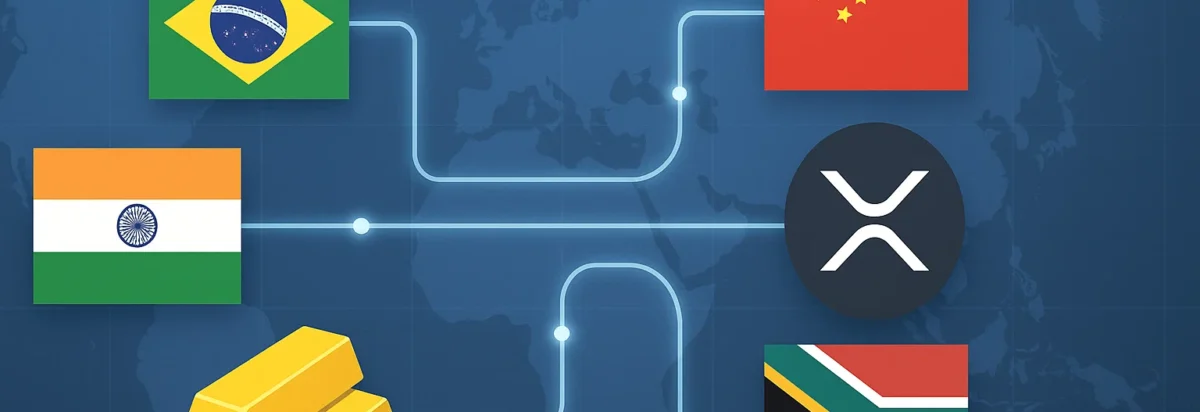
BRICS Nations Consider Adopting Ripple’s XRP for Trade
The BRICS alliance—comprising Brazil, Russia, India, China, and South Africa—is reportedly exploring the adoption of Ripple’s XRP to facilitate gold-backed international trade. If implemented, this strategy could mark a transformative shift in global economics, potentially reducing the BRICS bloc’s reliance on the U.S. dollar as a settlement currency.
This bold move comes amid growing dissatisfaction with dollar dominance, economic sanctions, and a push for financial sovereignty. Ripple’s XRP, known for its speed, low transaction fees, and interoperability, may provide the technological foundation needed for a decentralized, real-time, cross-border payment infrastructure.
The BRICS Bloc’s Strategic Interest in XRP
Challenging the Dollar’s Dominance
The BRICS nations have long expressed concern about the U.S. dollar’s outsized influence in global trade. Over 85% of all international transactions still rely on the dollar, giving the U.S. unmatched leverage over the global economy.
By considering a blockchain-based alternative like XRP, BRICS aims to:
-
Increase monetary independence
-
Avoid U.S.-imposed financial sanctions
-
Facilitate direct trade settlements among member states
Gold-Backed Trade: A New Settlement Standard?
Reports indicate that BRICS may also consider backing trade settlements with physical gold reserves, using Ripple’s XRP ledger as the digital rails for transaction processing. This combination of hard asset backing and blockchain technology would be unique, blending traditional and modern finance.
Gold-backed digital transactions would enhance trust and transparency, particularly in emerging markets where currency volatility is high.
Why XRP? The Technology Behind the Interest
Speed and Efficiency
Ripple’s XRP ledger is designed to handle 1,500 transactions per second, settling in just 3–5 seconds. For comparison, SWIFT payments can take 1–5 business days, depending on the destination. This dramatic speed advantage is critical for trade finance.
Low Cost and Scalability
XRP transactions cost a fraction of a cent, regardless of amount or destination. This cost-effectiveness makes it suitable for high-volume cross-border settlements, including those related to commodities, raw materials, and industrial exports—core sectors for BRICS economies.
Decentralized Ledger Technology
Ripple’s network does not rely on traditional mining like Bitcoin. Instead, it uses a consensus algorithm validated by independent nodes, ensuring fast confirmation without heavy energy consumption. It supports smart contracts and asset tokenization, making it ideal for complex trade ecosystems.
Global Reactions and Economic Implications
Disrupting the SWIFT System
A shift toward Ripple’s XRP by BRICS could weaken the SWIFT interbank system, which currently facilitates the vast majority of cross-border payments. Many BRICS members, especially Russia and China, have experienced SWIFT-related restrictions due to geopolitical tensions.
By adopting XRP or similar blockchain solutions, these nations could effectively bypass Western-dominated financial infrastructure.
Strengthening BRICS’ Economic Integration
XRP adoption could further integrate the BRICS economies, simplifying trade and settlement across very different monetary systems. For example:
-
China could pay Brazil for raw materials using XRP, avoiding currency exchange complications.
-
Russia could sell oil or wheat to India with instant payment clearance.
This mechanism would encourage intra-BRICS trade, supporting the bloc’s ambition to act as a counterweight to the G7.
Potential Challenges and Regulatory Concerns
U.S. Legal Pressure on Ripple
One obstacle to XRP’s global adoption is Ripple’s ongoing legal battle with the U.S. Securities and Exchange Commission (SEC). Although recent rulings have favored Ripple, uncertainty still lingers over XRP’s regulatory classification.
This could make some central banks cautious, especially those with strong economic ties to the U.S.
Infrastructure and Trust
To implement XRP for gold-backed trade, BRICS nations would need:
-
Interoperable banking infrastructure
-
Agreements on valuation mechanisms
-
Shared custody of gold reserves
-
Standardized compliance procedures
Building this system across diverse legal, political, and technological landscapes will be a complex, time-intensive process.
Historical Context: BRICS and the Quest for Monetary Autonomy
A Longstanding Goal
BRICS has consistently advocated for reforming global financial institutions like the IMF and World Bank. The idea of creating a BRICS currency or payment system has been circulating for over a decade.
Ripple’s XRP provides a ready-made solution—one that doesn’t require creating a brand-new asset from scratch. Instead, it offers immediate utility through existing technology and a growing network of institutional users.
De-Dollarization Momentum
The interest in XRP also aligns with a broader trend of de-dollarization. Countries like China and Russia have been actively reducing dollar reserves, promoting bilateral trade in local currencies, and investing in digital currency initiatives.
XRP could accelerate this shift by offering a neutral, borderless, and efficient medium of exchange.
XRP’s Current Adoption Beyond BRICS
Ripple’s Growing Network
Ripple has already partnered with central banks, financial institutions, and remittance providers in over 40 countries. Notable users include:
-
Santander Bank
-
SBI Holdings
-
Tranglo (Asia-Pacific)
-
Novatti Group (Australia)
Ripple also recently launched Ripple CBDC Platform, helping central banks build custom digital currencies on the XRP Ledger—an important step that could attract BRICS interest in programmable, tokenized trade assets.
Conclusion
The possibility that BRICS nations may adopt Ripple’s XRP for gold-backed trade represents more than a technological upgrade—it’s a strategic maneuver with deep geopolitical and economic implications. By reducing reliance on the U.S. dollar and building a blockchain-powered trade infrastructure, BRICS is taking concrete steps toward monetary sovereignty.
While challenges remain, especially in regulatory and interoperability terms, the case for XRP is strong: it’s fast, efficient, scalable, and already battle-tested. If BRICS proceeds with XRP adoption, it could mark the beginning of a new era in international trade, one driven not by fiat dominance—but by decentralized innovation.

Bitchcoin: Art Meets Cryptocurrency in a Bold New Medium
Before NFTs became a household term, before Beeple’s $69 million sale and before digital art marketplaces exploded in popularity, there was Bitchcoin. Launched in 2015 by conceptual artist Sarah Meyohas, Bitchcoin pioneered a visionary fusion of fine art and blockchain.
While most cryptocurrency projects focused on finance and decentralization, Bitchcoin asked a different question: Can value be captured not just by markets—but by meaning? With Bitchcoin, Meyohas redefined the artist’s role in the age of crypto, turning her own artwork into a tokenized asset.
In many ways, Bitchcoin was one of the first NFTs, even before the term “NFT” gained popularity. It linked blockchain technology with physical, tangible pieces of art—offering collectors a new way to invest in aesthetics.
What Is Bitchcoin?
A Conceptual Blockchain Artwork
Bitchcoin is a digital token built on the Bitcoin blockchain (and later migrated to Ethereum). Unlike standard cryptocurrencies, each Bitchcoin is backed by a specific, physical piece of Sarah Meyohas’ artwork—initially photographic prints from her “Speculations” series.
This meant that buying Bitchcoin wasn’t just a financial transaction; it was a direct investment in the artist’s evolving body of work. One token equaled one physical inch of a photographic print, redeemable by the holder.
In essence, Bitchcoin created a closed art economy, where tokens represented ownership, value, and artistic contribution—all secured by blockchain technology.
A Precursor to the NFT Boom
While NFTs (non-fungible tokens) wouldn’t rise to prominence until 2020–2021, Meyohas’ Bitchcoin anticipated the idea of tokenized art assets. At the time, no one had bridged the gap between crypto and contemporary art so directly.
According to Meyohas, the project was intended to challenge ideas of authorship, ownership, and value in the digital age—concepts central to both art and blockchain philosophy.
Who Is Sarah Meyohas?
A Boundary-Pushing Artist
Sarah Meyohas is a New York-based conceptual artist with degrees from both the Wharton School of Business and the Yale School of Art. Her work consistently explores the intersection of finance, technology, and aesthetics.
Through projects like Bitchcoin and the Stock Performance series, in which she manipulated stock prices to generate visual data, Meyohas challenges conventional boundaries between art and economics.
Her unique dual fluency in art and finance allows her to navigate crypto not as an outsider, but as a native interdisciplinary creator—well ahead of her time.
The Evolution of Bitchcoin
From Bitcoin to Ethereum
Bitchcoin was originally launched on the Bitcoin blockchain before the rise of Ethereum smart contracts. As the crypto ecosystem matured, Meyohas migrated Bitchcoin to Ethereum in 2021, taking advantage of its superior NFT infrastructure.
This move aligned with the global NFT boom, allowing new collectors to engage with her project on platforms like OpenSea, while preserving the conceptual integrity of the original artwork-token relationship.
Backed by Real Art, Not Just Hype
Unlike many NFT projects driven by speculation or meme culture, Bitchcoin has always been anchored in real, physical artwork. Each token maintains a verifiable link to tangible art created by Meyohas.
Collectors could redeem their tokens for a piece of the physical art—thereby “burning” the token and removing it from circulation. This built-in scarcity and redemption model made Bitchcoin more than just digital art—it was a crypto-backed art ecosystem.
Bitchcoin and the Meaning of Value
A Commentary on Art Markets
Bitchcoin didn’t just create a new format—it made a statement. The project questioned how value is assigned in the art world. Is it based on scarcity? Reputation? Aesthetic? Market speculation?
By tokenizing her art, Meyohas took control of her own value chain, sidestepping galleries and traditional art dealers. She created a direct artist-to-collector economy, where value was transparent, decentralized, and speculative.
Token as Medium, Not Just Currency
In Bitchcoin, the token is the medium. Just as paint is to a canvas, blockchain is to this conceptual framework. Meyohas treats cryptocurrency not just as a financial tool, but as an expressive material.
The blockchain ledger becomes part of the artwork—a transparent, permanent record of ownership, transaction, and artistic intent.
Bitchcoin’s Impact on the NFT Space
A Pioneer in Tokenized Art
Many in the crypto art world now recognize Bitchcoin as one of the first NFT-like projects. It predated the widespread use of ERC-721 tokens and yet fulfilled the same conceptual functions: provenance, scarcity, digital ownership.
It also stands in contrast to today’s NFT projects, many of which lack long-term artistic intent or connection to physical works. Bitchcoin was—and remains—a thoughtful integration of technology and artistry.
Institutional Recognition
In recent years, Bitchcoin has garnered institutional attention. It’s been featured in exhibitions at:
-
The Whitney Museum of American Art
-
MoMA PS1
-
Red Bull Arts New York
This cements its place not just in crypto history, but also in the timeline of conceptual and digital art movements.
Challenges and Criticism
Limited Accessibility
Because of its conceptual nature, Bitchcoin wasn’t widely marketed or accessible to mainstream audiences during its early years. This limited its impact outside of art circles until the broader NFT conversation gained traction.
Artistic Elitism?
Some critics have questioned whether Bitchcoin reinforces exclusivity in the art world, rather than dismantling it. After all, only those who understand both high art and blockchain could fully engage with the project at launch.
However, supporters argue that this depth is exactly what makes Bitchcoin meaningful—it challenges the public to think critically about value, ownership, and participation.
Conclusion
Bitchcoin represents a visionary moment where art meets cryptocurrency, not in a superficial or trendy way, but through deep conceptual alignment. Sarah Meyohas anticipated the rise of tokenized art and delivered a project that continues to provoke thought, inspire artists, and reshape conversations around value and technology.
In a landscape now filled with NFTs, Bitchcoin stands apart—not because it followed trends, but because it helped start them. As art and crypto continue to evolve, Bitchcoin remains a foundational work at the intersection of creative expression and financial innovation.

India’s Supreme Court Highlights Need for Crypto Regulation
India’s Supreme Court has once again brought the issue of cryptocurrency regulation into the national spotlight. In a recent statement, the Court emphasized that proper regulation—not an outright ban—is essential for managing the growing impact of digital assets on the Indian economy.
By noting that a ban might be counterproductive, the Supreme Court echoed a sentiment shared by economists, tech entrepreneurs, and financial regulators worldwide: cryptocurrency is here to stay, and managing it wisely is more pragmatic than attempting to eliminate it.
This stance signals a possible shift in India’s policy landscape—one that could shape the future of crypto innovation, investment, and legal structure in one of the world’s largest digital economies.
The Legal Landscape of Cryptocurrency in India
From RBI Ban to Supreme Court Intervention
India’s history with cryptocurrency regulation has been tumultuous. In April 2018, the Reserve Bank of India (RBI) imposed a banking ban on crypto-related businesses, effectively crippling the local industry. Exchanges were denied access to banking services, leading many to shut down or move operations overseas.
However, in March 2020, the Supreme Court struck down the RBI’s ban, ruling it unconstitutional and reaffirming the rights of crypto businesses to access banking services. This decision marked a turning point, bringing cautious optimism to crypto entrepreneurs in India.
Recent Remarks Reinforce Need for Framework
Now, the Supreme Court has emphasized that while concerns over crypto misuse are valid—such as money laundering, fraud, and terrorism financing—a complete ban would stifle innovation and deny economic opportunities.
Instead, the Court urged policymakers to craft a comprehensive regulatory framework, balancing investor protection with technological advancement.
Why Regulation Is Better Than a Ban
Encouraging Innovation, Not Suppression
Banning cryptocurrency altogether doesn’t stop its usage—it merely pushes it into unregulated, underground markets. Such a move would prevent legitimate businesses from flourishing while enabling illegal actors to thrive.
A regulatory framework, on the other hand, provides:
-
Clarity for businesses and investors
-
Consumer protections and transparency
-
Tools for law enforcement to address financial crime
This position aligns with the Supreme Court’s view that regulation offers better oversight than prohibition.
Global Precedents Support Regulation
Countries like the United States, Germany, and Singapore have taken regulatory approaches to crypto, requiring compliance with anti-money laundering (AML) and know-your-customer (KYC) laws, without banning the assets themselves.
India could benefit from studying these models and adapting them to its own financial ecosystem. The Supreme Court’s recommendation provides political and legal support for such an approach.
Key Challenges to Regulating Crypto in India
Lack of Unified Policy
One major challenge is the absence of a clear, unified crypto policy. Currently, India’s crypto market operates in a legal gray area. While the Supreme Court allows crypto trading, there is no official law defining its use, taxation, or classification as an asset.
This uncertainty discourages foreign investment and leaves Indian entrepreneurs exposed to abrupt policy changes.
Concerns from Financial Authorities
The RBI has maintained a cautious stance, citing concerns over financial stability and consumer protection. Additionally, India’s Enforcement Directorate (ED) has raised alarms about the misuse of crypto in illegal activities.
Balancing these concerns with innovation requires a collaborative approach between the judiciary, central bank, finance ministry, and technology experts.
Supreme Court’s Call to Action: What’s Next?
Potential for Legislative Change
The Supreme Court’s recent remarks could act as a catalyst for lawmakers. India’s Finance Ministry has been working on a Digital India Bill and a Crypto Regulatory Framework, but progress has been slow.
Now that the judiciary has explicitly discouraged an outright ban, pressure is building for Parliament to introduce a balanced bill that:
-
Defines cryptocurrencies legally
-
Outlines taxation rules
-
Specifies regulatory responsibilities for crypto exchanges and platforms
-
Ensures protection for retail investors
Increased Institutional Dialogue
The Court’s comments also encourage greater coordination between regulators and innovators. Institutions like NASSCOM and the Internet and Mobile Association of India (IAMAI) have been vocal about the need for progressive crypto policies.
The next step is turning consensus into legislation.
India’s Crypto Ecosystem at a Glance
Growing Adoption
Despite legal ambiguity, India is one of the largest markets for crypto users, with over 100 million active holders according to a 2023 Chainalysis report. Platforms like CoinDCX, WazirX, and ZebPay have attracted millions of users.
Startups and Innovation
Indian blockchain startups are pioneering solutions in finance, logistics, and public governance. However, without legal clarity, many are incorporating overseas or choosing to serve foreign markets instead of the domestic one.
A clear regulatory path could reverse this brain drain and make India a hub for blockchain innovation.
Conclusion
India’s Supreme Court has once again taken a forward-looking stance on cryptocurrencies, emphasizing the need for regulation over prohibition. In doing so, it acknowledges the transformative power of blockchain technology while recognizing the risks that come with an unregulated market.
By calling for a balanced and thoughtful regulatory framework, the Court is urging policymakers to embrace innovation responsibly. The message is clear: crypto isn’t a threat—it’s an opportunity, if managed wisely.
As India stands at a crossroads, the actions taken now could determine whether it becomes a global leader in digital finance or lags behind in the next wave of economic transformation.
Virtual Currency Girls: Japan’s Unique Fusion of Pop and Cryptocurrency
In the colorful world of Japanese pop culture, innovation often meets spectacle. But few phenomena have blended technology and entertainment as strikingly as the Virtual Currency Girls. This all-female J-pop group isn’t just about catchy tunes and synchronized dance routines—they’ve made cryptocurrency their identity.
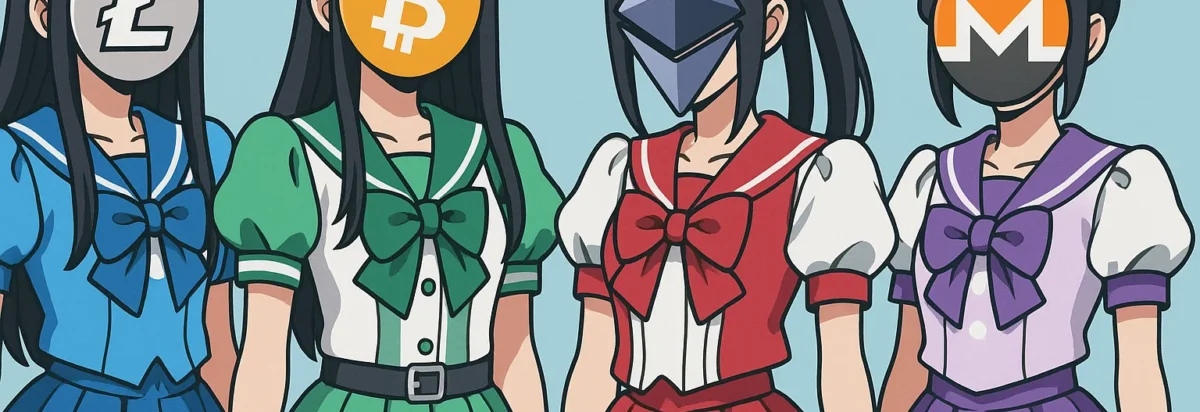
Debuting in 2018, Virtual Currency Girls captured global headlines by performing in masks representing various digital currencies, such as Bitcoin, Ethereum, and Ripple. More than just a gimmick, this branding choice signaled a creative attempt to educate the public about cryptocurrencies while promoting the use of blockchain-based money in everyday transactions.
And yes—they only accept virtual currencies for their merchandise.
The Birth of Virtual Currency Girls
A Marketing Stunt with a Deeper Message
The group was created by Japanese entertainment company Cinderella Academy, known for managing other underground idol groups. At first glance, it appeared to be another clever marketing stunt aimed at capitalizing on Japan’s fascination with “kawaii” culture and emerging technologies.
However, the producers were clear: the group’s purpose was not only to entertain but also to raise awareness about the pros and cons of cryptocurrency. The members weren’t just dancers—they were brand ambassadors for the crypto revolution.
Coin Masks and Alter Egos
Each member of the Virtual Currency Girls represents a different cryptocurrency and wears a custom-designed mask symbolizing their coin. For example:
-
Bitcoin: The group leader, wearing a golden mask
-
Ethereum: Known for her futuristic aesthetic
-
Ripple (XRP): Characterized by a flowing, oceanic theme
-
Monacoin: Japan’s own domestic cryptocurrency
This visual identity helped fans easily associate personalities with different coins—transforming abstract blockchain tech into pop culture icons.
Crypto Meets Idol Culture: A Natural Fit?
Japan’s History with Tech and Pop
Japan has long been a breeding ground for unique combinations of pop culture and advanced technology. From Hatsune Miku, the vocaloid singer, to robot waiters and virtual YouTubers, the culture readily embraces innovation. Against this backdrop, a cryptocurrency-themed idol group seems less surprising and more inevitable.
The idol culture in Japan thrives on themed personas, loyal fandoms, and tight fan engagement. Virtual Currency Girls cleverly infused this structure with crypto values—such as decentralization, anonymity, and digital-only commerce.
Digital Payment-Only Rule
In keeping with their crypto branding, the group accepts only digital currencies for purchases. Fans must use Bitcoin or other altcoins to buy merchandise or tickets. This not only boosts real-world crypto usage but also aligns the fan experience with the group’s ethos.
Their official website and live venues prominently promote wallet integrations, QR codes, and crypto-payment tutorials, turning each transaction into a mini-lesson on blockchain tech.
Spreading Awareness Through Performance
Lyrics with a Purpose
Unlike traditional idol songs about love, friendship, or summer vacations, Virtual Currency Girls tackle subjects like blockchain security, decentralization, and the volatility of crypto markets. Their debut song, “The Moon and Virtual Currencies and Me,” discusses coin price fluctuations and advises caution in trading—yes, all within a catchy J-pop beat.
This unique lyrical content adds educational value while remaining entertaining. It’s edutainment with a techno-futurist twist.
Engaging Younger Generations
Younger Japanese audiences, especially Gen Z, are more tech-savvy and open to decentralized financial models. Virtual Currency Girls use this cultural window to introduce complex topics in a digestible format. Instead of reading whitepapers, fans are singing along to choruses about “proof of work” and “digital wallets.”
Challenges and Criticism
A Short-Lived Fame?
Despite the viral attention in 2018, the group’s popularity was relatively short-lived. Critics argue that the project lacked musical depth or longevity beyond the initial buzz. The crypto bear market that followed also dampened enthusiasm.
Moreover, idol groups in Japan face constant competition. With hundreds of new performers emerging annually, staying relevant requires continual innovation. Virtual Currency Girls were novel, but novelty fades fast in entertainment.
Ethical Concerns and Regulation
Some skeptics questioned whether the group encouraged speculative trading or trivialized financial risk. The producers responded by emphasizing the educational purpose and incorporating disclaimers about crypto risk into performances and merchandise.
Japan’s Financial Services Agency (FSA) was also monitoring the crypto space more closely at the time, though the group did not violate any direct regulations.
Cultural and Technological Legacy
A Pop Culture Time Capsule
While they may not be active today, Virtual Currency Girls remain a cultural milestone—a snapshot of a moment when crypto fever peaked and Japan responded in the most “Japan” way possible: by forming a girl band.
Their blend of entertainment, education, and digital economy speaks to broader trends. Virtual identities, token-based commerce, and gamified learning continue to rise globally. Groups like this paved the way for more sophisticated crypto integrations in music, art, and live performance.
Inspiring New Crypto-Art Concepts
Since their debut, the NFT boom and metaverse experiences have created fertile ground for similar concepts. Artists are launching token-gated concerts, and fan clubs are adopting DAO models (Decentralized Autonomous Organizations).
Virtual Currency Girls might have been ahead of their time—experimenting with the fusion of decentralized finance and pop culture before it became mainstream.
Conclusion
The story of the Virtual Currency Girls is a fascinating intersection of entertainment, technology, and economic philosophy. By donning coin-themed masks and accepting only digital payments, they introduced the world to a new kind of musical activism—playful, futuristic, and educational.
Though their fame was fleeting, their impact resonates. They showed that cryptocurrency isn’t just for investors—it can be cultural, artistic, and even fun. In a world increasingly driven by virtual identities and decentralized platforms, they were among the first to sing and dance their way into the blockchain era.