£0.00


CoinsBank Review
Located in Edinburg, CoinsBank was established in 2013 by Ronny Boesing. The company offers Bitcoin debit cards and also supports Litecoin. The firm also offers exchange services along with digital wallets for its users. The company has an up and running mobile to track your balance on the go. One of the biggest features that differentiate it from other debit card issuer firms is that it allows its users a wide range of supported fiat cryptocurrencies.
In this article, we shall review what more it has to offer to its clients, drawbacks and fee structures associated.

Advantages
- It has an e-wallet for keeping tabs on the balance.
- The user-friendly mobile app also makes it convenient.
- Users enjoy strict security measures to ensure their cryptocurrency remains safe.
- The debit card allows cryptocurrencies to convert instantly.
- The debit card supports a number of fiat currencies including USD, EUR, GBP, AUD, RUB, and JPY etc.
- The biggest perk is that users can receive instant crypto cash-back when using it in store.
Disadvantages
- The company lacks transparency when it comes to determining who runs the firm.
- The prices are considerably higher, which makes the card inconvenient for many users. Many users have also lodged online complaints regarding this. However, the company hasn’t done anything so far to resolve the issue.
- The company offers free shipping but only to premium cardholders, which is, again, a drawback.
CoinsBank Bitcoin Debit Card Charges
- The company offers more than one type of debit card. The prices range from $2.95 to $1,000 as issuance fee.
- To use the physical debit card, users have to pay $14.95 as an activation fee.
- The CoinsBank debit card also has a monthly maintenance charge ranging from $0.95-$2.95.
- There is a $3.95 charge for domestic ATM withdrawals which is one of the highest we have seen so far. International ATM withdrawal costs $4.95.
- There is also a POS charge that ranges from $0.95-$1.99.
- Finally, currency conversions cost at 2.5 to 3%.
Summary
- Physical card: Yes
- Virtual card: Yes
- Card type: Visa
- Mobile app: Yes
- Supported fiat currencies: EUR, GBP, RUB, AUD, YEN, and USD
- Supported cryptocurrencies: Bitcoin (BTC) and Litecoin (LTC)
- Anonymous: Yes

Final Word
If we talk about versatility, this debit card has a lot to offer. Professionals and travelers find is an extensive range of currencies to be extremely handy and practical. The users also have the choice to decide which type of card they want. There are premium features for premium users. However, if we compare its prices with other debit card issuers, CoinsBank debit card is quite pricy. There is even a shipping fee for the card which is mostly free of cost with other debit card issuers. Only premium cardholders can get free shipping. Not to mention, the POS and ATM withdrawal charges, which are hefty too. However, all these drawbacks can’t stop the people from investing in one since it also allows users to take cryptocurrency cash-back when using it in a store.
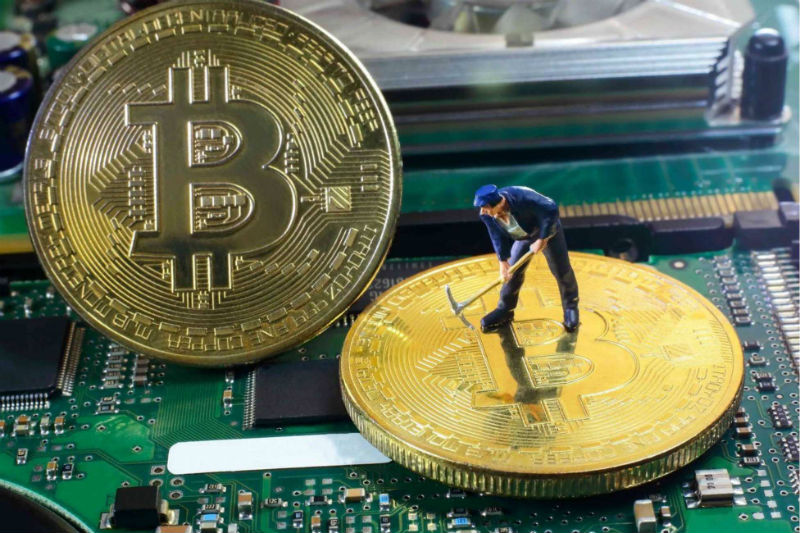
Bitcoin cash mining confirms a block of transactions every 10 minutes as compared to Bitcoin. But before this block is validated all the Bitcoin cash minors have to repair a cryptographic puzzle. The puzzle isn’t like a regular puzzle, in fact, it is impossible to solve by the human mind alone. It requires extensive processing power to repair it.
Ever biotin cash minor contends to become the pioneer to solving it. The prize of this pulse-solving is the mining benefits. Yes, it is true, whichever miner succeeds in repairing the cryptographic puzzle first claims all the associated benefits. As per the rules, any miner who successfully mines the block earns 12.5 BCH. This remains in location till April 2020. After this date, the benefits are cut into half the actual reward and down to 6.26 BCH.

Bitcoin Mining –Successful or not?
But are the rewards worth the efforts? Well, it all comes down to the gadgets used for mining. Since you are paid in BCH, you must think about the actual market cost of mining Bitcoin cash before diving into it. If the rate is higher, so will the reward be. Thus, its success solely depends on what objectives you have in mind and also if you think mining is a long-term investment or not.
Hardware Requirements to Mine Bitcoin Cash
The first and foremost hardware device required to mine Bitcoin cash is the ASIC (Application-specific incorporated circuit). It isn’t the only variation available –some are even better. But there isn’t a point to consider another since ASIC is the only way you will ever have a chance of winning the benefits.
Software Applications for Bitcoin Mining
There are a number of third-party software applications available for download when planning to mine Bitcoin. However, if you have carefully gone through the article, you would know that neither of the gadgets is suitable for Bitcoin mining. In order to mine Bitcoin, the user will have to use an ASIC. Furthermore, the user will also have to enter the Bitcoin wallet address to proceed.

Bitcoin Cash Mining Pools
Mining pools allow Bitcoin miners to pool in their resources together, share a joint hash and distribute the winning reward equally. Users with more shares win more and vice versa. Bitcoin mining pools allow a great deal of control to the users. Since they are easy to set up, there are many rip-offs in the name of authentic Bitcoin mining pools. Therefore, it is important that users carry out extensive research before joining a mining pool. If they aren’t sure about which one to join, they can always choose a public mining pool.
Below is a list of the top 5 Bitcoin mining pools as ranked here. Readers can read more about these in detail and then decide which one to opt for.
- BTC.com
- Antpool
- Slush
- F2pool
- ViaBTC
Final Word
Though it seems like a good opportunity to invest in mining Bitcoin cash, it is merely upon the miner whether to pursue it or not.
What is a Hard Fork?
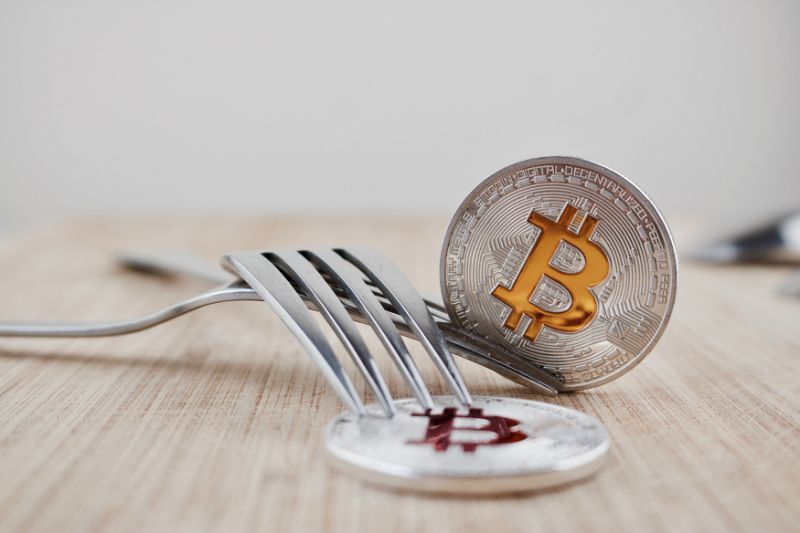
Knowledge of what hard fork is necessary for users who have contact with the cryptocurrency world. Consider how the forks pass, what are their pros, cons and how to benefit. A hard fork cryptocurrency is the introduction of significant changes in the program code of the blockchain chain, as a result of which a new branch of the network is created that functions by its own rules and do not interact with the “parent” system. In this review, we will consider in detail the key points regarding hard forks, and we will understand why it is being held.

As mentioned above, hard fork cryptocurrency is a modification of the source code of the blockchain, as a result of which new rules for the functioning of the system are created, incompatible with the old algorithms. Since the old and new rules cannot work within the same chain, the network is ramified (hence the name of the process, because the hard fork translates as “hard fork”). The “mother” system continues to operate according to the established algorithms, while the new blockchain has its own ecosystem.
In most cases, the result of the hard fork is the creation of a new cryptocurrency, which runs within the same payment system. Sometimes this operation does not imply the creation of a new asset. Changes are made in order, for example, to correct the principle of extraction of a coin. In this case, division occurs. The best example of hard forks is Bitcoin Cash. For a long time, the BTC blockchain worked, satisfying user needs, and everyone was happy with everything. In 2017, there was a proposal to change the settings and increase the block size to 8 MB. The step was to solve cryptocurrency scalability problems: reduce transaction costs and increase the number of transactions per second.
What changes are made during hard fork?
We have already found out that often due to hard forks a new cryptocurrency appears. This asset is formed due to the fact that the organizers make fundamental changes to the original blockchain, which are incompatible with the old algorithms. As a rule, the following aspects are touched upon when holding a hard fork:
- Sets the maximum issue of the new currency.
- The time of block generation is prescribed.
- Sets the amount of the reward for the disclosure of the block and the frequency of its adjustment.
- An algorithm that regulates the complexity of mining is created.
- The block size is set (the possibilities of the subsequent change of this parameter are additionally specified).
In fairness, we note that the organizers of the hard fork extremely rarely subjected to drastic changes absolutely everything. As a rule, they cover only a couple of aspects. For example, one of the most successful forks of Bitcoin Cash is in many ways similar to the original Bitcoin. It has the same emission (21 million coins), approximately the same block generation time.

Conclusion
Taking into account all the above, we can say that despite some drawbacks, hard fork cryptocurrency is a rather positive development. Of course, attackers often use this, and ordinary people burn through on projects that are not successful. However, dramatic changes in blockchain networks stimulate their development, expand the possibilities of application, make payment systems as user-friendly as possible, and give new chances for investment. The main thing is to observe a competent approach when working with one or another hard fork in order to minimize all risks.
What Is A Paper Wallet?
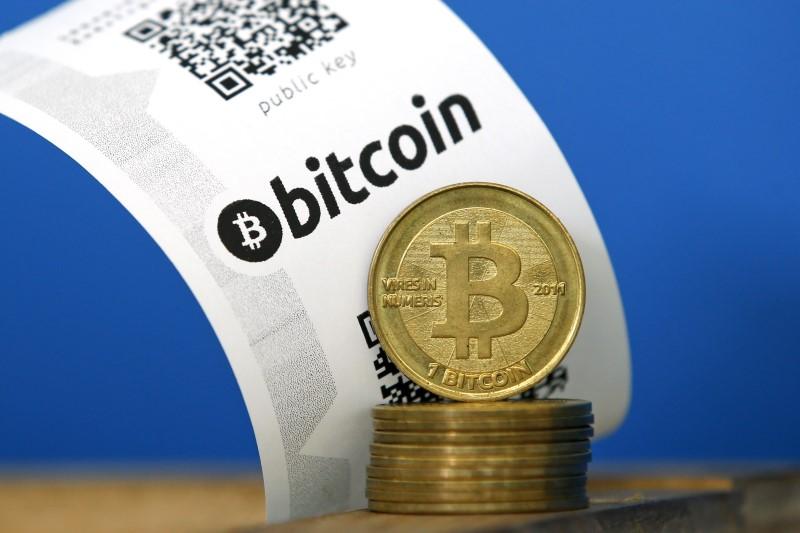
A paper wallet is a special document with which the storage of a virtual coin is ensured. Such storages are in demand among users of crypto networks who own a large number of cryptocurrencies and aim to protect the savings from intruders. The peculiarity of such wallets is the availability of copies of two types of keys (public and private).
The convenience of the store lies in the possibility of using QR codes that provide quick identification and adding keys to the desktop client for conducting operations in a crypto network. What are the features of such wallets? How to create a paper wallet Bitcoin and what is required for this? What safety measures to follow during use? These and a number of other issues will be discussed below.

What are public and hidden keys
To better understand the essence of cryptographic keys, let’s simulate the situation from the real world. Imagine a vending machine. Anyone can throw coins into it. But not everyone will be able to get them back because this requires a special key. The only person who takes money from the device is its owner with a unique key.
In this example, the vending machine symbolizes a public address to which money can be sent to you. You own a device with its own unique hidden key. With it, you get access to the funds and the right to dispose of them at its discretion. The public key is the address to which money is sent to you, and the secret key is what you will use to send the coin to someone else. Remember, only you must know the secret key, otherwise, anyone can use your wallet and send money to any address.
How to make a paper wallet
You will need a program that randomly generates unique private and public keys. This is an open source program, and if you know about programming, you can see for yourself that it doesn’t do anything extra. Moreover, the keys will be created offline so that they do not hit the Internet, and when the job is done, you need to remove the program to get rid of all traces. You do not need to be a programmer or to understand encryption: you need only a computer, a printer, an internet connection and a sheet of paper. First, you need to make sure that there is no malware on your computer. The best is just a new computer, but, of course, not everyone can afford it.
Do you need a paper wallet
The answer to this question depends on the specific circumstances. If you want to spend a summer day trading in currency, then you will not need such a carrier. But if you are going to save money for a long time, for example, you are going on a long journey, then a paper wallet is a great way to keep your savings safe.
Risks of paper wallets
As far as paper carriers are protected from virtual threats, so are they vulnerable to physical ones.
- Abduction: there are always people who are ready to break the law for the sake of something valuable. Bandits can crack your safe just like hijack Lamborghini. They do not know what is inside, but since it is protected, it means it is valuable.
- And the moral here is simple – do not shout at every corner about your investments in cryptocurrency. It doesn’t matter whether it’s online or in the real world. Remember.
- The unreliability of the carrier: after all, it’s just paper. It is easy to damage, and the paint eventually erases. So periodically make copies of the document.
- Theft: since the keys are written on a sheet, they can be seen, photographed and stolen your money.
- Disasters: a sheet of paper is not protected from natural disasters and can be easily destroyed if you have not made backup copies.
Conclusion
The use of a paper wallet is relevant for those cases where the holder of a cryptocurrency focuses on long-term investments and does not plan to frequently conduct transactions with coins. Despite a number of security advantages, paper vaults have a number of disadvantages that are important to remember before registering. But you have to tinker to prevent physical trouble: the loss, theft or damage to secret keys. Always keep their location secret and install new storage in case of minimal suspicion of privacy vulnerabilities.
The best solution is diversification. As the old saying goes: “Don’t keep all your eggs in one basket.” Always distribute them. Keep a part of the currency (most) in paper wallets, just in case, make backup copies.