£0.00


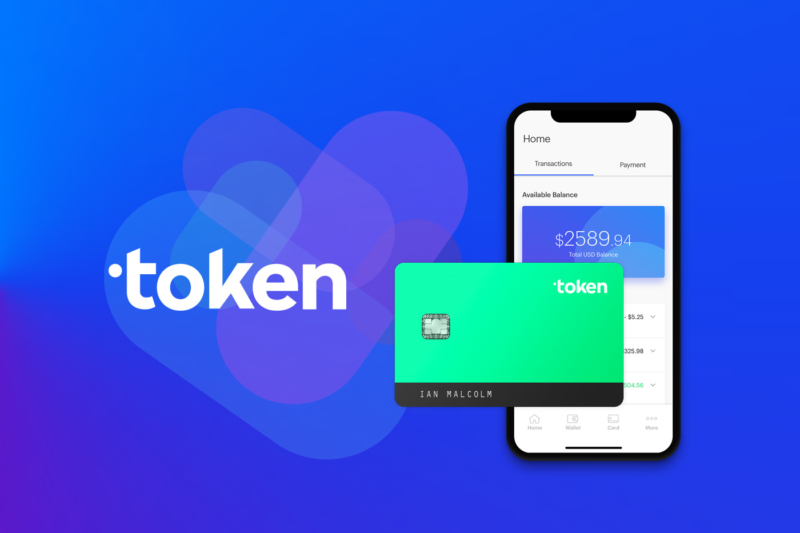
Card Review: TokenCard
In order for cryptocurrencies to be widely used and used, they must be easy and understandable to use, like ordinary money. Over the implementation of this direction, there are a lot of projects that create a lot of opportunities to use cryptocurrency. But perhaps the most important moment in the popularization of this sphere will be the provision of the opportunity to pay for goods with a credit card on which cryptocurrencies will lie. One such project is TokenCard (TKN).
TokenCard is a debit card and mobile app that runs around the world on millions of payment terminals / ATMs, which allows holders to use their real-time digital assets in the real world as real money. A card that allows its holder to spend ETH and other ERC20 tokens using a smart wallet contract.
What can you hold?
Users independently decide which tokens based on the Ethereum platform they would like to spend, and they will be able to set a mode in which several currencies participate in any transaction at the same time. Since the beginning of the project, the development team’s own token (TKN), Etereum (ETH), and eight other tokens are involved in it: REP, MKR, DGD, MLN, GNT, 1STб and SNGLS.

Contract Wallet
TokenCard users will be able to create their own wallet on the basis of a token contract and join the platform or provide such an opportunity to already existing wallets. The purse of the contract will act as a bank account on which funds are kept, and which provides security parameters, but all this is under the control of the user.
Mobile app
The mobile card application aims to eliminate the need to bind to a traditional bank account. The application allows users to manage their tokens, control costs, conduct transactions, and distribute tokens depending on each purchase they plan to make. The user can, for example, configure the card so that within any transaction 5% of funds are used in Etereum cryptocurrency (ETH), 40% in DGD and 55% in SNGLS.
Also, the Token Apps token application is the main tool for interacting with the wallet. The application manages the wallet and provides users with the ability to access their token portfolio and manage their own debit card.

Main features
It is difficult to name any features of this project. At its core, it is similar to how payment is made for services by conventional bank cards. But perhaps there is one difference. All processes on the card are controlled by smart contracts. Now we will try to explain how this happens. Suppose on your card, there are some tokens, the cost of which is equal to 2 dollars. You need to pay for the purchase – $ 100. When making a payment through the POS terminal, you will be charged 50 tokens + transaction fee from your account. The maximum commission of TokenCard is 1.5%. It is also worth noting that the activity of the team is not particularly happy because so far the project has not yet been launched. And in these market conditions, when there are a number of projects offering similar functionality, it will be much harder to make a breakthrough.
Original TKN token
TKN cryptocurrency is a digital token that is part of the TokenCard project. This project began one of the first to develop a technology that would allow paying for cryptocurrencies using debit cards. Work on TokenCard began about a year ago, in May 2017.
The TKN Asset Management Agreement provides for the accrual of 1% of the payment amount on a debit card using tokens from other issuers. For users who use TKN tokens when making payments, no fee will be charged.
Mining Ethereum
Many people often question how to mine Ethereum. They wish to understand the procedure involved in its mining and how it works. For starters, those who are aware of the procedure needed to mine Bitcoin will not find it very different. In fact, it is very similar to how Bitcoin is mined.
Despite popular opinion, blockchain miners don’t just collect cryptocurrency tokens. They are individuals who fill the function of the transitional people –a systematic approach, we don’t find in decentralized systems.

To fully understand the role played by an Ethereum miner, we first need to visualize how an orthodox monetary system works. PayPal and banks consist of checks and balances that ensure no fraud is being committed or mistakes made. Although very exceptional, these institutions run everything from one central point. All the transactions made or to be made have to run through this center in order to be processed further.
Now, one may again question, how these Ethereum miners differ from these institutions? In Ethereum mining, it is upon the miner to verify any changes in the established network. Whenever any modification or transaction is made, there are more than one computers that need to verify that modification or transaction.
For example, let’s assume there are ten computers that need to verify any modification made by a client. If nine of the ten computers verify the modification but one doesn’t, it is very easy to detect which computer didn’t. This makes spotting mistakes easier. Sadly, we don’t see any such system in banks. Whenever a mistake is made, there is no one to rectify it. This approach is what differentiates Ethereum miners from financial institutions. The record keeping model is far more superior to the one we see in centralized models.
Earning of Ethereum Miners
All banks charge a fee for the services rendered. These are usually charges spent on the internal confirmation system. However, when using Ethereum, clients pay the Ethereum miners for the verification services. Each of the modifications or transactions made by the clients are organized or tape-recorded in the form of blocks. Every time a block is completed on the blockchain, a miner earns 5 ETC.
So, how does the mining work? All the modifications made by the client on the DApp takes space –similar to an image storing on iCloud. Since data can be numerous, each set is compressed in the form of a hash. The hash is a string of the code containing all the information –like a zip file on a desktop.
Miners compete to determine the best hash for that specific block of information on the blockchain. This means that more than one miner can work on the same block of data simultaneously. Whichever miner cracks the hash code first is given the 5 ETC. All the other miners than stop working on that code. You can also calculate profitability here.

The Journey from Proof-Of-Work to Proof-Of-Stake
No one can really predict the future of Ethereum mining. Even though the current systems work well, the minds behind Ethereum are on the lookout to find a replacement. The current mining system is labeled proof-of-work. This label makes perfect sense since only Ethereum miners who have, in fact, hashed a block of information are given Ether for their contribution.
As predicted, proof-of-stake might be the future. This new approach may seem a bit harsh as it will limit miners in favor of Ether holders. This means that only those who own Ether towns will reach a consensus.
What Is A Hardware Wallet?
The main difficulty for users of Cryptocurrency is security. Crypto exchanges are ideal places to trade cryptocurrency, and they offer garage offerings, but there is a risk one suffers the loss of their asset in the event such websites get hacked. In the case the government takes the exchange down, it also prevents the recovery of these assets. A hardware wallet is among the best places to save your cryptocurrencies.
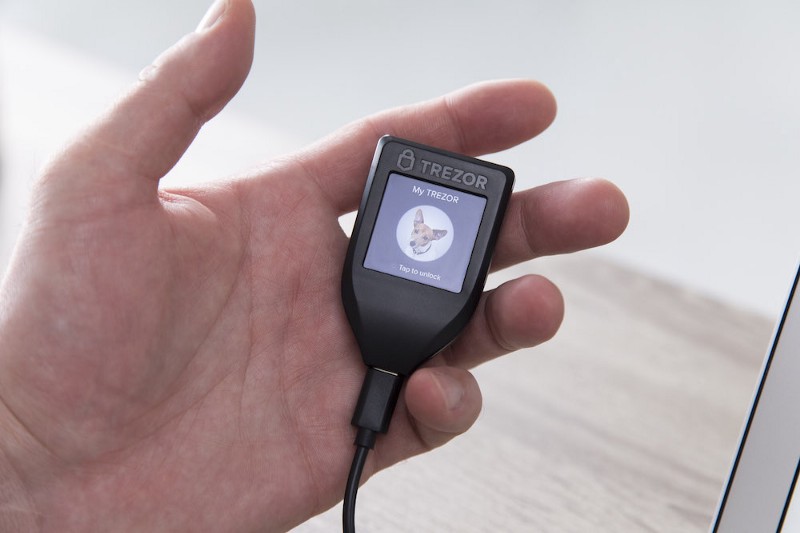
A cryptocurrency hardware wallet is a digital, physical system used to create and manage non-public keys. Compared to other substitute wallets, these devices can be said to be more secure in terms of security because they are not subjected to attacks from cybercriminals. These devices are used to separate non-public keys from getting damaged like those damage-prone online storages such as computers.

Some typical attributes of hardware wallets
– Information sharing screens can be found on most of them.
– Physical buttons are available on these devices and are used for command purposes.
– For security reasons, customers must set a PIN.
– The devices are used to generate and save private keys.
– They support about two to three critical coins.
– Transactions are performed on the device.
When you’re using a hardware wallet, it is recommended that you make sure no one sees your private keys. The loss of these keys can bring about the forfeiture of your assets. If you lose the device, you may lose your resources. You can improve the security of USB drives by making use of gadgets that require a PIN to access records.
Why use a Hardware Wallet?
Users of multi-currency hardware wallets are permitted to store various Cryptocurrencies in a single device, making it easier for customers to control their assets more efficiently. Since hardware wallets are cold wallets, this makes it problematic for programmers to go after them. In contrast, software and webpage wallets are permanently connected to the internet, making them easily accessible to cybercriminals.
Hardware wallets allow the operators to receive and send funds whenever they like. Sending cryptocurrencies from a paper wallet takes more time as it should, as it should first be imported into a hardware or programming application wallet. Hardware wallets permit owners over their public and private keys. Also, with some several other wallets other than paper wallets, users depend on third parties. In terms of exchange wallets, users could lose their assets if the website gets shut down for whatsoever reason.
The hardware wallets contain predefined encryption systems that ensure the devices doesn’t get compromised by computer infections and malware. Unauthorized persons cannot view the private keys kept on these devices. With hardware wallets, users can distribute cryptocurrencies uncountable times; this is different from paper wallets because they are only invested when security problems are anticipated.
Limitations of Hardware Wallets
Although it is considered one of the safest locations to keep coins, there are risks of you losing your cryptos from your hardware wallet. The hazards identified with these gadgets include:
Bugs
Like any other framework, the protection of hardware wallets depends on how you monitor them. Though this rarely occurs with these wallets, a firmware error may expose your stored crypto coins to invaders.

RNG
Hardware wallets use RNG to degenerate private wallet keys. The use of random characters makes it extremely difficult for someone to think or deduce your private key. It is sometimes difficult to guarantee the RNG generator’s randomness. By managing a non-random RNG that follows a specific pattern can reveal your wallet information to cybercriminals.
Cost
Although software wallets mostly come handy via free downloads, hardware wallets come with a price; this has prevented countless new crypto dealers from experimenting with these beautiful things. Regardless of their amount, they provide customers with a secure and feasible strategy for storing cryptocurrencies.

What Are Cryptocurrency Exchanges?
As in the case of traditional financial assets, exchanges play a key role in the cryptocurrency market. Exchanges can become an obstacle to the rapidly emerging world of digital assets. At first glance, they are very similar to stock exchanges – they reduce sellers with buyers and participate in the pricing process. However, they also have serious differences that expose investors to risks that they are not fully aware of. This worries regulators and leads to the emergence of new types of exchanges, devoid of these shortcomings.

What is the difference and difference between stock and cryptocurrency exchanges?
They perform the same function – provide asset turnover – but that is where their similarity ends. Cryptobirds keep investors’ assets and charge fees. In normal markets, these functions are performed by brokers. As a result, the profitability of cryptocurrency exchanges significantly exceeds traditional profitability.
For example, in 2017, Japan’s second largest crypto birth, Coincheck, was almost equal in terms of profitability with Japan Exchange Group, the operator of the country’s largest equity and derivative markets. Another important difference is in regulation: the supervisory authorities strictly monitor the stock markets, while digital in most jurisdictions are left to their own devices.
What risks arise from these differences?
Protection characteristic of stock markets does not exist on cryptocurrency ones. The biggest potential danger for an investor is the possibility of losing all your money due to a hacker attack or a bankruptcy exchange. So, in January, Coincheck lost nearly $ 500 million of tokens, and in June two crypto birds were hacked in South Korea. Since mid-2014, several exchanges have closed, including after hacking (including Mt. Gox, once the largest cryptocurrency exchange in the world), the activities of others have been stopped by the authorities.
How can investors protect themselves?
They can keep their digital tokens in personal wallets or so-called cold stores. However, they are usually not inclined to do so. Active traders act differently: they divide their assets into several parts and distribute them among various exchanges. Some platforms are trying to improve the security of trade. For example, the Gemini Trust used the services of the Nasdaq corporation to monitor potentially dangerous transactions with bitcoins and others.
What do regulators do to protect investors? Investors often hear warnings from authorities, especially with regard to volatile prices and the possibility of losing all assets. Many regulators require exchanges not to list the tokens, which are securities and are subject to relevant laws. In March, the head of the Bank of England, Mark Carney, said that it was time to put an end to “cryptocurrency anarchy” and bring the industry to the standards characteristic of the rest of the financial system.
How do the exchanges react?
Fundamental changes. There is a new generation of sites, closely adhering to the libertarian ideals of the blockchain. Known as decentralized trading platforms, these exchanges do not store customer funds and simply bring buyers together with sellers, allowing investors to conduct transactions. At their core, such exchanges are peer-to-peer platforms. According to Kelvin Wong, an enthusiast of decentralized exchanges and director of public relations fund OAX, this structure increases the transparency of work and the structure of commissions compared with the current model. The Foundation is developing decentralized trading platforms.

Decentralized exchanges
The answer to this question depends on who you ask it to. Sam Tabar, an AirSwap strategist who opened his own decentralized exchange in April, believes that the main theme of this year will be the migration of traders to new sites. Chia Hawk Lai, President of the Singapore Fintech Association, notes that the new type of exchanges has its drawbacks, for example, less user-friendliness and low technical support. David Lee, the author of the Handbook of Digital Currency (“Handbook of Digital Currency”), is convinced that in 5–10 years, the vast majority of cryptocurrency trading will take place on decentralized sites.