£0.00


Iagon Review
Since the emergence of cloud technology, businesses and private persons alike are storing their data remotely and using SaaS applications.
The cloud space is currently dominated by the likes of IBM, Microsoft, Google, and Amazon, as these giants have the capacity to host large amounts of data.
Just like the banks, however, their business relies on a centralized model – a model that will soon be outdated.
As the phenomena of Big Data and Artificial Intelligence become more prevalent in our society, the centralized models will not be able to cope with the increasing amounts of data.
Therefore, it would be advantageous if only there were a decentralized model businesses and consumers could rely on…

Enter IAGON
According to their website, IAGON’s vision is “to create a Global Supercomputer, powered by Artificial Intelligence & Blockchain Technology”
Essentially, the company aims to marry two of the most revolutionizing technologies of the future: artificial intelligence and blockchain.
IAGON’s developers have created a platform that can be used by anyone on any smart device.
With its sophisticated AI, the platform is incredibly intuitive and only requires basic knowledge to operate.
By utilizing blockchain technology, the platform will furthermore provide its users with more safety than a centralized cloud service ever could.
The best part of it is perhaps the way users will be able to generate revenue for themselves via mining.
Whenever a user’s device is idle, the network will use its processing and storage capabilities, so no power ever goes to waste.
This means that all users in the network will essentially be using each other’s free storage, which is 100% safe due to the encryption.
In sum, IAGON offers a safer, faster, and wider-reaching solution than any current system out there.

So how does it all work?
Since the IAGON ecosystem depends on harnessing the processing and storage capabilities of the users in the network, it will only grow faster, stronger, and smarter as more users join.
As a user, you lend the idle power of your computer, server, data center or smart device, and receive tokens in return as compensation.
These tokens can then be traded for fiat money on any of the major cryptocurrency exchanges.
When you use the network for storage, you can rest assured that it will be safely encrypted – just like when you trade in Bitcoin or any other cryptocurrency.
Because the platform will integrate multi-distributed ledger technology, it will be able to utilize the networks of Tangle and Ethereum.
The network will also have contributors, offering their skills and capacities as and when they are available.
The network’s AI will then ensure that the contributors’ price is reasonable, by matching it to their level of expertise.
To summarize
IAGON is set to revolutionize the way we think about cloud technology and cryptocurrency mining.
Forget having to trust the current Internet giants with keeping your data safe in their centralized data centers.
Forget having to dedicate processing power and energy to mine for cryptocurrencies.
All this will change with IAGON.
bitcointalk username: Ico Friends

The recent regulations rolled out across Western and Eastern countries do not seem to be letting up in the light of new issues.
Canadian Banks Impose Bans
Last month, the Canadian bank Toronto Dominion enacted a policy that would prevent their customers from buying cryptocurrencies using their services.
Another Canadian bank, the Royal Bank of Canada, also announced that it would begin to restrict the number of transactions involving cryptocurrencies.
Now the Bank of Montreal follows suit.
The bank, which is under the BMO Financial Group, just recently announced that their customers would not be able to use their debit and credit cards for the purposes of trading in (or with) cryptocurrencies.
This is could be seen as bad news for new and existing investors in cryptocurrencies, as their options will now be severely limited.
This has not stopped the traders, however. When one door closes, another one opens.
LocalBitcoins, which is a local P2P platform, allows for cryptocurrency transactions and has as a result of the bank ban increased their trades significantly – from $1.2 to $7.2 in just three weeks.
As with the recent bans imposed by social media platforms on the advertisement of cryptocurrencies, some investors even see the bank ban as a good thing.
Given that the whole philosophy behind cryptocurrencies is predicated on the fact that the current bank system is flawed, many welcome the ban as an opportunity.
By banning cryptocurrency transactions, banks are giving the investors one more reason not to use the traditional system to conduct business.
Skeptics of these new ways of doing business, as the traders do with LocalBitcoins, say that it will lead to disaster due to security concerns.
These concerns do not seem to phase Canadian cryptocurrency traders in the slightest, however.

Crypto-Scam in Vietnam Causes Trouble
Canada is not the only country recently taking a stricter stance on the cryptocurrency market.
Vietnam has recently experienced a massive case of fraud involving cryptocurrencies, and have as a result announced that Vietnamese traders should be wary.
As a result of this case, the State Bank of Vietnam and the Ministry of Public Securities have been told by the Prime Minister to impose stricter regulations on cryptocurrency trading.
The official website of the Vietnamese released a statement that said:
“Cryptocurrency investment and trading and raising money through initial coin offerings are evolving in a more complicated manner”
In the light of the recent scam, which is thought to involve the company Modern Tech JSC, the police authorities in Ho Chi Minh City have been put on alert.
Le Dong Phong, the chief of police in Ho Chi Minh City, made the following statement:
“All cryptocurrencies and transactions in cryptocurrencies are illegal in Vietnam. We are gathering information about the case, but officially we haven’t launched an investigation until we receive accusations from any of the alleged victims”
The Vietnamese banks have now been asked not to facilitate any further transactions involving cryptocurrencies.
What should be done?
What do you think can be done to prevent scams in the cryptocurrency markets? Do you think the restrictions imposed by Canada and Vietnam is the right response?
Leave your opinion in the comments below!

As anyone in the cryptocurrency community will be painfully aware of, a string of Internet giants have banned (or proposed to ban) cryptocurrency advertisements on their platforms.
Some of the most prominent of these companies include the likes of Google, Facebook, Twitter, MailChimp, and Reddit.
Facebook already put the ban on ICO adverts into effect at the end of January this year, and Twitter’s ban was just announced at the end of last month.
Although Google confirmed their ban in March as well, the ban will not come into effect until June later this year.
Finally, “Яндекс”, the biggest search engine in Russia, has now also announced that it impose a similar ban on ICOs.
Russia, in particular, stands to lose quite a lot on this kind of ban, as their contribution to the global ICO market is as much as 10%.

Why ban cryptocurrency advertisements?
The rationale behind this ban is that too many ICOs are scams, and the users of the online social media platforms must be protected.
This has caused some of the investors to worry that the value of their cryptocurrencies will plummet – and indeed some have.
Others have started suspecting that the timing of all the Internet giants deciding on a ban within a relatively short timeframe is due to collusion between them.
However, still other investors are optimistic about the situation. They say that the advertisement ban on social media will help weeding out the criminal elements of the cryptocurrency market.
And there are quite a few criminal elements: money laundering, trading of illegal substances, and scam artists peddling fraudulent ICOs.
Cryptocurrency associations strike back
Regardless of where one stands on the advertisement ban, there are now several organisations that have decided to file lawsuits against the major Internet companies in retaliation.
The organizations are based in a wide range of countries, including Russia, China, South Korea, Kazakhstan, Switzerland and Armenia, and have recently formed Eurasian Blockchain Association (EBA).
The organizations themselves include the Russian Association of Cryptocurrency and Blockchain, a Chinese association of crypto investors called LCBT, and the Korea Venture Business Associations, the Kazakhstan Blockchain and Cryptocurrency Association, the Swiss fintech company InnMind, and the Armenian Blockchain Association.
Pending lawsuit against Google, Facebook, and Twitter
The news about this joint lawsuit is hot off the press, and the world only found out about this move a little over a week ago.
The group of organizations is moving swiftly, however. With funding collected and stored in Estonia, the lawsuit is already set to be filed in New York next month.
Where the lawsuit will apply to is yet to be confirmed, as some states have more lax laws when it concerns cryptocurrencies.
What do you think of the proposed ban on cryptocurrency advertisements? Will the companies change their mind as the criminal elements slowly but surely disappear?
Leave your comments in the section below!
The market for cryptocurrencies has matured, especially in the case of now well-established ones like Bitcoin, which has been in circulation since 2008.
As a result, many of those who were once very sceptical about the concept of digital currencies are now slowly being won over.
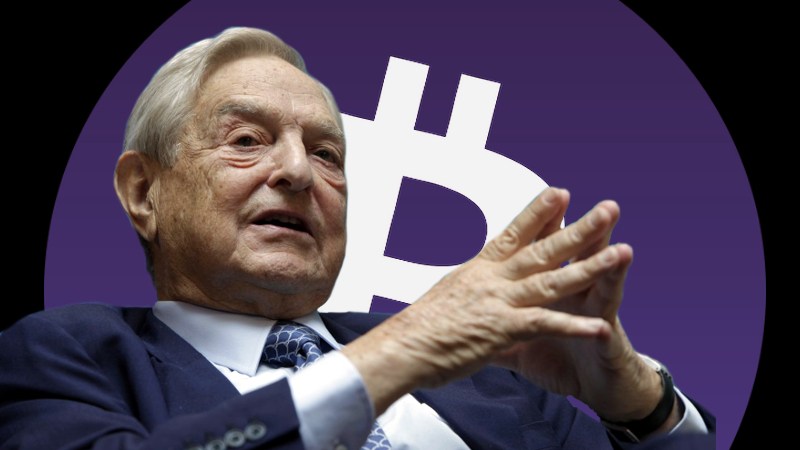
Some are even beginning to toy with the idea of investing in Bitcoin themselves. A great example of this is famous billionaire George Soros.
“Cryptocurrencies are a typical bubble” – George Soros
Mr. Soros has denounced Bitcoin several times in the past, and one of the reasons he has given is that cryptocurrencies will help foreign dictators in the same way that they aid criminal activity in the West.
On this subject, Mr. Soros has said:
“There’s also as very innovative blockchain technology, which can be used for positive or negative purposes. Currently it’s used mostly for tax evasion and for people and the rulers and dictatorships to build a nest egg abroad.”
Another reason Mr. Soros has given for not caring much for Bitcoin, and cryptocurrencies in general, is that they are not currencies at all.
According to him, cryptocurrencies are nothing more than pure speculation with no intrinsic value:
“Cryptocurrencies are a typical bubble, which is always based on some kind of misunderstanding. Bitcoin is not a currency, because a currency is supposed to be a stable store of value, and the currency that can fluctuate 25 percent in day cannot be used, for instance, to pay wages, because wages could drop by 25 percent in a day. So it’s a speculation, it’s based on misunderstanding.”
A change of tune from George Soros
Now, however, things seem to have changed for the billionaire tycoon.
He has been indirectly involved with Bitcoin since August 2017, which makes his comments above very interesting, given that they came after his involvement with cryptocurrencies.
Overstock.com branded itself as the first major retailer to accept Bitcoin, and Soros is the third biggest shareholder of that company.
That alone is an indication that the businessman has changed his tune when it comes to blockchain technology and digital currencies.

The plot thickens
Things are now becoming much more interesting in the Soros camp.
Bloomberg reports that Soros Fund Management will now be investing in cryptocurrencies, ICOs, and blockchain technology directly.
Thus, Soros joins the ranks of many billionaire investors who have begun to speculate in digital currencies, such as John Burbank (who starting his funding round in January), and Alan Howard (who makes a significant personal income from cryptocurrencies and blockchain technology).
The example of George Soros perfectly describes the changing attitude of seasoned businesspeople and investors all over the world.
They have not achieved their status as moguls in the world of investment because they made foolish decisions.
Sometimes it pays to take it slow, and consider your options before making a leap of faith into a new market.
What do you think of the veteran investors changing their opinion on cryptocurrencies? Will this add to the credibility of the market? Or will they simply push out some of the early movers?
Leave your thoughts in the comments section below!