£0.00


Alibaba is perhaps best known for being the largest e-commerce marketplace in the world.
The platform is mainly geared towards the bulk sale of items of all kinds.
Many European businesses import goods from China by liaising directly with the manufacturers via Alibaba’s platform.
For smaller Chinese businesses or individuals, there is Taobao.
Set up in 2003, Taobao is owned by Alibaba, but functions more like a Chinese version of eBay.
Banning the sale of items related to cryptocurrencies is not a new phenomenon on Taobao.
Previously, sellers of tutorials on how to mine cryptocurrencies have had their items taken off the platform.
Now, however, Taobao is expanding its ruleset.
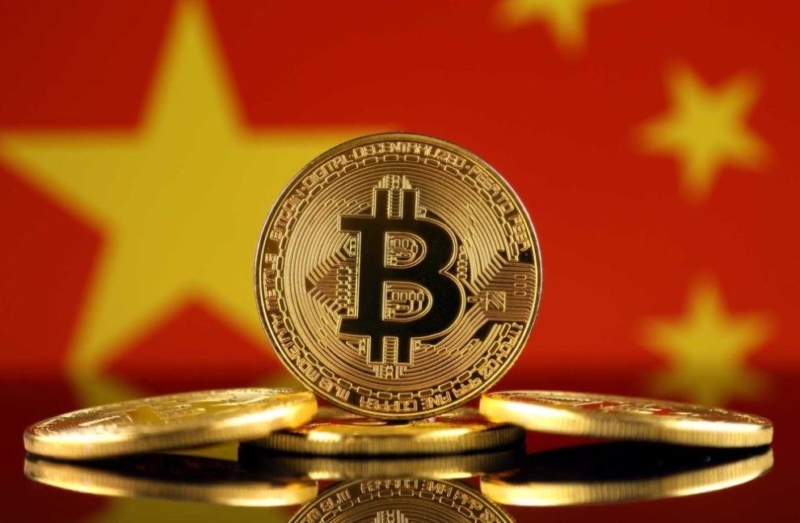
Anything remotely related to cryptocurrencies, ICOs, and blockchain will now be banned from the platform.
This also includes services like consultancies, ghostwriting, and technical services.

Bans are nothing new in China
For those who have been following the developments in China, this should come as no surprise.
ICOs and cryptocurrencies have not received a warm welcome.
The People’s Bank of China decided to ban all ICOs last year, and now they have banned cryptocurrencies altogether.
There is no ban on cryptocurrency mining yet, but given the current bans in place, it cannot be far away.
It is therefore understandable that Taobao has decided to penalize their users if they try to sell anything related to ICOs and cryptocurrencies.
If Taobao allowed their users to circumvent the bans issued by the People’s Bank of China, the whole platform would be at risk of being shut down.
Despite these bans, which could easily spell the end of the Chinese cryptocurrency community, many are optimistic.
Good news on the horizon
The People’s Bank of China recently had a change of leadership, and the new head of the bank has a very different view of the digital currencies.
According to Yi Gang, cryptocurrencies like Bitcoin provides the users with an unprecedented amount of freedom.
This stance could indicate that there is a good chance the People’s Bank of China will eventually revoke the bans.
Another factor that could give crypto-fans reason to be optimistic about the future is the Chinese government’s stance on blockchain technology.
Cryptocurrencies and ICOs have been banned, but blockchain has not.
That is because the Chinese government is very fond of the technology, and invested $1 billion in startup companies using blockchain.
Furthermore, the People’s Bank of China has the record for most blockchain related patents.
It, therefore, seems a bit counter-intuitive that the People’s Bank of China would issue the bans on ICOs and cryptocurrencies.
Why the mixed messages?
One of the reasons why could, of course, be that the Chinese government and the People’s Bank of China want full control over what the technology is being used for.
By limiting blockchain technology to the companies funded by the government startup fund, they will have that control.
What do you think about the new bans issued by the People’s Bank of China? And what about the Chinese government’s interest in blockchain?
Leave your opinions in the comment section!
One of the reasons given for the sudden surge in Bitcoin value, which only happened recently, was that many American investors were selling their coins ahead of tax collection.
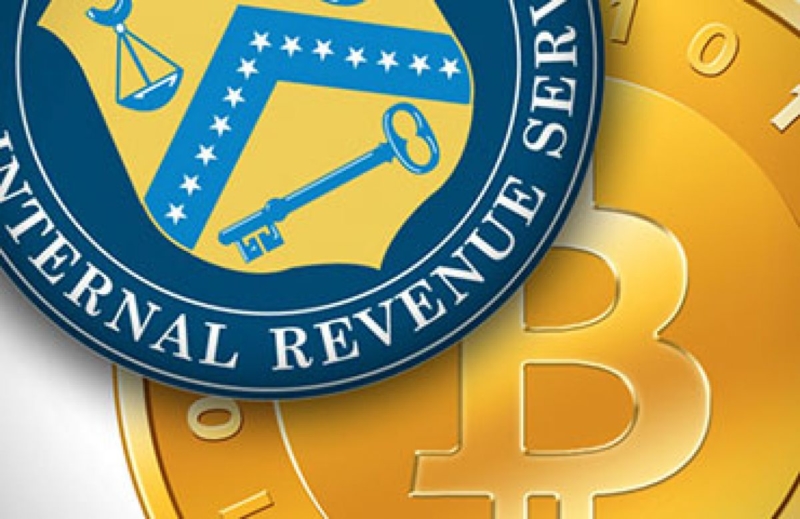
Whilst this may or may not have been the reason, the IRS (Internal Revenue Service) has now released data on exactly how many people have reported capital gains from their cryptocurrency investments.
The results are far from compelling – not even 1% of the traders dealing in cryptocurrencies have reported any of their activity yet.
With the deadline for tax filing fast approaching, the IRS questions the current state of affairs.

Few have reported capital gains from cryptocurrencies
The IRS has suggested that fewer than 100 individuals have reported any capital gains or losses on their cryptocurrency investments by April 13th.
Since there are a quarter million people thought to be involved in cryptocurrency trading, that comes out to less than 0.04%.
This is seen as somewhat suspicious, seeing as 2017 was a very good year for some – and very bad for others.
Regardless of what happened with the investments, the IRS expected quite a few reports on it.
That, however, did not happen.
Complexity could be the reason
One of the reasons for this could be the uncertainty surrounding how exactly to report such gains or losses.
A representative of Credit Karma, Jagjit Chawla, opines:
“There is a very good probability that the perceived complexities of reporting cryptocurrency gains are pushing filers to hold out till the quite past minute.”
However, the reporting of cryptocurrencies like Bitcoin should be nothing new to US investors.
The IRS has been providing guidance on how to report transactions for the past four years.
The fact that Bitcoin has been around, and presumably traded in, since 2008 should also be a cause for suspicion.
The IRS considers cryptocurrencies to be assets, which means that they are to be treated like any other physical property.
In this sense, cryptocurrencies are treated in the exact same way as making a profit from buying and selling houses or land.
Regardless of whether one is trading or mining cryptocurrencies, tax applies.
Nothing new under the sun
Despite the worryingly low figures, the IRS is used to this lack of activity.
The current figures are actually not very odd, considering that only 802 people filed any capital gains or losses back in 2015.
That said, the 2017 tax year saw a huge increase in cryptocurrency trading compared to the preceding years.
This has raised some suspicion and led some people to believe that cryptocurrency traders are underreporting on their activities.
The IRS, however, remains calm.
Although the deadline is approaching with increasing speed, there is still time for the cryptocurrency traders to file their capital gains and losses.
What do you think the reason for the late filing is? Are you a cryptocurrency trader? If so, why (or why not) would you wait with filing your gains and losses? Are the tax laws too complex?
Leave your comments below!

Qompass Review
Qompass is an ambitious project with an even more ambitious vision: to revolutionize how the financial markets operate.
What is Qompass?
Qompass is a system that aims to provide users with a new way of accessing financial markets. Qompass comprises of three things: it’s a blockchain platform, it’s a mobile app, and it’s a debit card. It’s the Kinder Surprise of ICOs. The platform will be using Qompass tokens (called QPS), and the mobile app will function as a digital wallet, with which users can load credit onto their cards. The aim of the Qompass is to eliminate corruption on the global financial market by transforming it with blockchain technology.

Who is behind it?
The CEO of Qompass is Emmanuel Lim, who has over three decades of experience in data encryption and cryptography. Educated in Computer Science at Singapore Institute of Technology, his past experience includes working for Standard Chartered Bank as a head of their cybersecurity. Along with CTO Vladimir Okhrimenko and CFO Selena Neskovic, he founded Qompass in Hong Kong last year.
How does it work?
By using a combination of active leverage, artificial intelligence, and neural networks, Qompass aims to create an ecosystem of applications and protocols. In other words, the system will contain a number of services and products that will benefit users interacting with financial markets. As with other kinds of cryptocurrencies, Qompass is completely decentralized and protects the anonymity of its users. One of the added benefits is that the Qompass system will function much faster than current ones like Bitcoin and Ethereum. As a matter of fact, the developers promise that it will be able to process 30,000 transactions every second. One of the ways it will do this is by harnessing artificial intelligence. This will, in turn, lower the cost of usage, which will translate into lower transaction costs for its users. While the platform is built with financial transactions in mind, it is also designed with user customizability in mind.

What are the services and products?
Qompass promises quite a few interesting products and services for its users. The Qompass Trader uses artificial intelligence to analyze movements in the financial markets, and then provide the user with recommendations on what to trade when for maximum profit. The Open API Platform allows for financial institutions around the world to link up with the platform. The Crypto P2P Exchange is a peer-to-peer exchange that will allow users to cash out their QPS earnings through the financial institutions linked to the platform. The Blockchain-Based Financing will allow users to put down their QPS as guarantees on loans in other cryptocurrencies like Bitcoin. Finally, the Crypto Payment Cards will be the “debit card” that allows users to access the blockchain.
How much can you invest?
Qompass offers investors packages in three different tiers, that each come with different benefits. The Alpha Package (the smallest one) can be bought for just $1, and gives users the opportunity to double their investment each month, whilst paying a quarter of their earnings back into the platform. For those investing $10,001 or more, the Delta Package will allow for 200% return on investment each month, whilst only requiring 20% of the earnings to be paid in fees. Finally, the Omega Package ($100,001 and more) will give investors up to 300% back on their investment each month, and only requires 15% in performance fees.
bitcointalk username: Ico Friends

It was only a few days ago that journalists covering the fall of Bitcoin could still claim that the cryptocurrency was at its lowest point since its all-time high in December 2017.
Although the value of Bitcoin seemed to have stabilized in March, where it floated around $11,500 per coin, it plummeted further.
This steady decline was reflected in other cryptocurrencies like Ripple, Ethereum, and especially the altcoins.
Today, the tune is very different, as it would seem that the famous cryptocurrency has made a surprising, but not unwelcome, comeback in terms of value.

Bitcoin is back
Yesterday, the value of Bitcoin soared by a staggering 17%, which translated into an increase in value of more than $1,000.
Prior to this spike, the value was at an all-time low of $6,786, which meant that many investors had been losing sleep over the future of their assets for months.
The value of Bitcoin was yesterday morning at $8,011, which could on the surface seem like the Bitcoin is making a long-awaited comeback.
Many investors are therefore breathing a sigh of relief, as it could be a sign that the Bitcoin is on the way back up.
Skeptics don’t buy it
However, there are those who view this rise in value as a completely normal and predictable phenomenon.
Experts see this as a sign that investors have gone from long-term to short-term, meaning that day-traders are most likely the cause of the spike.
The head of BKCM, Brian Kelly, confirmed this in an official statement:
”Once bitcoin broke higher, shorts were squeezed and forced to cover.”
One of the developers for Cypher Capital seemed to agree:
“The ratio of short margin trades versus longs has been increasing recently. Buying volume ticked up today and a lot of these short trades got liquidated, helping fuel the rally.”
Others believe that the spike could be due to the fact that many Bitcoin investors owe taxes to the IRS, and are looking to pay off this debt by selling off their assets.
The host of the Bitcoin & Markets, Ansel Lindner, is one of those people:
“I think it’s just some pent-up market movement, [there is] some relief in the selling [ahead of tax day]”
The future’s still bright
What needs to be considered is the many bad news there has been in regards to the international cryptocurrency market.
Just recently, Canadian banks banned their clients from using their services to trade in cryptocurrencies.
This follows a string of other countries around the world which have imposed stricter regulations on cryptocurrency investors and exchanges.
These countries include, but are not limited to, the US, the UK, South Korea, Vietnam, India, and China.
What this means is that despite the increasing unpopularity surrounding cryptocurrencies, the perceived value is still high amongst the investors.
What do you think caused the sudden spike in Bitcoin? Do you think the experts are right in saying that it is simply to pay the IRS ahead of tax day? Or is it because the Bitcoin has stabilized?
Leave your comments below!