£0.00



Cryptocurrency Attracts the Youth
Interest in cryptocurrency, especially Bitcoin, continues to grow amongst the young. As a new study, conducted by Qriously in conjunction with the exchange, Coinbase, shows the rise in interest among students. It has been suggested that Bitcoin is on the same trajectory as the internet and social media before it. Up to one-fifth of students already own Bitcoin, whilst two-fifths of Universities offer courses on cryptocurrency and blockchain. Stanford University is currently leading the way with over ten courses on the subject. And with student interest and enthusiasm flourishing, this trend amongst universities continues to grow.
This bolstered the recent study conducted by Imperial College London, who touted cryptocurrency as the next logical step. Researchers suggest as cryptocurrency moves beyond being a store of value to a readily exchangeable commodity it will elevate itself towards the mainstream. However, as the researchers state, there are several obstacles cryptocurrency must overcome. Regulation, usability, and scalability are the main three hurdles if cryptocurrency manages to straddle these it may very well be on it’s way to winning the race.

Meanwhile in Asia
Mainstream interest continues to pick up in Asia as more people look to work in Blockchain and cryptocurrency. Since 2017, job opportunities in the sector have exploded, increasing by up to 50%. Blockchain, which is the underlying technology for cryptocurrencies has seen a particular interest. Data from Indeed shows a heightened interest in Blockchain jobs all across Asia, from Australia to India, down to Singapore. It’s not just interest that is growing but opportunities too.
Cryptocurrency and blockchain positions are attracting people from all sectors. As the industry grows beyond just development and trade there is a need to round out their operations. Where once the sector mainly attracted individuals from more technical backgrounds, in software development, and financial backgrounds, in banking, it now reaches further afield. As the sector moves towards more distributed applications they are beginning to resemble internet and tech-based companies.

Rakuten Everybody’s Bitcoin
Japan’s largest e-commerce company, Rakuten, believes in the future of cryptocurrency as it continues to expand into new sectors. Rakuten, see’s cryptocurrency based payments to grow exponentially and have been considering entering into the cryptocurrency exchange for some time. Today, 31st August, Rakuten announced their acquisition of Everybody’s Bitcoin, signaling their commitment to the future of cryptocurrency.
Rakuten covers over 70 services, ranging from e-commerce retail to financial services. And they believe that cryptocurrency will become integral across all services. Although they had already begun accepting Bitcoin payments back in 2015, the organizations believe that this is the next step. By providing their own cryptocurrency exchange they will be able to provide better processes for cryptocurrency payment across the board, providing a more streamlined and secure service. Rakuten looks to bring their extensive experience and knowledge of various financial services to Everybody’s Bitcoin. And with Everybody’s Bitcoins knowledge and experience of the cryptocurrency exchange they look to expand and develop cryptocurrency services for customers.
Have you begun investing yet? Let us know in the comments below!
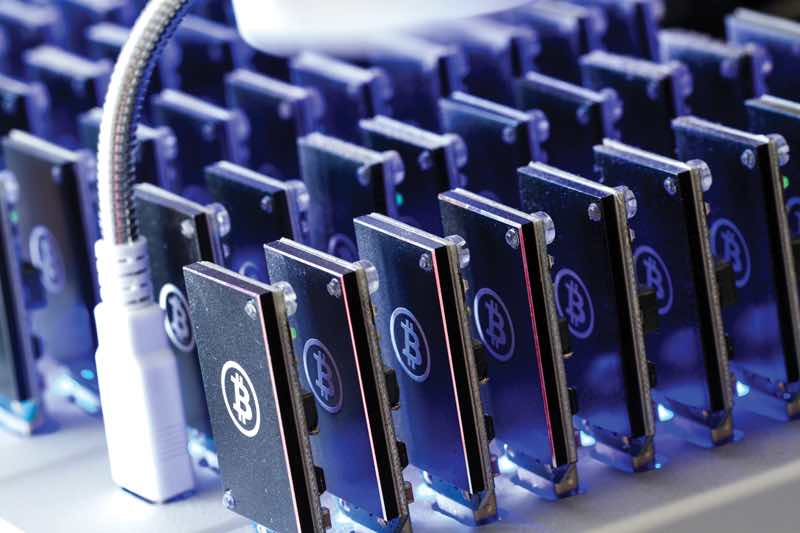
The standoff between cryptocurrency miners and utility companies continues but some may be looking for a way to work together.
Mining is becoming more popular
As cryptocurrency mining grows, so does the need for more power. Mining is a power-intensive process, utilizing large numbers of servers. Bitcoin mining alone absorbs more power than the country of Ireland. Therefore, Crypto-miners are always seeking the cheapest rates in order to maintain profitability. In fact, the cost of power can make or break a mining operation.
The hunt for cheap electricity has led to many confrontations with the utility companies. In, March, Chelan County, Washington, utility regulators had to suspend applications from cryptocurrency miners because the impact their power-intensive operations were having on the small county of Washington was becoming untenable. As 100’s of new mining operations look to set up in rural Washington, due to their cheap utility rates, the tensions have increased. One public utility company even had to beef up security as would-be miners have been harassing their staff. These tensions have led to some companies deciding to set up their own power grids. A Canadian company, DMG Blockchain, have invested in building their own sub-station in British Columbia.

Miners vs. utility companies
It seems on the surface that there is money to be made on both sides, so why the standoff? From the point of view of the utility companies, it would involve a massive investment on their part in an industry with an uncertain outcome. Kevin Nordst of Grant PUD, Washington, states that the infrastructure is not there and it would require millions if not billions of investment to meet the massive demand. The risk of investing in an industry with no track record and a lot of unknowns leaves much to be desired. The utility companies would be building power plants to serve a single industry in an area that does not require that kind of power. If crypto-mining were to disappear, for whatever reason, the utilities would be left footing the bill with an abundance of power they can’t sell. With these concerns in mind and money to be made, both sides are looking for suitable solutions.
Utility companies are looking to start from the ground up. Their first concern is on how to regulate and asses crypto-mining operations. Grant PUD, has created a new classification, known as the ‘evolving class’, this would include not only crypto-miners but any other emerging technologies with power-intensive needs. From this starting point, they would develop effective policies tailored towards these growing industries.

Solutions on the horizon
Crypto-miners, on the other hand, are looking for solutions in the existing system which they believe can benefit all. Power companies keep an excess of power at any given time in order to meet especially high demands. The majority of the time this power goes unused. What crypto-miners are suggesting is to have access to this excess power during the periods where it is not needed and when it is needed they are happy to close down operations. This would give utilities the opportunity to sell off unused power whilst still having the capability to meet the demands of their population base.
As the industry continues to grow we will no doubt see the confidence in certainty rise and more partnership solutions between utilities and crypto-miners.

The adult entertainment industry has always been at the forefront of new technological developments. Back in the 1970s, it was the adult entertainment industry that brought the VHS tape technology into the mainstream. In the 2000s, it did the same thing with DVDs. A few years after that, the adult entertainment industry was crucial to making streaming a mainstream phenomenon. Today, the industry is looking at tokenizing porn viewing — and this is good news for the cryptocurrency industry.

Tube8 is the website that will lead the way
Tube8 is a subsidiary website of the behemoth PornHub and boasts of 10 million members with 150 million page visits every single month. That is a huge amount of traffic. But rather than seeing this as an opportunity to charge people to watch porn, the Tube8 management is seeing a very different opportunity. Robin Turner of Tube8 is very enthusiastic about these latest developments. He mentions in an interview with Hard Fork that it has always been a dream for many people to get paid to watch porn. Up until recently, everyone had to pay for magazines and videos. The streaming revolution enabled people to watch all the adult entertainment they wanted to for free. Soon, the many online enthusiasts will be able to actually earn money for viewing their favorite pass time.
What is the Vice Industry Token?
The cryptocurrency token that users of Tube8 will be rewarded with is the Vice Industry Token (VIT). The token has recently been involved in some controversy, but it hasn’t stopped Tube8 from deciding to work with the team behind it. There are other blockchain projects out there doing the same thing as VIT, but they are not fully decentralized. The content found on Tube8 will be monetized through the VIT protocol. Although the token isn’t specifically designed for the adult entertainment industry, it is designed to monetize all kinds of streamed content online. Previously, people would log into the Tube8 site, watch a video or two, and then log off. With the introduction of the VIT tokens, they will be incentivized to engage more with the content by liking, commenting, and sharing. The VIT token has also formed a partnership with prominent figures like Stormy Daniels.
Technological hurdles ahead for Tube8
There are a few hurdles the project needs to overcome before the dream of getting paid to watch porn can become a reality. One of these is the scalability issue. There has long been a growing concern that the blockchain network is not fast enough to meet demand.

Networks like Ethereum can at present only handle 15 transactions per second. This is very little compared to credit card companies like Visa and Mastercard, who can handle tens of thousands of transaction each second. Given that Tube8 has 150 million page views every day, tokenizing this traffic will become an issue. Rather, Tube8 is looking t the Steem blockchain, which is able to handle 100,000 transactions per second. If Tube8 is successful in their experiment, it could see the entire PornHub Network becoming tokenized. This includes sites like PornHub itself (2.8 billion visits), as well as YouPorn (360 daily visits) and RedTube (510 million daily visits).

What is Malta Blockchain Summit?
Malta is quickly becoming a hot spot for everything blockchain. One of the reasons for this is, of course, the government’s lax attitude towards regulation of the cryptocurrency market. This has led Finance and OKEx, to two of the biggest cryptocurrency exchanges, to move to the island, which has now been dubbed Blockchain Island.

Malta Blockchain Summit is set to be one of the biggest conferences centered around blockchain technology, digital ledger technology, and cryptocurrency. 300 different companies will be sponsoring the event and exhibiting the latest cutting-edge technology there. 100 speakers will be sharing their knowledge and findings from their research. 5000 delegates will be attending the event to learn from the speakers, interact with the sponsors, and network with their peers in the industry.
Needless to say, this is an event not to be missed. There will be ample opportunity to participate in fascinating discussions about the future of the economy. You will also be able to either witness or participate in the Hackathon that will be held at the event. If you are working on your own ICO, there will also be an ICO pitch where you will be able to connect with potential investors.
What is the agenda?
The Malta Blockchain Summit takes place on 1-2 November 2018 at the InterContinental hotel, St George’s Bay, St Julians and is actually four conferences in one. Each of the four conferences will focus on the separate aspect of the blockchain space. the first conference will look at government and regulation. the second conference will cover marketing and affiliation. The third will look at fintech, tokenomics, and cryptocurrencies. Finally, there will also be a conference about blockchain for developers.

Blockchain app developers will be invited to the event free of charge, in order to benefit as many of the other attendees, sponsors, and exhibitors as possible. The exhibitors will, in turn have their goods displayed at their conference stands for the attendees to peruse. There will also be a Platinum sponsor package, which is an exclusive exhibitor spot that comes with a four-page interview in Blockchain Magazine. There will also be opportunities for sponsors to have their brands made visible to everyone attending the summit.
During the event, there will be an exciting Hackathon, where the competitors will battle against each other and win a range of exciting prizes. The Ico pitch will also see ten exciting startup companies pitch their ideas to potential investors for the chance to form a lucrative partnership that can bring their vision to life.
The end of the summit will perhaps be the most exciting part. There will be an interactive Q&A session, where the attendees can pick the brains of not only the developers, but also the speakers, investors, and sponsors. The event will feature a Blockchain Awards Ceremony where some of the most prominent thought leaders will be awarded prizes for their contributions to the industry. There will be a Crypto Cruise, where attendees will be treated to an incredible view of the Maltese coasts line. Finally, there will also be a crazy party where all the attendees are invited to join in for some fun by the Mediterranean seaside.

Where can you buy tickets?
You can buy your tickets here: https://maltablockchainsummit.com/buy-tickets
Use Coupon Code: 25MBSDCT422991 to get 25% Discount on Ticket Booking
You can find out more here:
Facebook: @MaltaBlockchain
Twitter: @BlockchainMT
Instagram: @maltablockchainsummit
Telegram: https://t.me/maltablockchainsummit
LinkedIn: @Malta Blockchain Summit
Hashtags:
#MaltaBlockchainSummit #BlockchainIsland